Dumbbell Spider Curl
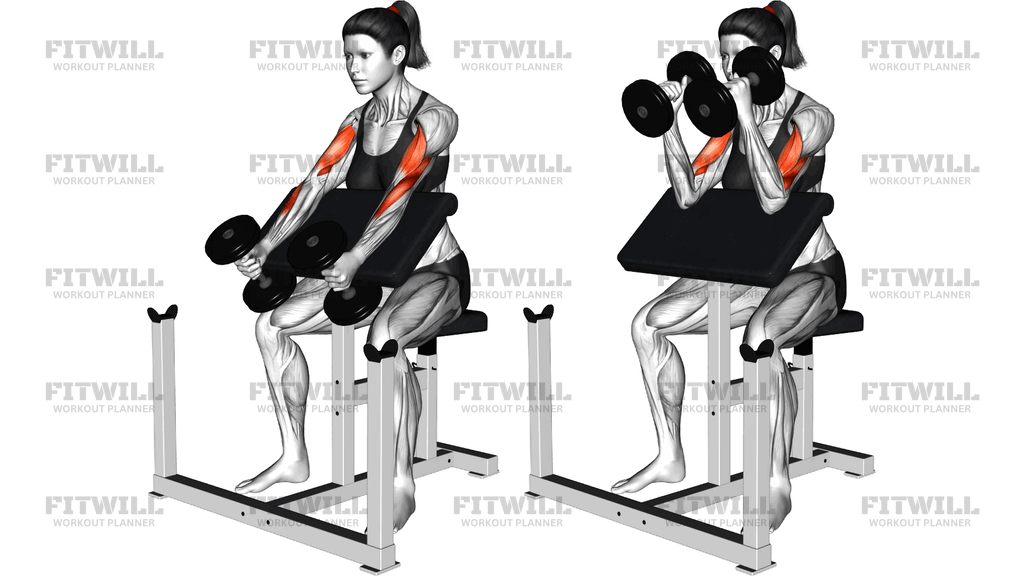
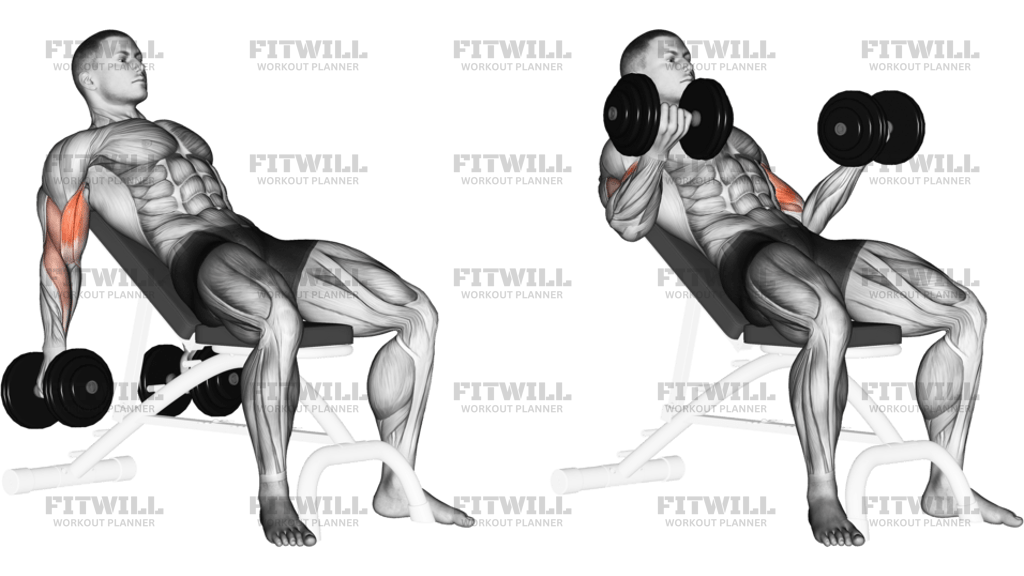
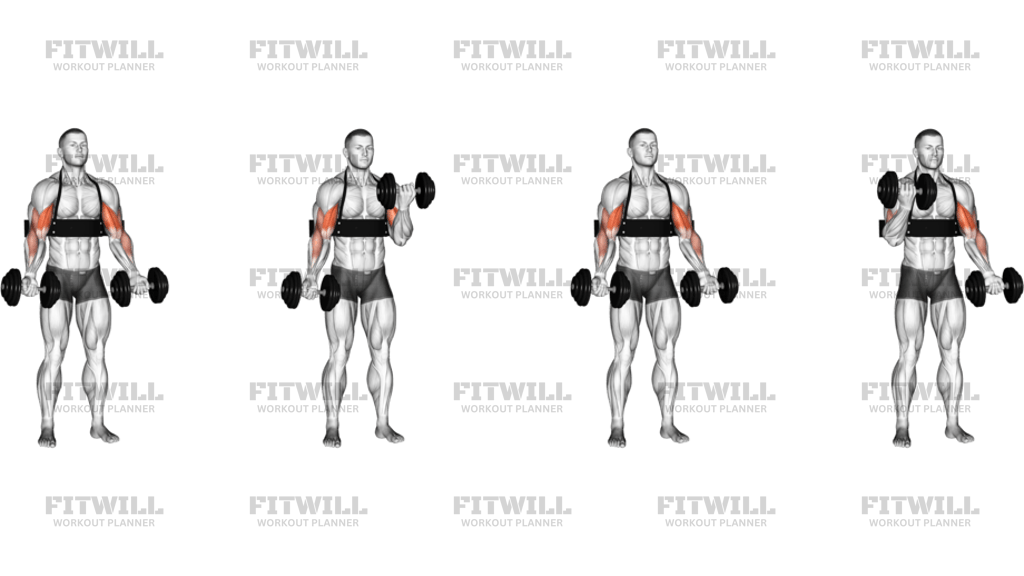
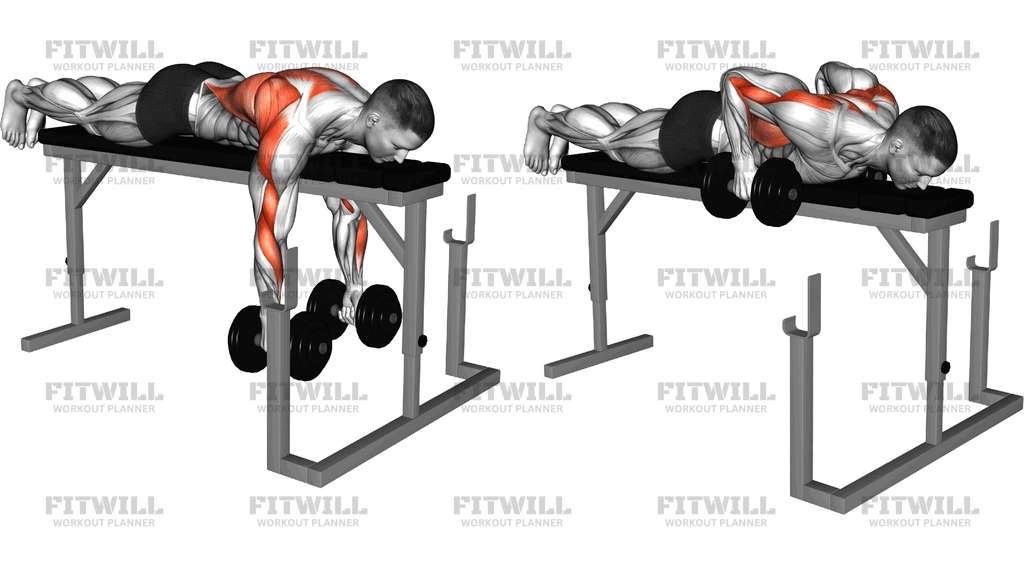
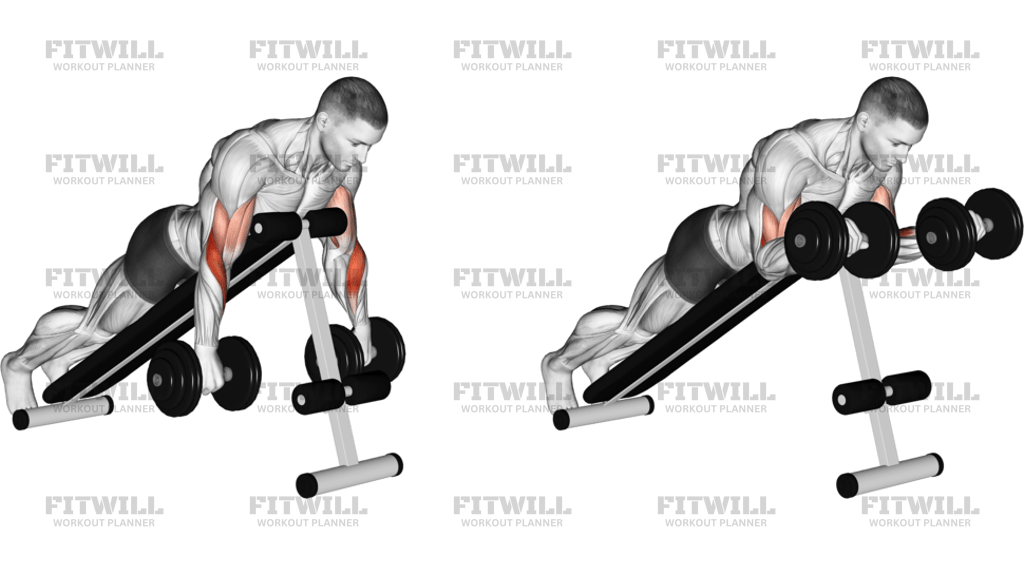
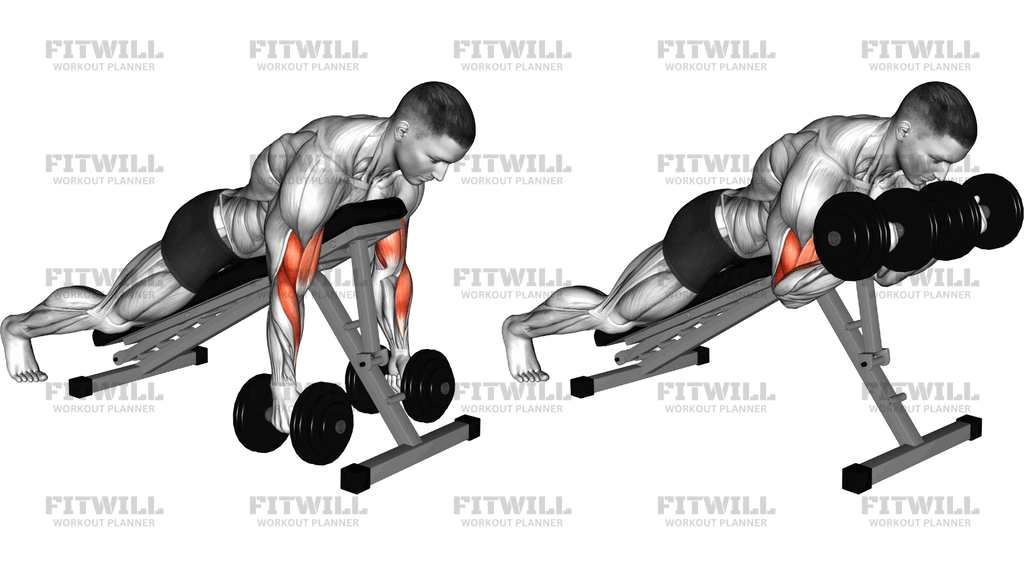
The Dumbbell Spider Curl is a chest-supported biceps exercise performed lying prone on an incline bench with your arms hanging straight down toward the floor. Because the bench presses against your chest and pins your upper arms in place, the shoulders and lower back are taken almost entirely out of the movement, forcing the biceps to do all of the work through a strict, isolated curl.
What makes this variation stand out is the arm position. With your arms perpendicular to the floor and hanging vertically beneath your shoulders, the biceps sit in a stretched position at the bottom of every rep. That long-length position is something standing curls and preacher curls only partially reproduce, and many lifters find the peak contraction at the top feels noticeably harder here despite using lighter dumbbells.
The setup is the whole exercise. Your chest and the fronts of your shoulders stay glued to the bench pad, your feet brace against the floor or the bench's lower rungs for stability, and your elbows stay pointed down and fixed in place. If your chest lifts or your elbows drift forward, the bench stops doing its job and momentum starts doing it for you, so treat the pad contact as non-negotiable from the first rep to the last.
To perform it, curl both dumbbells up in an arc toward the front edge of the bench until your forearms press against your biceps or the dumbbells reach shoulder height, squeeze hard for a beat, then lower under control until your arms are fully extended. Because the biceps work from a stretched position and there is no back support, most people should use roughly half to two-thirds of the weight they would handle on a standing dumbbell curl.
This movement suits lifters who want to prioritize biceps growth with strict form, anyone whose standing curls have turned into hip-and-swing reps, and intermediate to advanced trainees looking for a finisher after heavier curl variations. Beginners can use it too, but the unsupported, stretched position makes it less forgiving than a preacher or seated curl, so start light and learn the feel before adding load.
[ Workout Log & Planner ]
Put your next workout in Fitwill
Keep your plan and training log ready when you are.


Instructions
- Set an incline bench to a low-to-moderate angle, around 30 to 45 degrees, and place a dumbbell of your chosen weight on each side of the bench within easy reach.
- Lie chest-down on the bench so your chest and the fronts of your shoulders are firmly supported by the pad, with your head just past the top edge and your arms hanging straight down toward the floor on either side.
- Grip each dumbbell with a neutral to slightly supinated grip, palms facing forward or angled slightly inward, and brace your feet against the floor or the bench's lower support for a stable base.
- Extend your arms fully so the dumbbells hang directly below your shoulders, and lightly engage your core to stop your torso from rocking on the pad.
- Curl both dumbbells up and slightly forward in a smooth arc, keeping your upper arms vertical and your elbows pinned in place under your shoulders.
- Continue until your forearms press against your biceps or the dumbbells reach roughly shoulder height, and squeeze your biceps hard at the top for one to two seconds.
- Lower the dumbbells slowly along the same arc until your arms are fully extended and you feel a complete stretch in the biceps at the bottom.
- Exhale as you curl up and inhale as you lower, keeping your breathing steady rather than holding your breath under load.
- Keep your chest in contact with the pad for every rep; if it lifts, the set is over or the weight is too heavy.
- Once your set is done, set the dumbbells down on the floor on either side of the bench before sitting up, then rest before the next set.
Tips & Tricks
- The most common mistake is letting the elbows drift forward as fatigue builds, which turns the exercise into a front raise hybrid; consciously keep your upper arms pointed straight down at the floor throughout the set.
- Lifting your chest off the pad to help the dumbbells up defeats the entire purpose of the chest-supported setup. If your torso moves, drop the weight rather than fighting for the rep.
- Lower the dumbbells slower than you curl them, aiming for a two to three second descent. Because the biceps are loaded in a stretched position at the bottom, dropping the weight quickly is where most strain risk lives.
- Do not fully relax your arms at the bottom between reps. Keep light tension in the biceps so the dumbbells hang with control instead of yanking on the elbow joint.
- A pronated (palms-down) grip on the same bench setup shifts more work to the brachialis and brachioradialis; use it as a follow-up variation once your standard spider curls are solid.
- Your wrists should stay neutral and in line with your forearms. Curling with bent-back wrists is a sign the dumbbells are too heavy and shifts tension away from the biceps.
- Because both arms curl together here, a stronger side can quietly compensate. If you notice uneven height or speed, run a block with single-arm spider curls to even things out.
- Expect your standing curl numbers to be useless for loading this exercise. Pick a weight you can control for strict reps with your chest welded to the pad, and progress from there.
- If the bench angle is too steep, your head drops below your heart and your arms sit at an awkward angle. Stay in the 30 to 45 degree range so the arms hang vertically under the shoulders.
Frequently Asked Questions
Which muscles does the Dumbbell Spider Curl work?
The biceps brachii is the primary mover, with the brachialis and brachioradialis assisting and the forearm flexors working to hold the dumbbells. Because the chest is supported on the bench, the shoulders and lower back contribute almost nothing.
Why is the bench angle important for the Dumbbell Spider Curl?
The angle determines where your arms hang relative to your shoulders. In the 30 to 45 degree range your upper arms hang vertically and the biceps work from a stretched position; too steep an angle changes the resistance path and puts your head and shoulders in an awkward spot.
Is the Dumbbell Spider Curl good for beginners?
It can be, but it is less forgiving than seated or preacher curls because there is no back support and the biceps start each rep from a stretched position. Beginners should use light dumbbells, master the chest-on-pad position, and expect to use far less weight than in a standing curl.
Why are the weights so much lighter than my standing dumbbell curls?
Standing curls let your hips, shoulders, and momentum assist, while the Dumbbell Spider Curl isolates the biceps with the upper arms fixed. The load drops because the biceps are doing all the work alone, which is exactly the point of the exercise.
Should I curl both arms together or one at a time?
The standard version curls both dumbbells together, which is efficient and keeps your torso square on the bench. Single-arm reps are a useful fix if one side lags behind or if you struggle to keep your chest planted with two dumbbells moving at once.
What is the most common mistake on the Dumbbell Spider Curl?
Letting the elbows drift forward and the chest lift off the pad as the set gets hard. Both turn a strict biceps isolation into a partial front raise, so reset with a lighter weight and keep the upper arms vertical and the torso glued to the bench.
Can I do the Dumbbell Spider Curl on a flat bench?
No, a flat bench will not work because your arms would be trapped underneath your body. You need an incline bench set at roughly 30 to 45 degrees so your arms can hang straight down toward the floor on either side.
How does the Dumbbell Spider Curl compare to the Preacher Curl?
Both pin the upper arms to remove cheating, but the spider curl loads the biceps from a more stretched hanging position while the preacher curl supports the upper arms on an angled pad. They pair well together, with the spider curl typically used as a strict finisher.
How many sets and reps should I use?
Two to four sets of 8 to 15 controlled reps works well, usually after a heavier curl variation earlier in the session. Because the biceps are stretched under load, prioritize smooth tempo over chasing high numbers.
Is the Dumbbell Spider Curl safe for the elbows?
It is generally elbow-friendly when the weight is controlled and the descent is slow, since the chest support removes swinging. The main risk comes from letting the dumbbells drop at full extension or using loads your elbows cannot decelerate, so keep tension through the entire range.