Dumbbell Seated Alternate Hammer Curl On Exercise Ball
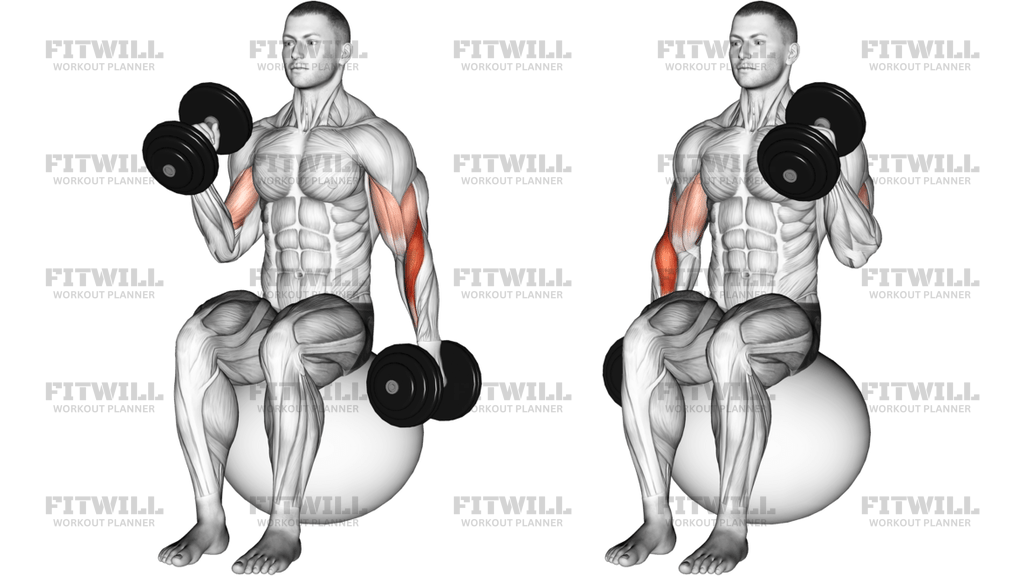
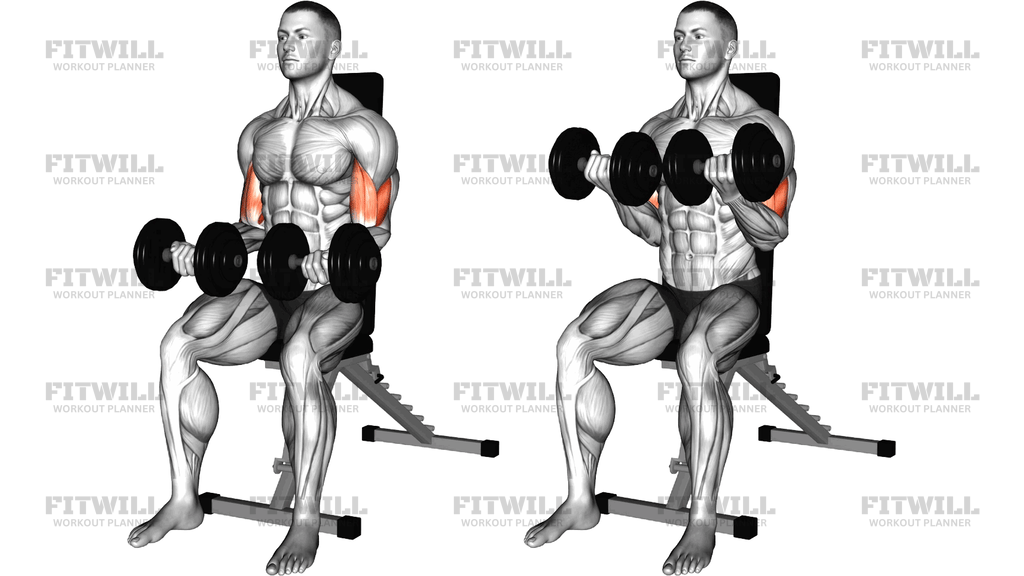
Dumbbell Seated Alternate Hammer Curl On Exercise Ball is a seated single-arm curl performed with a neutral grip while you balance on a stability ball. The exercise trains the upper arms and forearms while also asking the torso to stay quiet, so the biceps work without the usual help from leg drive, leaning, or shoulder swing. The ball adds an extra stability demand, which makes the setup part of the training instead of just a place to sit.
This movement emphasizes the biceps, brachialis, and brachioradialis, with the forearm flexors working to keep the wrist in a strong hammer position. In practical terms, you are curling one dumbbell at a time while the other arm stays controlled at your side. That alternating rhythm lets you focus on one side without turning the set into a swinging two-arm lift.
The setup matters because an unstable seat changes the whole repetition. Sit near the center of the ball with both feet flat, the knees bent to a comfortable angle, and the chest stacked over the pelvis. Hold the dumbbells with palms facing in, keep the elbows close to the ribs, and keep the shoulders from creeping forward as you begin the curl. If the ball is too high, too low, or too slippery, the exercise becomes harder in the wrong way.
Each rep should be a clean elbow bend rather than a body lean. Curl one dumbbell toward the same-side shoulder, pause briefly near the top, then lower it under control before or while the other arm works. The wrist stays neutral, the upper arm stays mostly still, and the torso resists twisting or bouncing. Breathing should stay smooth, with a controlled exhale on the lift and an easy inhale on the way down.
This is a useful accessory exercise when you want arm isolation with a little core and posture challenge built in. It fits well in bodybuilding, general strength, or conditioning sessions where strict tempo matters more than loading heavy. Beginners can use it with light dumbbells and a stable ball height, while more advanced lifters can slow the lowering phase or add a brief pause at the top. The main goal is steady, side-to-side control without rocking the ball or using momentum to finish the curl.
[ Workout Log & Planner ]
Put your next workout in Fitwill
Keep your plan and training log ready when you are.


Instructions
- Sit on the center of the exercise ball with both feet flat on the floor and the knees bent at a comfortable angle.
- Hold a dumbbell in each hand with a neutral hammer grip, palms facing your thighs, and let both arms hang straight down.
- Stack your ribs over your pelvis, keep your chest tall, and pull your shoulders down away from your ears.
- Brace lightly so the ball stays still, then begin with one arm while the other arm remains quiet at your side.
- Curl the working dumbbell toward the same-side shoulder without turning the wrist or letting the elbow drift forward.
- Pause briefly near the top of the curl, keeping the upper arm close to the torso and the neck relaxed.
- Lower the dumbbell under control until the arm is almost straight again, then repeat on the other side.
- Alternate sides for the planned number of reps, breathing out as you lift and in as you lower.
Tips & Tricks
- Pick a ball height that lets your hips stay slightly above knee level without you sliding forward.
- If the ball rolls while you curl, lighten the dumbbells before trying to force a stricter rep.
- Keep your palms facing in the whole time; rotating into a normal curl turns the exercise into a different variation.
- Let the elbow hinge while the upper arm stays close to the ribs instead of drifting in front of the torso.
- Avoid leaning back as the dumbbell comes up, because that usually means the front shoulder is taking over.
- Lower the weight slowly enough that you can feel the brachialis and forearm keep tension on the way down.
- Use a short pause at the top if you want to reduce swing and make each side work independently.
- Stop the set when your torso starts twisting or the ball feels unstable enough to change your rep path.
Frequently Asked Questions
What muscles does the seated alternate hammer curl on an exercise ball work?
It primarily trains the biceps, brachialis, and brachioradialis, with the forearm flexors helping maintain the neutral grip.
Why use an exercise ball instead of a bench?
The ball adds a stability challenge that forces you to stay upright and avoid leaning, which makes the curl more strict.
Should my palms turn up during the rep?
No. Keep a hammer grip with the palms facing in so the movement stays focused on the neutral-grip curl pattern.
How do I keep the ball from wobbling too much?
Sit centered on the ball, plant both feet firmly, and use a lighter load until you can curl without rocking side to side.
Can I curl both dumbbells at the same time?
You can, but the alternating version is usually better if you want stricter reps and less body swing.
What should move during the rep?
Only the elbow should flex and extend. The upper arm, shoulder, and torso should stay mostly still.
Is this a good beginner arm exercise?
Yes, if you use light dumbbells and keep your torso controlled. The ball makes balance harder, so start conservatively.
What is the most common mistake with this curl?
Most people lean back or swing the dumbbell forward. That turns the rep into momentum instead of a clean arm curl.