Dumbbell Seated Hammer Curl
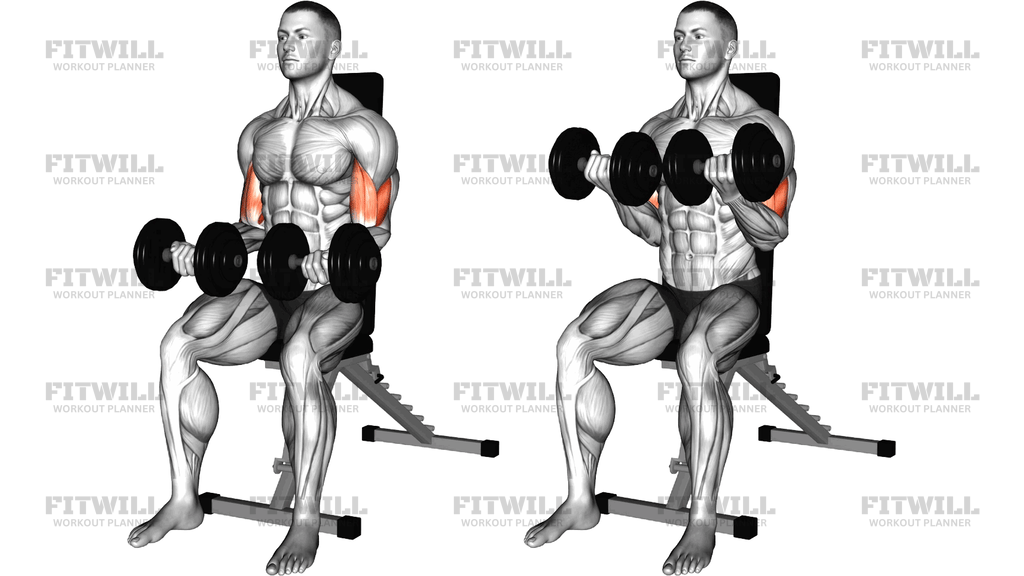
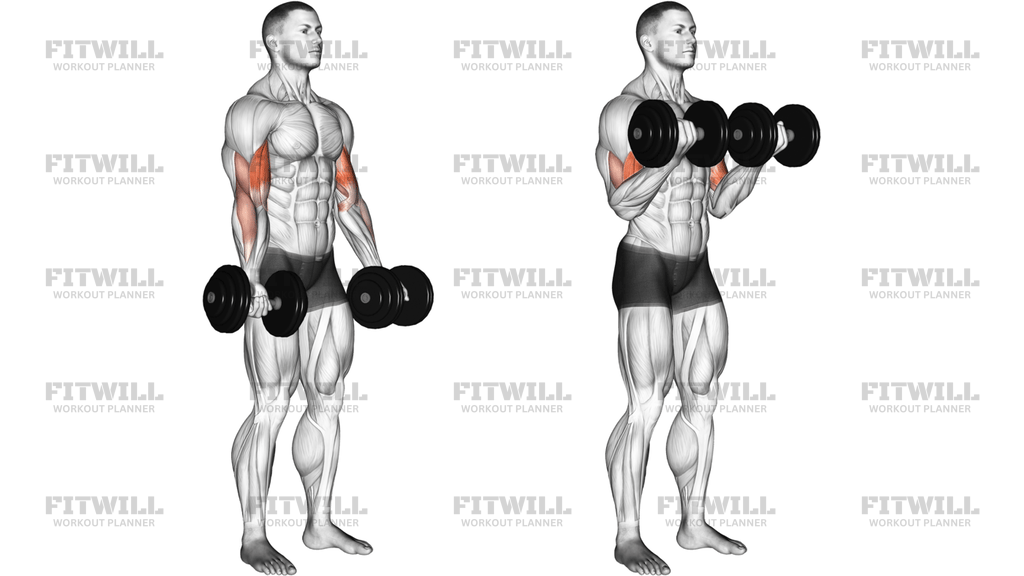
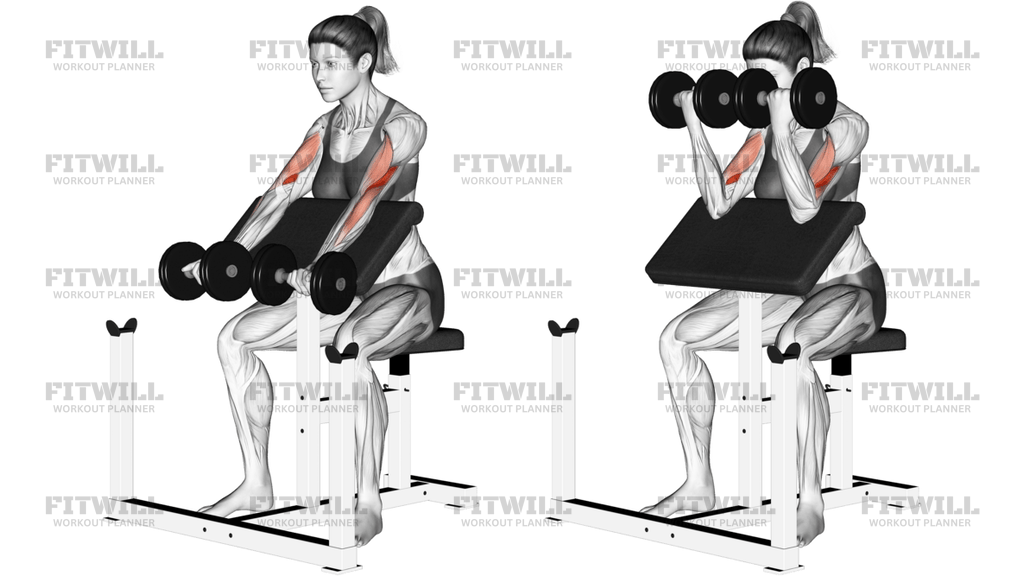
Dumbbell Seated Hammer Curl is a seated arm exercise that uses a neutral grip to train elbow flexion with a strong emphasis on the upper arms and forearms. With your palms facing in, the lift shifts work away from pure supination and makes the brachialis and brachioradialis do more of the job, which is why this variation is often used to build thicker-looking arms and stronger grip support.
The seated position matters because it reduces the chance of cheating with the hips or lower back. When you sit tall on the bench with your feet planted and your shoulders stacked over your hips, the dumbbells start dead still at your sides and the curl has to come from the elbows. That makes the rep cleaner, keeps tension on the target muscles, and helps you notice when one arm starts to drift ahead of the other.
From the bottom position, curl both dumbbells by bending the elbows while keeping the palms turned in and the wrists straight. The weights should travel in a smooth arc toward the front of the shoulders without the elbows flaring forward or the torso rocking back. At the top, squeeze briefly without letting the dumbbells crash together or roll the wrists inward. Lower them under control until the arms are almost straight again, then repeat with the same tempo and posture.
This exercise works well as accessory volume on arm day, as a secondary curl after a heavier supinated curl, or as a beginner-friendly way to learn strict elbow flexion. The seated setup makes the movement easy to standardize, but it also exposes sloppy reps quickly, so the load should stay light enough to keep the shoulders quiet and the descent controlled. If the dumbbells start swinging or the elbows drift away from the sides, the set is too heavy or the bench position is no longer helping.
Use the seated hammer curl when you want direct biceps work with extra brachialis and forearm involvement, and keep the goal on clean repetitions rather than body English. It is especially useful for lifters who want arm size, elbow flexor strength, or a curl variation that is usually friendlier on the wrists than a fully supinated curl. A well-executed set should feel solid, symmetrical, and deliberate from the first rep to the last.
Fitwill
Log Workouts, Track Progress & Build Strength.
Achieve more with Fitwill: explore over 9600 exercises with images and videos, access built-in and custom workouts, perfect for both gym and home sessions, and see real results.
Start your journey. Download today!




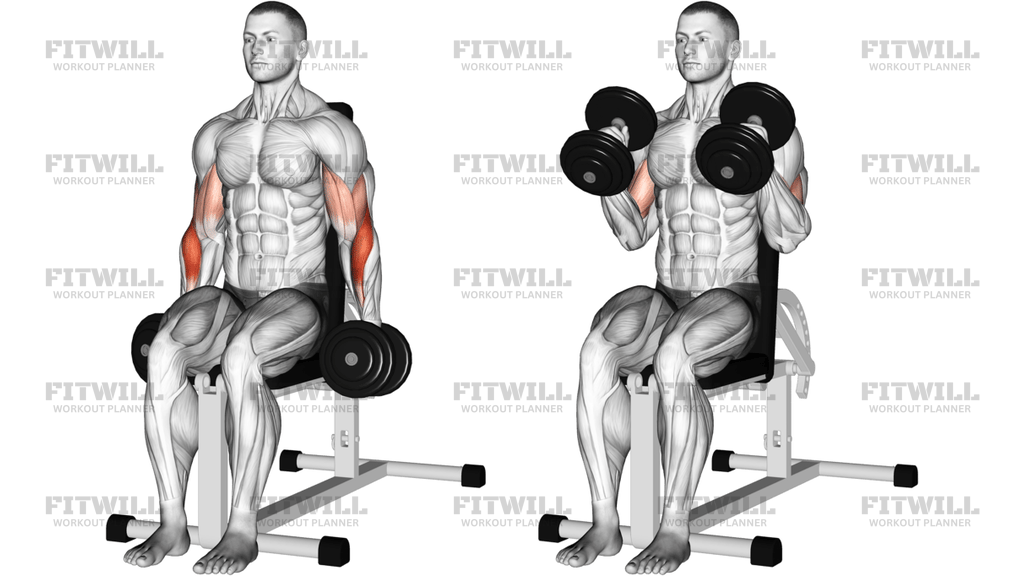
Instructions
- Sit tall on a bench with your feet flat on the floor and a dumbbell in each hand hanging at your sides.
- Set your palms to face each other, keep your wrists straight, and let your elbows rest close to your ribs.
- Lift your chest without leaning back and brace lightly through your midsection before the first rep.
- Curl both dumbbells by bending the elbows and driving the handles up in a smooth arc toward your shoulders.
- Keep the upper arms still so the movement comes from the elbow joint instead of the torso.
- Pause briefly near the top while keeping the palms neutral and the shoulders relaxed.
- Lower the dumbbells slowly until the arms are almost straight and the weights are under control.
- Exhale as you curl up, inhale as you lower, and keep the tempo even from rep to rep.
Tips & Tricks
- Keep your elbows pinned close to your sides; if they drift forward, the front delts start helping too much.
- Think about lifting with the knuckles and elbows together so the wrists stay stacked instead of bending back.
- A slower lowering phase usually gives this exercise more value than adding extra weight and swinging the dumbbells.
- If one arm rises faster, match the slower side and use the same top position on both sides.
- Do not shrug the shoulders at the top; that usually means the load is too heavy or the range is getting sloppy.
- A bench with back support can make it easier to keep the torso still, but do not press your lower back into an exaggerated arch.
- Stop the curl just short of letting the elbows lose tension at the bottom so the forearms do not take over the set.
- Choose a weight that lets you keep the palms facing in the whole time instead of rotating into a regular curl.
Frequently Asked Questions
What muscles does the seated hammer curl work most?
It mainly targets the biceps, brachialis, and brachioradialis, with the forearms helping stabilize the dumbbells.
Why do the palms stay facing each other during this curl?
The neutral grip shifts more work to the brachialis and brachioradialis and usually feels friendlier on the wrists than a fully supinated curl.
Should I curl one arm at a time or both together?
Both work, but the pictured version uses both arms at the same time, which makes it easier to compare side to side and keep the tempo consistent.
How high should the dumbbells come up?
Bring them up until the hands are near the shoulders or upper chest without letting the elbows shoot forward or the shoulders shrug.
Can I use a backrest for seated hammer curls?
Yes. A backrest can help keep the torso quiet, but the curl should still come from the elbows rather than from leaning back into the lift.
What is the biggest mistake on this exercise?
The most common issue is swinging the dumbbells or using body English instead of keeping the upper arms still.
Is this a good beginner curl variation?
Yes. The seated position and neutral grip make it easy to learn strict elbow flexion with less cheating.
How should I breathe during each repetition?
Exhale as you curl the dumbbells up and inhale as you lower them back down under control.