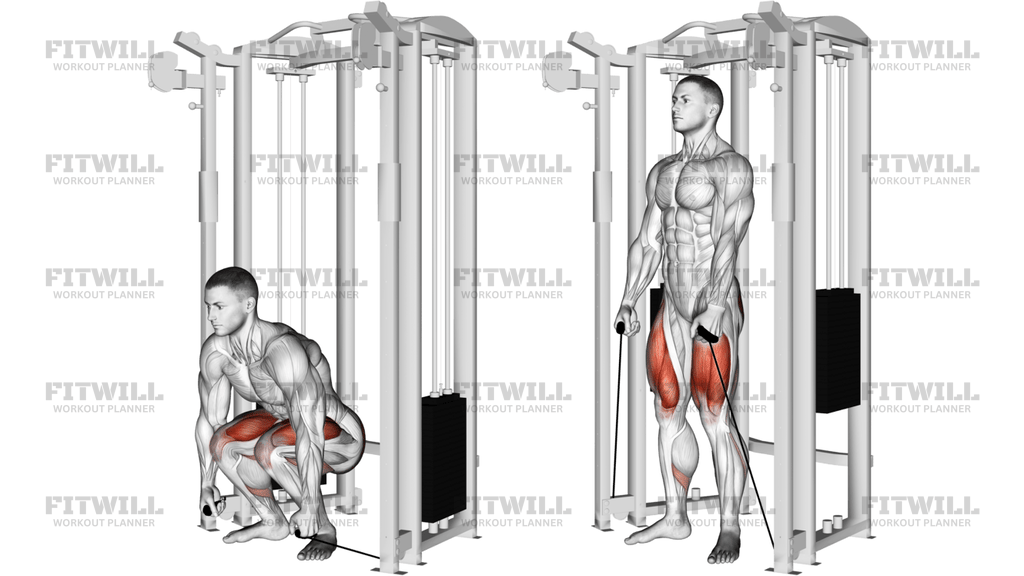
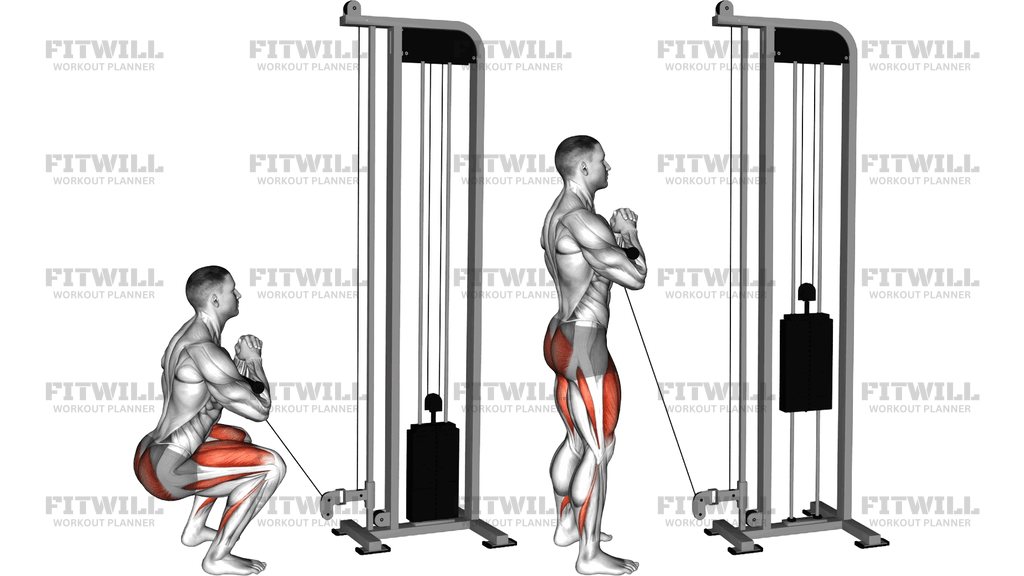
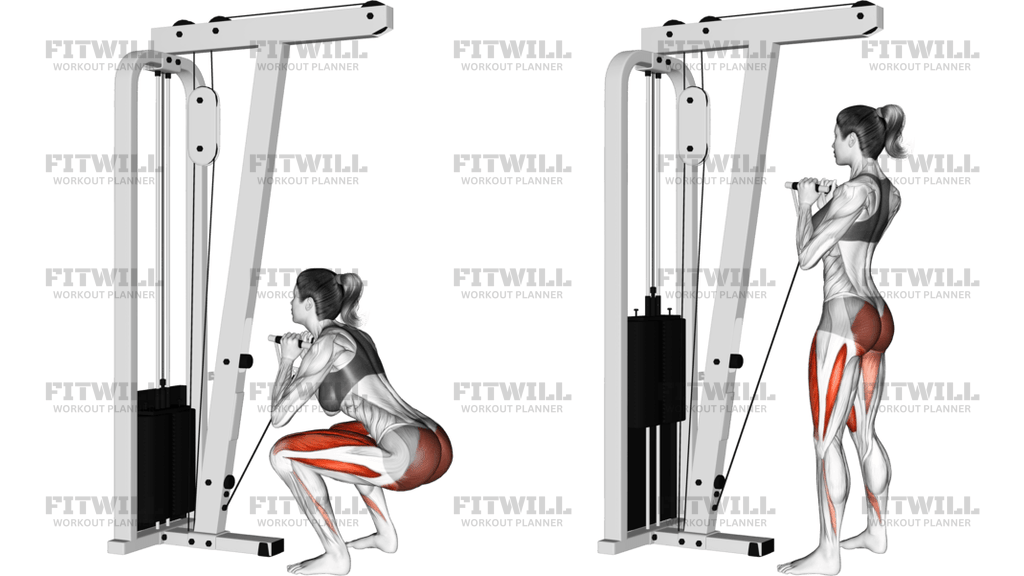
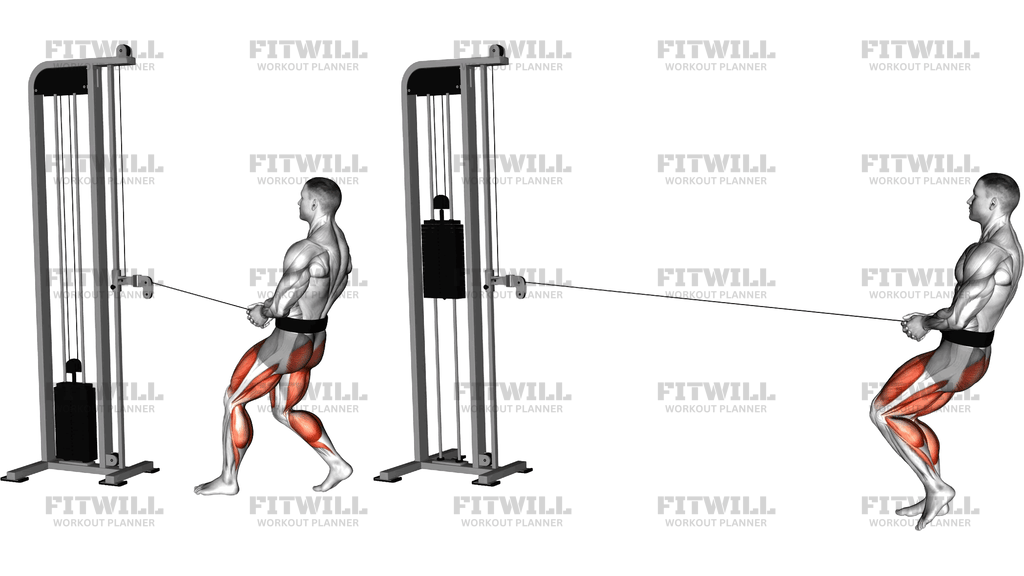
Cable Squat Row With Rope Attachment
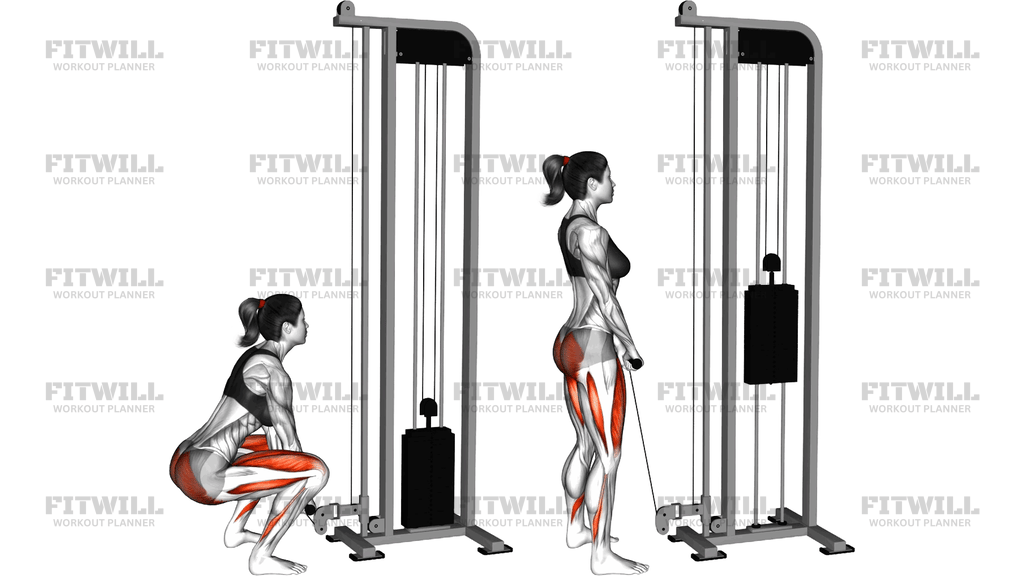
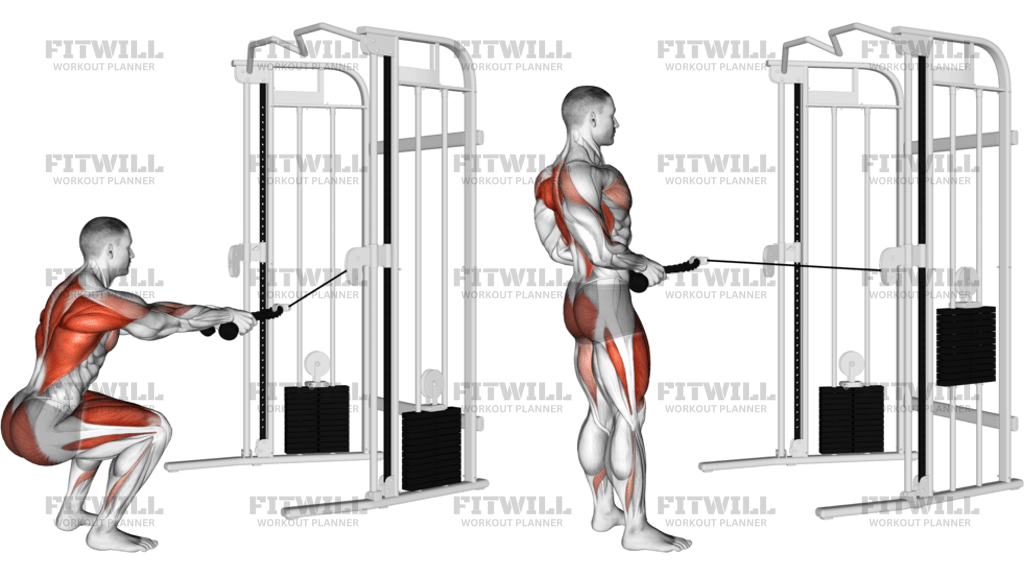
Cable Squat Row With Rope Attachment is a compound cable movement that links a squat with a standing row in one smooth repetition. It is useful when you want to train lower-body drive, upper-back pulling strength, and trunk control at the same time. The low pulley and rope attachment keep the line of resistance steady, so the exercise rewards clean positions more than raw speed.
The movement asks your legs, glutes, back, rear delts, arms, and core to work together. On the way up, your hips and knees extend as the rope travels toward your lower ribs or upper waist. On the way down, you return to the squat while keeping tension on the cable instead of letting the stack slam down.
Setup matters because the cable should stay under tension through both parts of the rep. Stand facing the machine with the pulley low, take hold of the rope ends, and step back until the stack lifts slightly. From there, settle into a balanced squat with your chest proud, heels down, and arms long enough that the cable can pull you forward without rounding your back.
The best reps feel coordinated rather than rushed. Start from the bottom of the squat, drive through the floor, and pull the rope toward your torso as you rise so the row finishes with your elbows close to your sides. Keep your wrists neutral, avoid shrugging, and let the shoulders finish by squeezing the shoulder blades without overextending your lower back.
Cable Squat Row With Rope Attachment is a good accessory when you want a full-body pattern that is easier on the joints than explosive free-weight work but still demanding enough to build work capacity. It fits well in strength circuits, athletic warmups, and conditioning blocks, especially when you want to reinforce posture under load. Choose a resistance that lets every rep look the same from the first squat to the last row, and stop the set as soon as the cable starts pulling you out of position.
[ Workout Log & Planner ]
Put your next workout in Fitwill
Keep your plan and training log ready when you are.


Instructions
- Set the cable pulley to the lowest position and clip on the rope attachment, then stand facing the stack.
- Hold one rope end in each hand, step back until the cable is lightly tensioned, and plant your feet about shoulder-width apart with toes slightly turned out.
- Sit into a controlled squat with your hips back, chest lifted, and arms extended so the rope stays under tension.
- From the bottom of the squat, drive through your whole foot and stand up while pulling the rope toward your lower ribs.
- Keep your elbows close to your sides as you finish the row, and let your shoulder blades squeeze back without leaning away from the stack.
- Lower the rope under control as you sit back into the next squat, letting your arms lengthen without losing the cable tension.
- Keep your wrists straight and your neck relaxed so the pull stays in your back and arms instead of your hands and traps.
- Breathe in as you lower into the squat and breathe out as you stand and row, keeping each rep smooth and linked together.
- When the set is done, step forward first, let the weight stack settle, and then release the rope.
Tips & Tricks
- Use a load that lets you stand up and row together; if you have to jerk the stack off the floor, it is too heavy.
- Keep the rope ends level with your lower ribs at the top rather than pulling high toward your chest.
- Let your knees track over your toes in the squat so your balance does not shift onto the balls of your feet.
- If your lower back rounds at the bottom, shorten the squat and keep the cable slightly closer to your body.
- Do not flare the elbows wide; a tucked row keeps the pull smoother and usually feels better on the shoulders.
- Pause for a split second at full standing row to avoid turning the movement into a fast cable swing.
- Keep the cable moving through the whole rep instead of locking out the squat and then snapping upright for the row.
- A wider stance usually makes the squat part easier because it gives you room to keep tension on the cable without being pulled forward.
Frequently Asked Questions
What muscles does Cable Squat Row With Rope Attachment work?
It trains the legs and glutes through the squat, then the upper back, lats, rear delts, and arms through the row. Your core works hard to keep the cable path controlled.
Is Cable Squat Row With Rope Attachment more of a strength exercise or a conditioning exercise?
It can be either. Use moderate weight and steady reps for conditioning, or slow the tempo and use heavier resistance if you want a strength-focused accessory movement.
Should I stand up first and then row the rope?
No. The row should happen as you drive out of the squat so the movement stays connected and the cable never loses tension.
Why use a rope attachment for Cable Squat Row With Rope Attachment?
The rope lets your hands stay neutral and lets your elbows travel naturally, which usually feels smoother than a fixed straight handle.
How deep should my squat be in this exercise?
Squat only as low as you can while keeping your heels down, your chest lifted, and your lower back from rounding.
What is the most common mistake with Cable Squat Row With Rope Attachment?
People often rush the rep and turn it into a cable swing. Keep the squat, stand, and row connected instead of yanking the stack.
Can beginners do this exercise safely?
Yes, if they start with light resistance and a smaller squat range. The key is learning how to keep the rope under control while the body changes position.
How can I make Cable Squat Row With Rope Attachment harder without adding much weight?
Slow the lowering phase, pause briefly at the bottom of the squat, and squeeze the row for a moment at the top before returning.