Finger Extensor Stretch
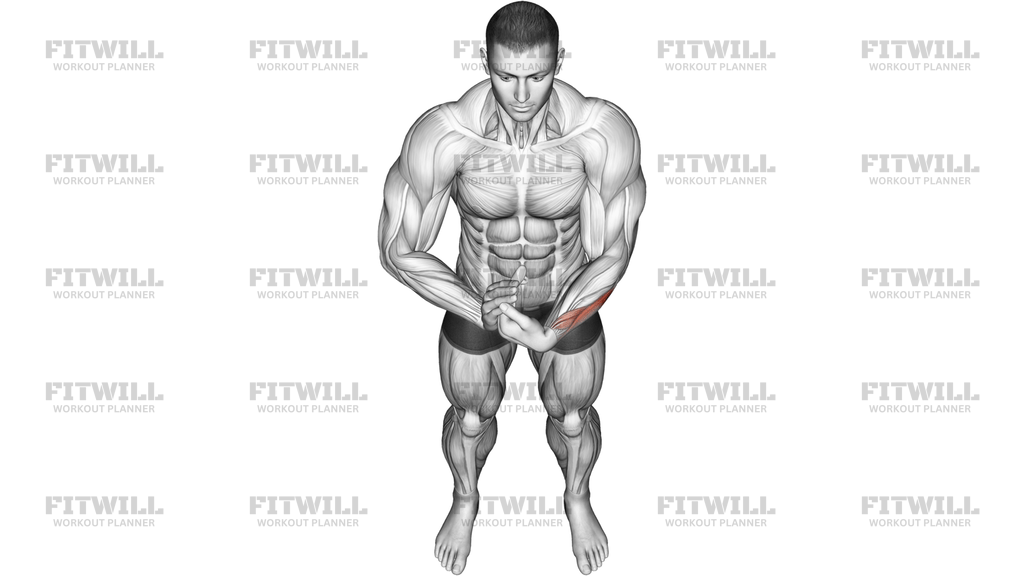
Finger Extensor Stretch is a standing mobility drill that targets the muscles and connective tissue on the back of the forearm and hand. The version shown here uses no external load. One hand opens the other by gently pulling the fingers back while the elbow stays long and the shoulder stays quiet. The point is not to force a big range. It is to create a calm, controlled stretch through the forearm extensors so the hand can open more freely.
The setup matters because a small change in hand angle changes where the stretch lands. Stand tall, keep the working arm in front of your body, and extend the elbow with only a soft bend if needed. Use the opposite hand to hold the fingers and guide them back toward the floor and slightly toward your body. When the position is right, you should feel a broad pull through the top of the forearm and the back of the hand, not a sharp pinch in the wrist or finger joints.
This stretch is useful after grip-heavy work such as pulling, lifting, climbing, racket sports, typing, or any session where the forearms feel dense and closed. It is also helpful in a warmup when the hands need to move better before training. Because the exercise is static rather than explosive, the goal is steady breathing, relaxed shoulders, and a repeatable end position you can hold without shaking or bracing hard.
As you settle into the stretch, let the exhale help the hand soften and the forearm lengthen. Keep the wrist from twisting and do not yank on the fingers to chase more range. If the stretch feels too intense, back off the pull, bring the hand a little closer to chest height, or soften the elbow lock. The best result comes from a moderate stretch held with control, then released slowly before switching sides.
Used well, Finger Extensor Stretch can reduce the feeling of stiffness in the forearm and make hand opening feel smoother for the rest of the session. It is a simple drill, but the details matter: stable posture, gentle pressure, quiet shoulders, and no bouncing. When those cues stay consistent, the stretch is easy to repeat and much safer on the small joints of the hand and wrist.
Fitwill
Log Workouts, Track Progress & Build Strength.
Achieve more with Fitwill: explore over 9600 exercises with images and videos, access built-in and custom workouts, perfect for both gym and home sessions, and see real results.
Start your journey. Download today!




Instructions
- Stand tall with your feet about hip-width apart and bring one arm in front of your body at chest height.
- Keep the working elbow long with only a small bend if that makes the stretch more comfortable.
- Use your other hand to grasp the fingers of the working hand, not the wrist joint itself.
- Gently draw the fingers back toward the floor and slightly toward your body until you feel the stretch start in the back of the forearm.
- Keep the shoulder down and the neck relaxed so the pull stays in the forearm rather than creeping into the upper trap.
- Hold the position and breathe slowly, using each exhale to let the fingers soften a little more.
- Stop at a mild to moderate stretch; do not force the hand into a painful end range.
- Hold briefly, release the hand slowly, shake it out if needed, and repeat on the other side with the same setup.
Tips & Tricks
- Keep the pull on the fingers gentle. If you have to crank the wrist to feel anything, the angle is too aggressive.
- A straight elbow increases the stretch along the forearm, but a small bend is fine if it keeps the wrist happy.
- Do not let the shoulder rise toward the ear. That usually turns the stretch into a neck shrug instead of a forearm opener.
- If the stretch lands mostly in the thumb or small finger joints, spread the pull across the whole hand and ease off the pressure.
- The best sensation is a broad line of tension along the back of the forearm, not a sharp spot at the wrist crease.
- Keep the wrist from twisting sideways; the hand should move as one unit while the fingers are guided back.
- This is a static stretch, so a steady hold beats repeated bouncing or pulsing.
- After heavy gripping, start lighter than you think you need and let the tissue settle before increasing the hold.
Frequently Asked Questions
What does Finger Extensor Stretch target?
It mainly targets the finger and wrist extensor muscles on the back of the forearm, especially near the upper side of the hand.
How should the hand be positioned in this stretch?
One hand should gently pull the other hand's fingers back while the working elbow stays long and the wrist stays quiet.
Can beginners do this stretch safely?
Yes. Beginners should keep the pull light and stop well before any sharp pain or joint pinch.
Where should I feel the stretch most?
You should feel it across the back of the forearm and the back of the hand, not as a jab in the wrist or fingers.
How long should I hold each side?
A short static hold of about 15 to 30 seconds is usually enough, especially after gripping or pulling work.
What is the most common mistake?
The biggest mistake is yanking the fingers back hard and turning a simple stretch into joint stress at the wrist or finger knuckles.
Do I need a mat or any equipment?
No. The standing version does not require equipment; a mat is only useful if you prefer to sit or kneel while stretching.
Can I use this after lifting, climbing, or typing?
Yes. It fits well after any session where the hand stayed closed or the forearm did a lot of gripping.