Dumbbell Lying Hamstring Curl
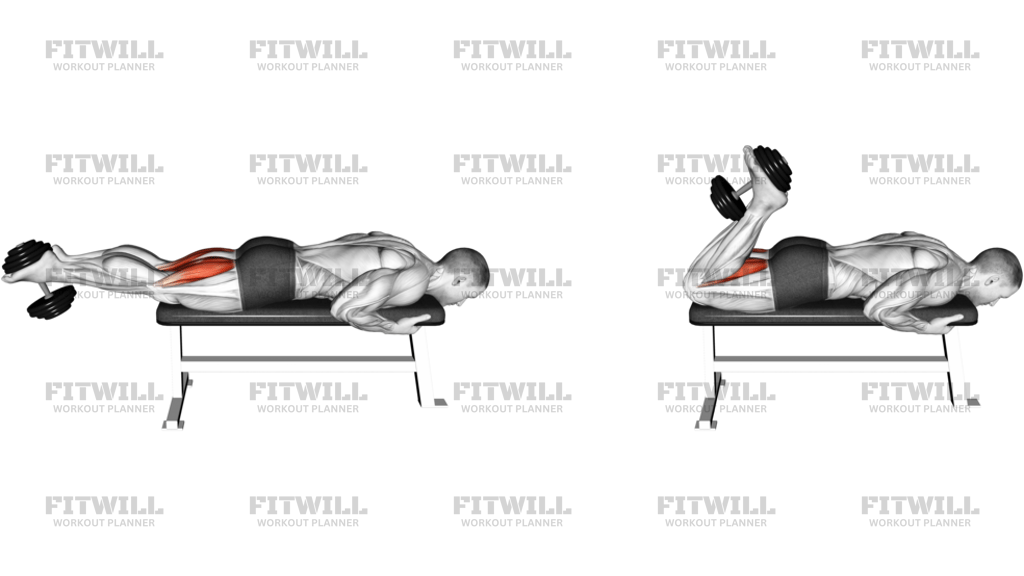
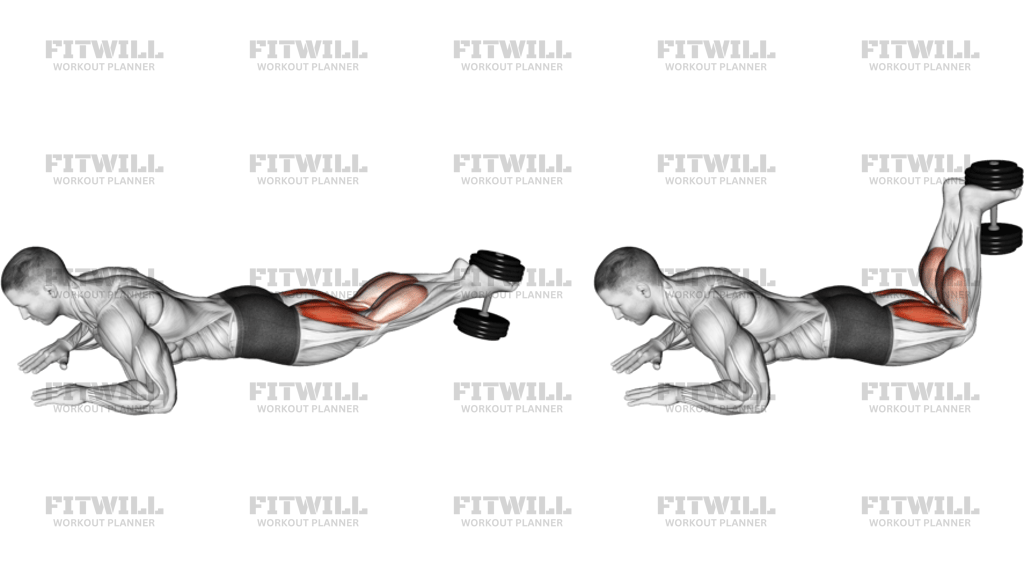
Dumbbell Lying Hamstring Curl is a prone knee-flexion exercise that loads the hamstrings by asking you to curl a dumbbell held between your feet. Unlike a machine curl, the resistance is not guided, so the exercise depends on how well you can keep the dumbbell pinned, keep the hips quiet, and bend the knees without turning the set into a swinging back-extension pattern. That makes the movement useful for building hamstring strength, control, and awareness of how the back of the thigh works through both the curl and the lowering phase.
The setup matters because the dumbbell has to stay secure while your lower legs move. Lie face down on a mat, support yourself on your forearms, and trap a light dumbbell between the soles or inner edges of both feet so the plates stay level. Keep your thighs pressed into the floor, ribs down, and neck long. If the dumbbell shifts, the load is too heavy or your feet are not squeezing evenly enough to control it.
During each rep, curl your heels toward your glutes by bending both knees together. Keep the thighs as still as possible and avoid hiking the hips or arching the lower back to cheat the weight upward. At the top, the hamstrings should feel fully shortened but not cranked by momentum. Lower the dumbbell slowly until the legs are almost straight again, and reset the feet before starting the next rep so the implement never feels loose or unstable.
This exercise is especially useful as accessory work after heavier hinges, squats, or deadlift variations, or as a home-based hamstring movement when you do not have access to a curl machine. Because the dumbbell is secured by the feet, the load should stay modest and the tempo deliberate. Beginners can use it, but the first goal is always a clean, controlled curl path with no slipping, no hip pop, and no rushed lowering phase.
[ Workout Log & Planner ]
Put your next workout in Fitwill
Keep your plan and training log ready when you are.


Instructions
- Lie face down on a mat and support your upper body on your forearms with your elbows under your shoulders.
- Trap a light dumbbell between the soles or inner edges of both feet so the plates stay level and centered.
- Press your thighs and hips into the floor, keep your ribs down, and lengthen your neck before you start.
- Start with both legs straight and the dumbbell hanging just off the floor behind your ankles.
- Curl both heels toward your glutes by bending your knees together while keeping your thighs quiet.
- Keep the dumbbell pinned between your feet as you lift, and stop before your hips begin to rise.
- Pause briefly at the top when the hamstrings are fully shortened and the weight is still under control.
- Lower the dumbbell slowly until your knees are almost straight, then re-squeeze your feet before the next rep.
Tips & Tricks
- Use the lightest dumbbell that stays secure between your feet; if it shifts, the load is too heavy.
- Squeeze the dumbbell with the inner edges of your feet instead of trying to lift it with your lower back.
- Keep your hips heavy on the mat so the curl comes from knee flexion, not a pelvic lift.
- Match both legs on every rep; if one heel rises faster, reset the set.
- Take 2 to 4 seconds on the way down to keep tension on the hamstrings.
- Stop the set when the dumbbell starts to wobble or your feet lose their clamp.
- Keep your chin slightly tucked and your gaze down so the neck does not crane upward.
- If your ankles cramp, shorten the set and reduce the dumbbell size before adding reps.
Frequently Asked Questions
What muscles does Dumbbell Lying Hamstring Curl train most?
The hamstrings do most of the work as you bend the knees to lift the dumbbell. Your glutes, core, and forearms-on-floor support the position.
How do I keep the dumbbell from slipping out of my feet?
Use a light dumbbell, clamp it with the inner edges and soles of both feet, and keep the reps slow. If it still slides, reduce the load before you try more reps.
Should my hips stay on the floor the whole time?
Yes. Your hips should stay heavy and still so the movement stays a hamstring curl instead of turning into a back-extension cheat.
How high should I curl the dumbbell?
Curl until your heels are close to your glutes and the hamstrings are strongly contracted, but stop before the dumbbell starts to pull your feet apart or your hips rise.
Is this exercise beginner-friendly?
Yes, if you start with a very light dumbbell and focus on holding it securely. The setup is the hardest part, not the curl itself.
Why are my hamstrings cramping during this movement?
Cramping usually means the load is too heavy, the tempo is too fast, or your hamstrings are doing all the work without enough control. Lower the weight and slow the lowering phase.
Can I do this on a bench instead of the floor?
Yes, some people use a bench for more clearance, but the same rules apply: secure the dumbbell, keep the hips quiet, and lower under control.
What is the biggest mistake with Dumbbell Lying Hamstring Curl?
The most common mistake is swinging the weight by arching the back or kicking the hips up. The curl should come from the knees, not from momentum.