Elbow Push-Up
Elbow Push-Up is a bodyweight plank variation performed from the forearms, with the elbows stacked under the shoulders and the body held in one long line from head to heels. It is a useful exercise for training shoulder stability, chest engagement, triceps support, and trunk control at the same time, while keeping the movement simple enough to focus on position rather than load.
The setup matters because the exercise depends on a stable forearm base. If the elbows drift too far in front of the shoulders or the ribs flare, the position turns into a sagging plank and the front of the shoulders and low back take over. A clean Elbow Push-Up keeps the forearms pressed into the floor, the hands quiet, and the neck long so the torso stays organized through the entire hold or rep.
Although it looks like a small movement, the demand on the midsection is high. The abs, obliques, glutes, and deep spinal stabilizers work to stop the hips from rotating or dropping, while the chest, shoulders, and triceps help maintain pressure through the forearms. That makes the exercise especially useful when you want more control in pressing positions without needing heavier external resistance.
Use Elbow Push-Up as part of a warm-up, core circuit, shoulder-stability block, or conditioning session where you want strong bodyline control. It also works well for beginners who are not ready for a full push-up yet, because the forearm support reduces some of the pressing demand while still teaching how to brace and hold a rigid torso.
The safest way to progress it is to make the position cleaner before making it harder. Build time under tension first, then add longer holds, slower transitions, or harder plank variations only if you can keep the hips level and the shoulders quiet. If the lower back starts to arch or the elbows slide forward, shorten the set and reset the body position before continuing.
[ Workout Log & Planner ]
Put your next workout in Fitwill
Keep your plan and training log ready when you are.


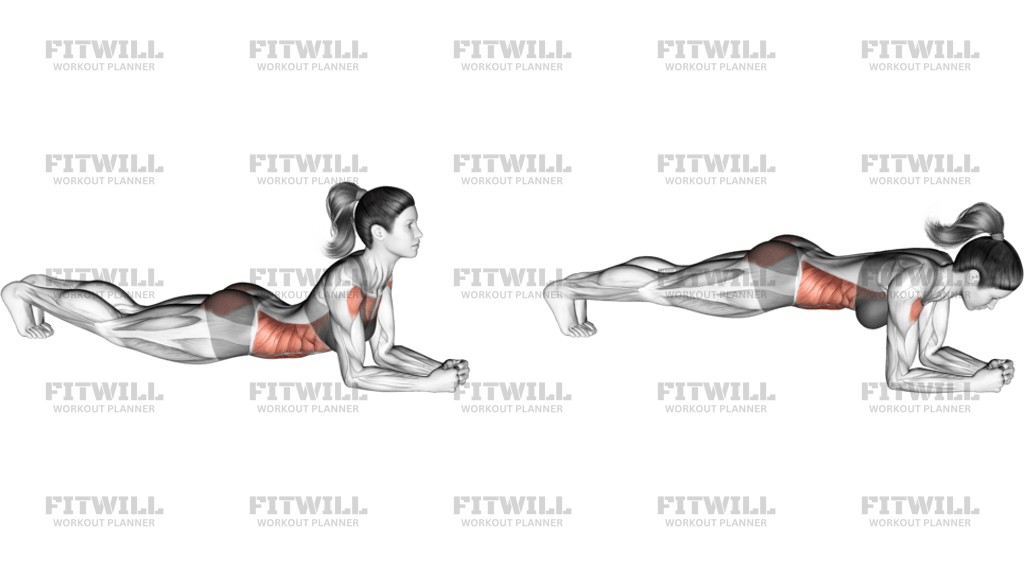
Instructions
- Place your forearms on the floor with your elbows under your shoulders and your hands relaxed in front of you.
- Step your feet back until your legs are straight and your body forms a long line from head to heels.
- Press the forearms into the floor and tuck your ribs so the lower back does not sag.
- Squeeze your glutes and quads to keep your hips level and your body from twisting.
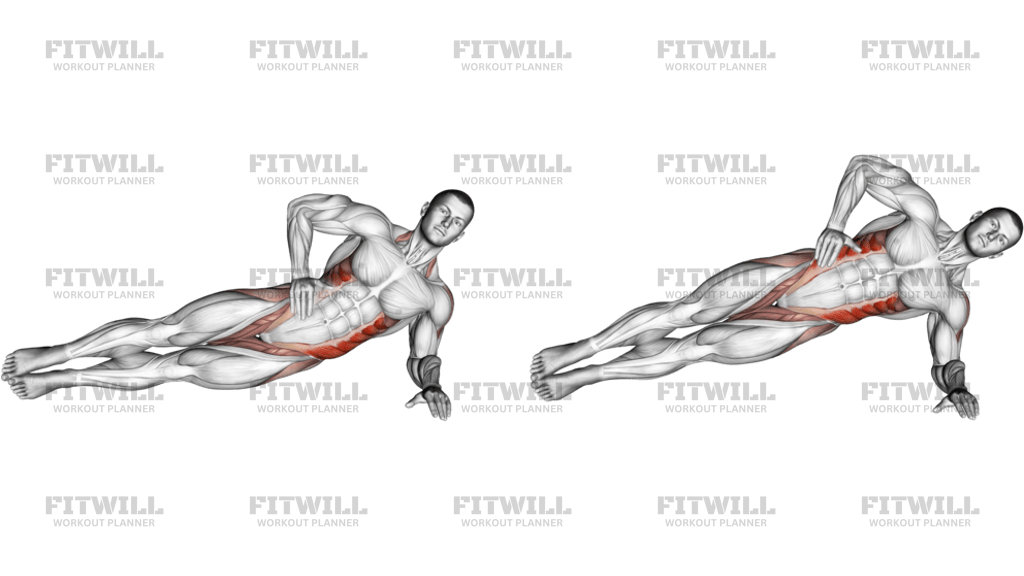
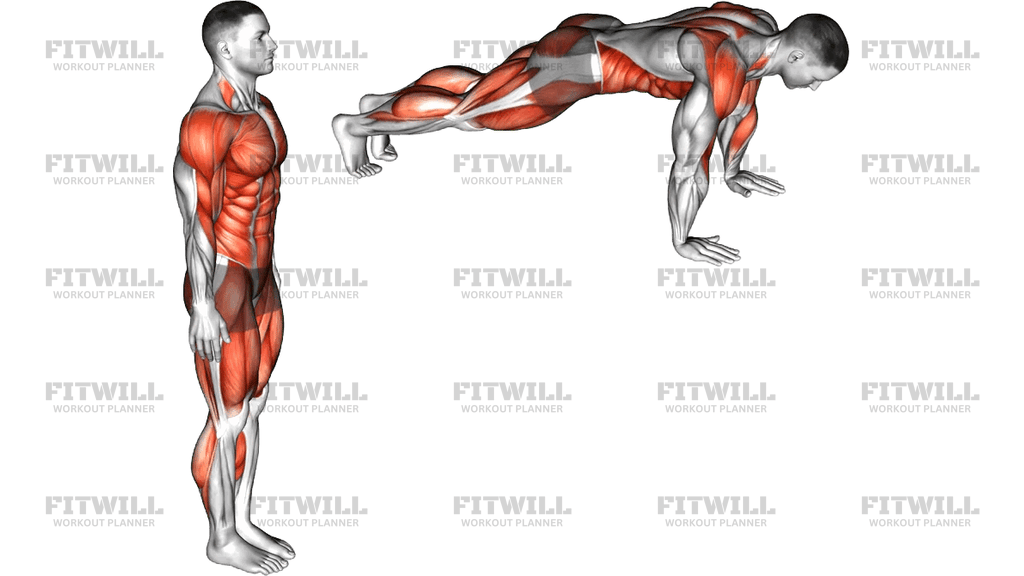
- Hold the plank position or make the small elbow push-up motion shown in the exercise by shifting and pressing through the forearms without losing alignment.
- Keep your neck neutral and look slightly ahead of your hands rather than craning your chin upward.
- Breathe in through the nose to hold position, then exhale as you press, shift, or return with control.
- Finish the set by lowering your knees to the floor and resetting the forearms before standing up.
Tips & Tricks
- Keep the elbows directly below the shoulders; if they drift forward, the front delts take over and the plank gets harder to hold.
- Squeeze the glutes as if you are trying to pull the tailbone toward the heels; that helps prevent the hips from dipping.
- Do not let the rib cage pop forward when the set gets hard, or the low back will arch and the core work drops off.
- Keep pressure even through both forearms instead of leaning hard to one side, especially if you are using the elbow push-up transition.
- Make the movement smaller if the shoulders shrug toward the ears or the neck starts to strain.
- A short, crisp hold is better than a long collapse, so stop the set when the body line starts to break.
- If the forearms feel unstable on a hard floor, use a mat so you can drive straight down without sliding.
- For a harder version, extend the hold time before adding speed or extra transitions.
Frequently Asked Questions
What does the Elbow Push-Up work most?
It mainly trains the core and shoulder stabilizers, with the chest, triceps, glutes, and deep trunk muscles helping keep the body rigid.
Is the Elbow Push-Up good for beginners?
Yes, because the forearm support reduces the pressing demand. Beginners should keep the hold short and focus on a straight line from head to heels.
How should my elbows and forearms be set up?
Put the elbows under the shoulders and keep the forearms parallel or slightly angled inward. That gives you a stable base and reduces stress on the front of the shoulders.
Why do my hips sink during the Elbow Push-Up?
Usually the abs and glutes stop holding tension. Tighten the glutes, shorten the set, and keep the ribs pulled down so the pelvis stays level.
Should I feel this in my shoulders?
Yes, a steady shoulder effort is normal because the deltoids help keep the forearms planted. The feeling should stay controlled, not like a pinch in the front of the shoulder.
Can I make the Elbow Push-Up easier?
Drop to your knees or shorten the hold before the body starts to shake. You can also use a mat and keep the transitions smaller if the full position is too demanding.
What is the biggest form mistake with this exercise?
Letting the low back sag while the elbows stay planted. Once the hips drop, the exercise becomes a back-extension hold instead of a clean plank variation.
How do I progress the Elbow Push-Up over time?
Increase the hold time first, then add controlled transitions or longer sets. Keep the same forearm position and only progress if the body line stays solid.