Wrist Flexor Stretch
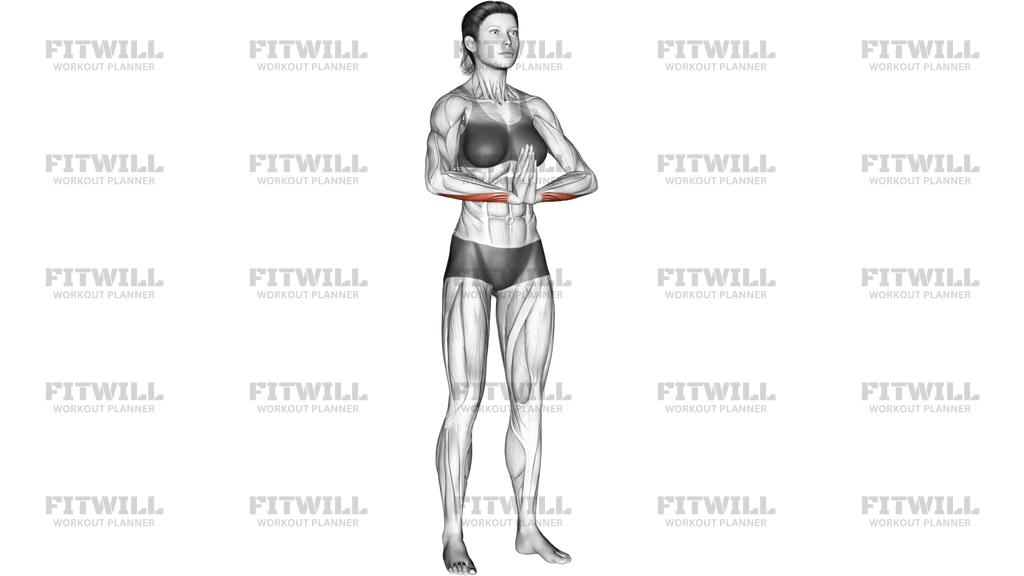
Wrist Flexor Stretch is a standing forearm mobility drill that opens the palm-side tissues of the wrist while teaching you to keep the shoulders quiet and the torso stacked. It is useful after gripping, typing, racquet sports, or upper-body lifting when the forearms feel tight or the wrists feel stiff. The image shows the classic prayer-style setup: hands centered in front of the chest, elbows bent, and forearms held level so you can control the stretch instead of collapsing into it.
The setup matters because the stretch changes a lot with elbow height, hand position, and pressure between the palms. Stand tall with feet under the hips, bring the palms together, and keep the wrists aligned so one side does not twist ahead of the other. Lift or lower the elbows just enough to create a smooth line through the forearms, then use a gentle squeeze of the palms to create tension without cranking on the fingers. The goal is a strong but clean line of tension through the inner forearms, not a sharp pinch in the wrists.
From there, slowly adjust the prayer position until you feel the stretch deepen along the wrist flexors and the front of the forearm. A small downward slide of the hands or a slight shift away from the chest is usually enough; do not bounce or force the wrists past their comfortable limit. Breathe out as you settle into the position, keep the neck long, and let the shoulders stay down so the stretch stays in the forearms instead of creeping into the upper traps.
Use this stretch as part of a warm-up before pressing, pulling, or bar work, or as a cooldown after a session that loaded the grip heavily. It is also useful when wrist position is limited by desk work or climbing-style training. Progress by spending a little longer in the end position and by improving symmetry between the two sides, not by forcing more range. If you feel tingling, sharp pain, or a joint pinch, back off immediately and reduce the angle until the forearm tissues are being stretched comfortably.
Keep the repetition calm and deliberate. The best version of this movement is not the deepest one, but the one you can enter and exit without shrugging, leaning, or letting the wrists collapse. A good stretch leaves the forearms feeling open and the hands feeling ready to grip again, which is the main reason this exercise belongs in recovery, preparation, and mobility work.
[ Workout Log & Planner ]
Put your next workout in Fitwill
Keep your plan and training log ready when you are.


Instructions
- Stand tall with your feet about hip-width apart and bring both hands to the center of your chest, palms touching and elbows bent in front of the ribcage.
- Keep the fingers together and the wrists aligned so the hands stay level instead of twisting to one side.
- Gently press the palms together to create light tension through the forearms before you move any farther.
- Lower the hands a few centimeters or let the elbows drift to the point where you feel a stretch along the wrist flexors.
- Keep the shoulders down and the chest stacked over the hips while you hold the position.
- Breathe out slowly and settle into the range without bouncing or forcing the wrists.
- Hold the stretch for the prescribed time, then ease off the pressure before coming out of the position.
- Repeat with the same hand height and pressure if one side feels tighter than the other.
Tips & Tricks
- If the stretch lands mostly in the fingers, reduce how hard you squeeze the palms and focus on the forearm line instead.
- Keep the elbows in front of the body rather than flaring hard behind you; that keeps the work in the forearms instead of the shoulders.
- Small changes in hand height make a big difference, so move in short increments instead of chasing a deep stretch right away.
- Exhale as you settle into the end position to let the forearm tissues relax.
- Keep the wrist angle even on both sides; if one hand leads, the stretch becomes uneven.
- Avoid locking the elbows aggressively because the goal is a forearm stretch, not a joint lockout.
- Stop before any sharp wrist pinch, numbness, or tingling, especially if you already have tendon irritation.
- This stretch works well after heavy curls, rows, pull-ups, or desk time when the inner forearms feel shortened.
Frequently Asked Questions
What muscle does Wrist Flexor Stretch target most?
It mainly targets the wrist flexors and the inner forearm tissues. The shoulders and biceps stay involved only as posture stabilizers.
How should my hands be positioned in the prayer setup?
Bring the palms together at chest height with the forearms in front of you. Adjust the hand level until you feel a steady stretch instead of wrist compression.
Should I feel this more in my wrists or forearms?
Mostly in the forearms near the palm side. A little wrist sensation is fine, but joint pain is not.
Can beginners do Wrist Flexor Stretch?
Yes. It is beginner-friendly as long as the pressure stays light and the range feels comfortable.
How long should I hold the stretch?
Fifteen to thirty seconds per round is common. Longer holds are fine if the sensation stays smooth and not sharp.
What is the biggest mistake with the hands and elbows?
Forcing the hands too far down or cranking the fingers back usually turns a forearm stretch into a wrist pinch.
When should I use this stretch?
It works well before pressing, rowing, rack work, or after grip-heavy training, typing, or racquet sports.
Can I do one arm at a time if one wrist feels tighter?
Yes. A single-side version can help if one forearm is much tighter, but keep the same palm pressure and elbow height when you switch sides.