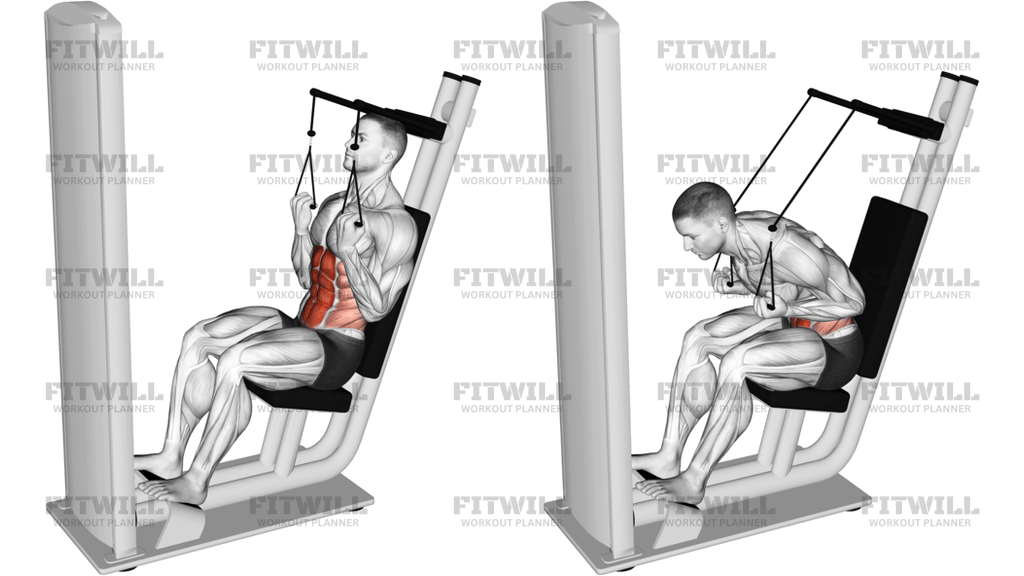
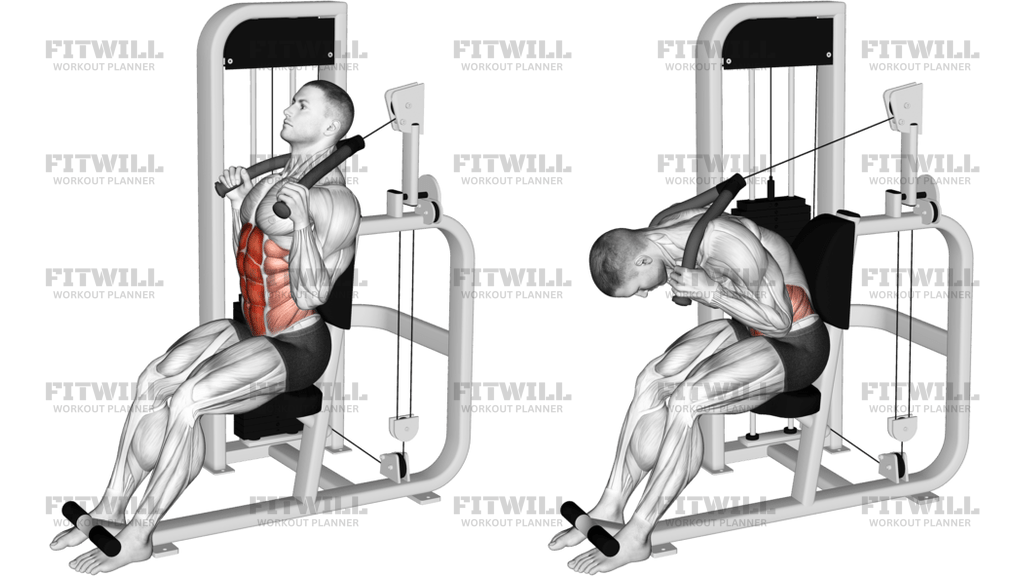
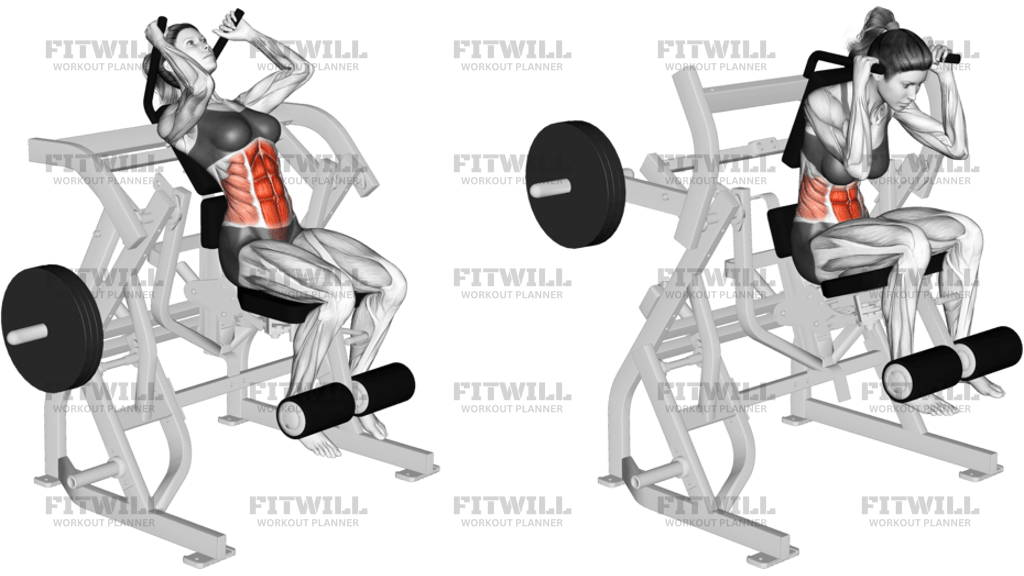
Lever Decline Sit-Up
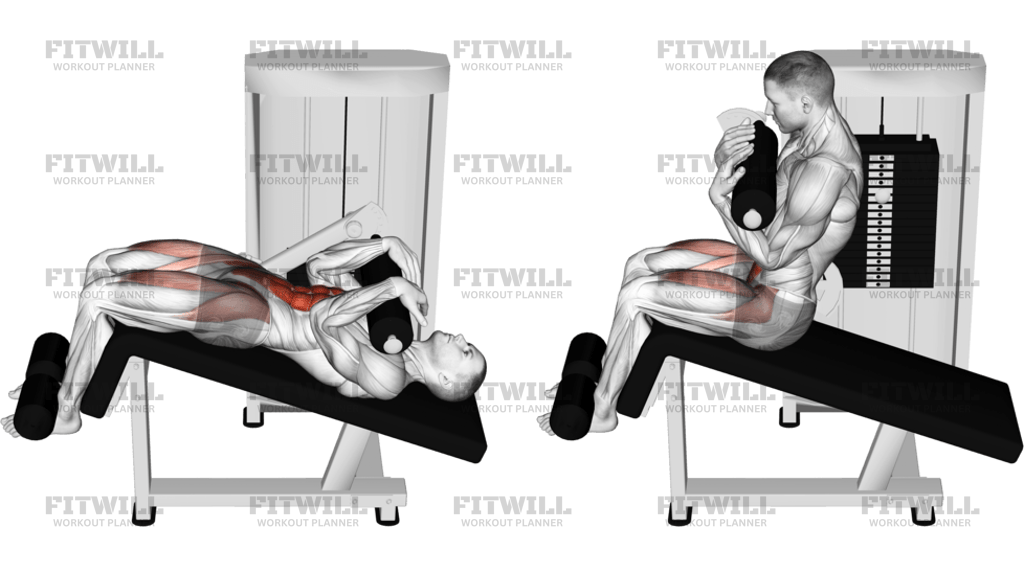
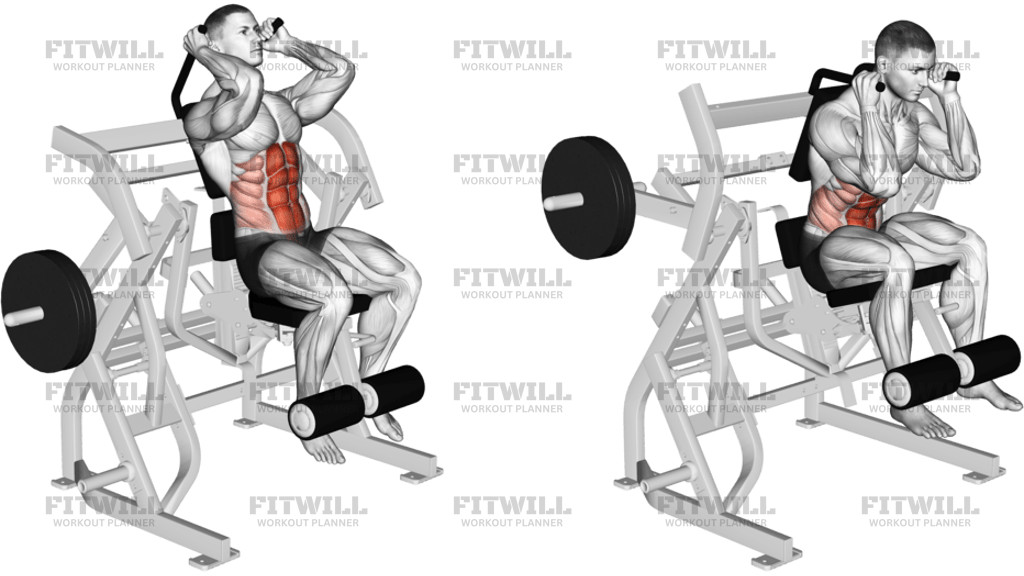
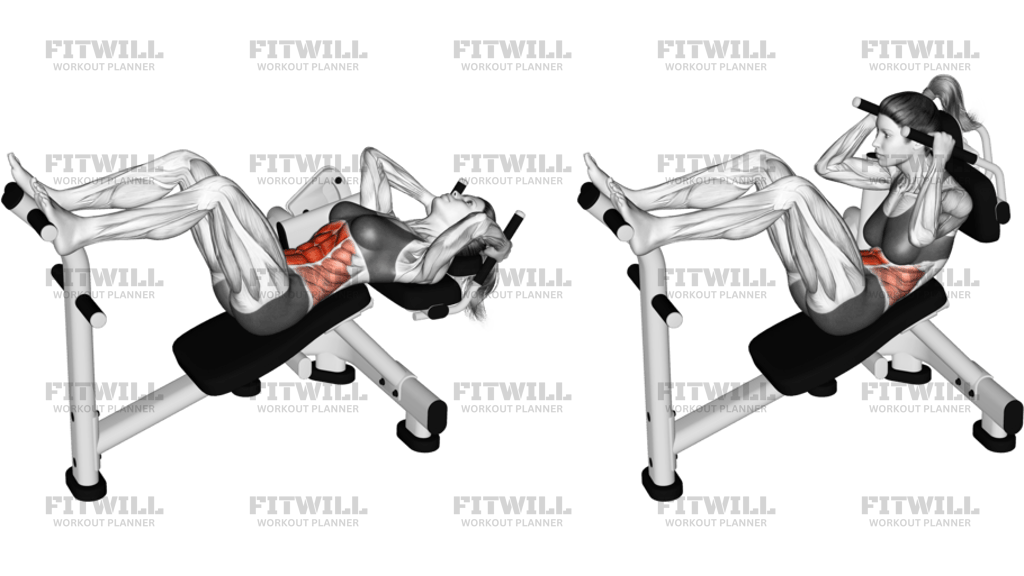
Lever Decline Sit-Up is a machine-assisted abdominal exercise that uses a decline bench and fixed foot support to load trunk flexion more consistently than a floor sit-up. The machine keeps your lower body anchored while the torso moves through a controlled curl, so the set is easier to standardize and easier to progress with added resistance. That makes Lever Decline Sit-Up useful when you want direct abdominal work without having to balance the whole body through every rep.
The main work comes from the abs, with the obliques and hip flexors helping to finish the curl and stabilize the pelvis. In anatomy terms, the emphasis is on the Rectus abdominis, supported by the External obliques, Iliopsoas, and Transversus abdominis. Because the machine fixes your feet and gives you a clear arc, the exercise rewards clean spinal flexion and controlled return more than speed or momentum.
Setup matters more here than it does in a basic floor sit-up. Anchor your ankles under the rollers, sit back on the decline pad, and keep your hips positioned so you can curl without sliding down the bench. If the chest pad or handles are part of your setup, keep them close enough to stabilize the torso without yanking the head or shoulders forward. A stable setup lets the abdominals drive the movement instead of the hips taking over early.
Each rep should feel like a smooth ribcage-to-pelvis crunch, not a throw-and-drop sit-up. As you come up, keep the chin lightly tucked, exhale through the effort, and lift the shoulders and upper back as one unit until you reach the top without jerking. On the way down, lower yourself under control until the back is supported again, then reset before starting the next rep. The tempo should stay deliberate enough that you can feel the abs shorten and lengthen on every repetition.
Lever Decline Sit-Up is a good choice for direct core training, accessory work after compound lifts, or focused abdominal sessions where you want measurable resistance. It can be useful for beginners if the load is light and the range stays smooth, but the exercise gets sloppy quickly when the resistance is too high. Keep the movement strict, limit neck tension, and stop the set when you can no longer curl the trunk without swinging or arching through the lower back.
Fitwill
Log Workouts, Track Progress & Build Strength.
Achieve more with Fitwill: explore over 9600 exercises with images and videos, access built-in and custom workouts, perfect for both gym and home sessions, and see real results.
Start your journey. Download today!




Instructions
- Sit on the decline bench and slide your ankles under the lower rollers so your feet are locked in place.
- Lean back until your hips and lower back are supported by the pad, and keep your torso aligned with the bench.
- Hold the chest pad or handles close to your upper chest with your elbows tucked in and your chin slightly nodded.
- Set your shoulders down and back, then take a breath and brace your midsection before the first rep.
- Exhale and curl your ribcage toward your pelvis, lifting your shoulders and upper back off the pad as one unit.
- Keep the motion in your abs instead of pulling with your arms, jerking your head, or letting your hips drive the rep.
- Reach the top under control, stopping before you lose tension or start bouncing at the peak.
- Inhale and lower slowly until your back is supported again, then reset your ribs and pelvis before the next repetition.
Tips & Tricks
- Keep the chin lightly tucked so the curl comes from your trunk, not from craning the neck forward.
- If the chest pad or handles tempt you to pull, relax the arms and let them only stabilize the torso.
- Lock the ankles firmly under the rollers; sliding feet make the rep turn into a hip-flexor struggle.
- A smaller range is better than a rushed one if your lower back starts to arch on the way up.
- Exhale as the shoulders leave the pad to help the ribs close toward the pelvis.
- Lower slowly enough that you feel the abs lengthen instead of dropping back under the machine's weight.
- Choose a resistance that lets you curl smoothly without rocking the torso or kicking through the hips.
- If your hip flexors dominate, think about bringing the sternum toward the belt line instead of just sitting up.
Frequently Asked Questions
What muscle does Lever Decline Sit-Up target most?
Lever Decline Sit-Up mainly targets the abs, especially the rectus abdominis. The obliques and hip flexors assist, but the movement should still feel like a trunk curl.
How do I set my feet on the Lever Decline Sit-Up machine?
Lock your ankles under the lower rollers so your feet stay fixed as you curl up and lower back down. If the feet slide, the rep usually gets rushed and the hips start doing too much of the work.
Should I hold the chest pad or handles tightly?
Hold them just firmly enough to keep the torso stable. If you pull hard with the arms, the sit-up becomes easier to cheat and the neck tends to tense up.
Why do I feel Lever Decline Sit-Up in my hip flexors?
Some hip flexor involvement is normal, but it should not overpower the abs. Shorten the range slightly, exhale as you curl, and focus on bringing the ribs toward the pelvis instead of simply sitting up.
Is Lever Decline Sit-Up safe for beginners?
Yes, as long as the resistance is light and the movement stays smooth. Beginners should avoid using enough load to jerk the torso or strain the neck.
How low should I lower on the decline bench?
Lower until your upper back and shoulders are supported again, but do not let the movement turn into a drop. The descent should stay slow enough that you can feel the abs controlling the return.
What are the most common mistakes on Lever Decline Sit-Up?
Pulling with the arms, tensing the neck, and using too much momentum are the biggest ones. A shorter, cleaner rep is usually better than a bigger rep that breaks down.
Can I use Lever Decline Sit-Up as a finishing exercise?
Yes, it works well as a core finisher after compound lifts. Keep the load moderate so the last few reps stay controlled rather than turning into a swing.