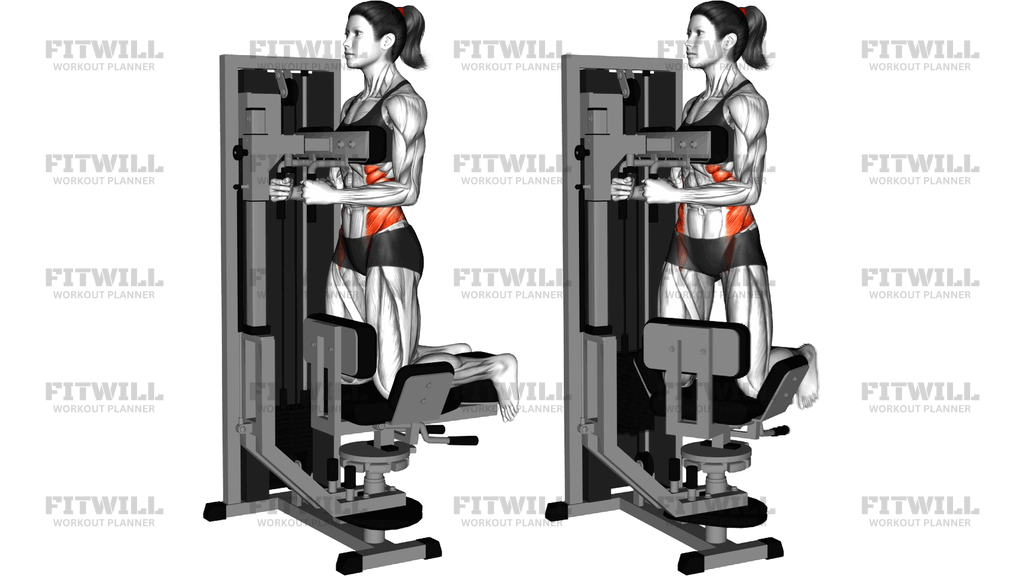
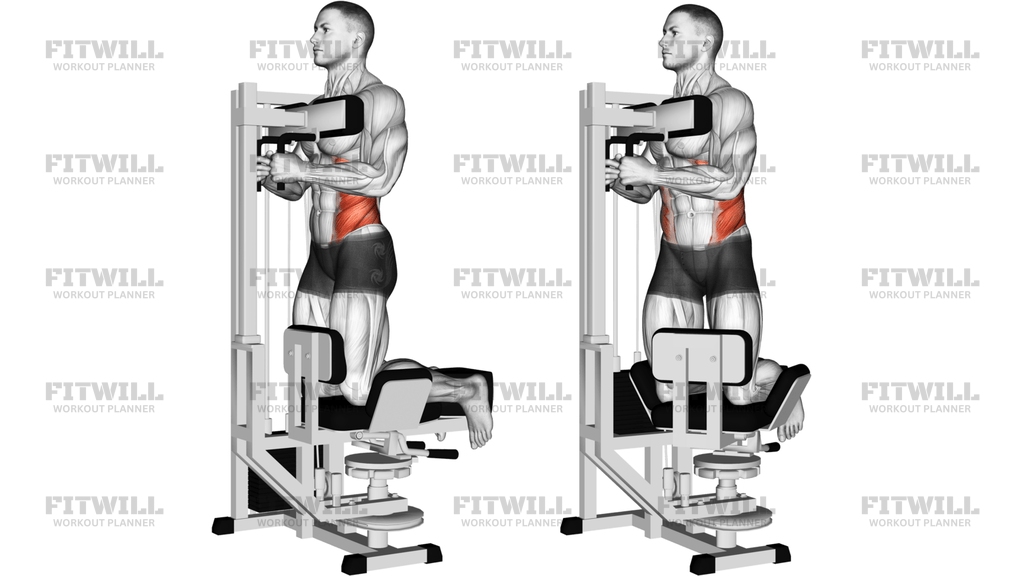
Lever Seated Full Crunch
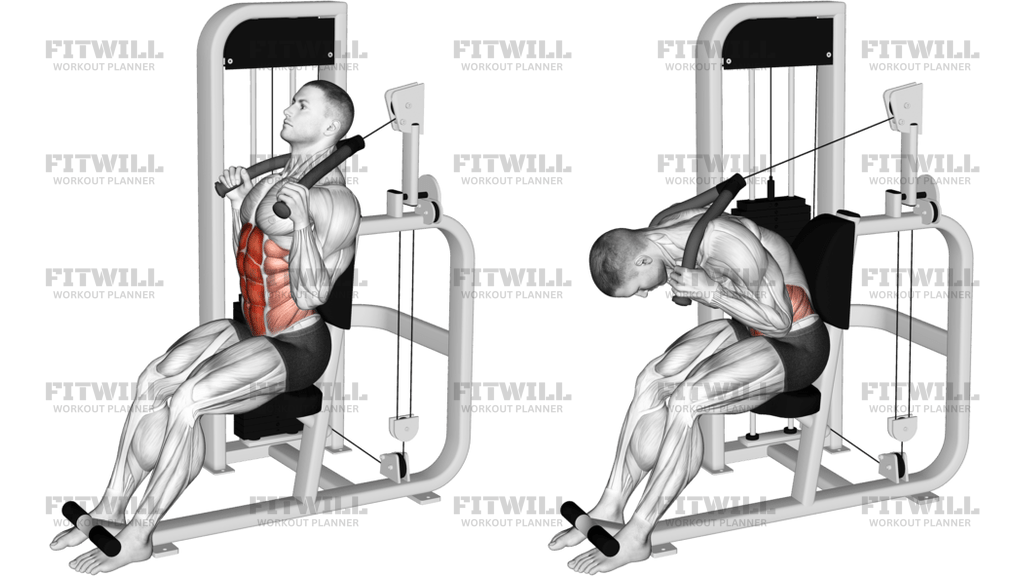
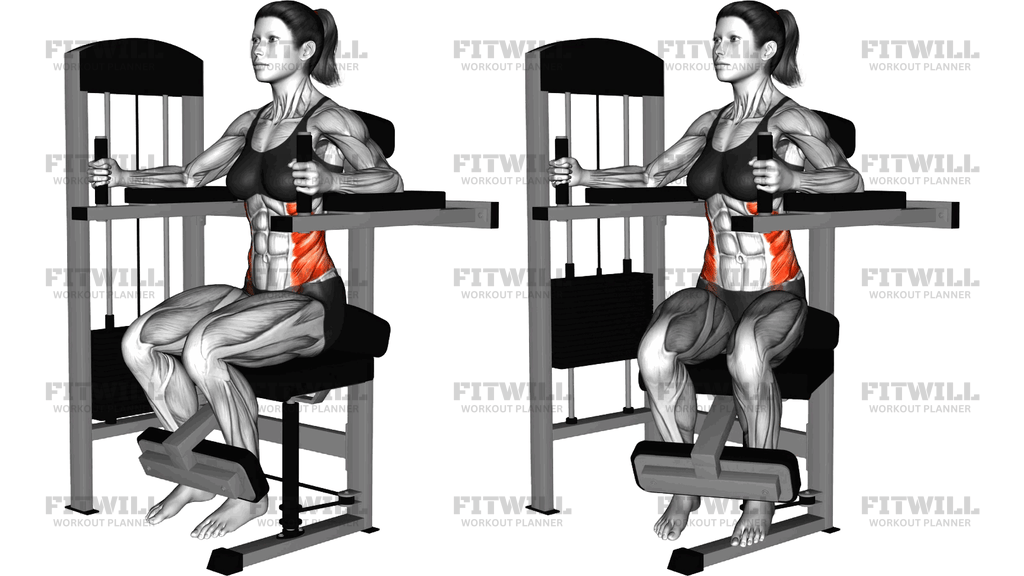
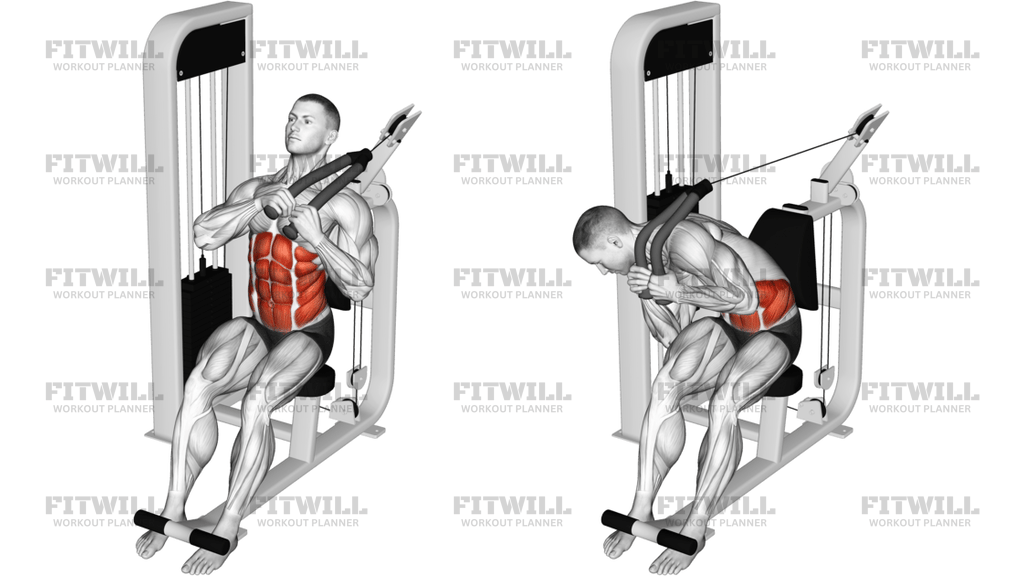
Lever Seated Full Crunch is a machine-based abdominal exercise that trains spinal flexion against a guided load. It is built for deliberate, repeatable crunching rather than momentum, so the machine path helps you keep tension on the midline while limiting extra body swing. When the seat and shoulder pads are adjusted correctly, the movement becomes a clear way to load the abdominals with less guesswork than a free-form floor crunch.
The exercise primarily targets the rectus abdominis, with the obliques, transverse abdominis, and hip flexors helping stabilize and finish the rep. Because the resistance comes from a leverage machine, the setup determines how clean the crunch feels and whether the effort stays in the abs or gets stolen by the hips and neck. A good setup also keeps the pelvis anchored so the torso can curl forward without sliding or folding awkwardly.
This movement works best when you start tall, grip the handles lightly, and think about bringing your ribs toward your pelvis. The goal is not to yank the handles or smash the torso forward, but to roll the spine into a controlled crunch and then reverse under tension. If the machine has a fixed arc, stay with that arc and use a smooth tempo so each rep looks and feels the same.
Lever Seated Full Crunch is useful as accessory core work after bigger lifts, as part of an ab-focused session, or as higher-repetition trunk training when you want a stable machine setup. It is also a practical option for beginners who need clear feedback from the machine and a smaller skill requirement than hanging or unstable core drills. Keep the load conservative enough that you can pause in the shortened position and return without jerking, because heavy machine crunches can quickly turn into hip-driven reps if the weight outruns control.
Treat the machine like a loaded curl for the torso: exhale as you crunch, keep the neck relaxed, and stop the set when the low back starts to arch or the shoulders start to pull the motion. A clean set should feel like the abs are shortening and lengthening on purpose, not like the machine is moving you around. That controlled pattern is what makes the exercise useful for building strong, visible trunk flexion and better bracing under load.
[ Workout Log & Planner ]
Put your next workout in Fitwill
Keep your plan and training log ready when you are.


Instructions
- Adjust the seat so the shoulder pads or upper handles sit across your upper chest and the back pad supports your torso comfortably.
- Sit tall with your hips set back in the seat, feet planted on the floor or foot supports, and your lower body stable before you start.
- Hold the handles lightly with elbows close to your sides; do not pull with your arms.
- Inhale, brace your midsection, and begin the rep by curling your ribs down toward your pelvis.
- Crunch your torso forward along the machine path until your abs are fully shortened and your upper back rounds under control.
- Squeeze briefly at the bottom without bouncing, jerking, or letting your shoulders drive the motion.
- Reverse the movement slowly until you are back near the starting position and still controlling the load.
- Reset your breath at the top and repeat for the planned number of reps.
Tips & Tricks
- Set the seat height so the pads contact your upper torso, not your neck or face.
- Think about curling the ribs toward the pelvis instead of simply hinging at the hips.
- Keep your grip light enough that your arms stay passive through the whole rep.
- Tuck your chin slightly so the neck does not lead the crunch.
- Use a load that lets you pause at the bottom for a brief squeeze without losing position.
- Lower under control; the return should feel like the abs are resisting the stack, not relaxing into it.
- If your low back arches or slides off the pad, shorten the range and reduce the weight.
- Exhale through the crunch to help keep the ribcage down and the trunk braced.
Frequently Asked Questions
What does Lever Seated Full Crunch work most?
It mainly trains the rectus abdominis, with the obliques and deeper core muscles helping control the trunk.
How is this different from a floor crunch?
The leverage machine gives you a fixed resistance path, which makes it easier to load and repeat the crunch with consistent form.
Should I pull with my hands on the handles?
No. Use the handles for light support only and let your abs drive the movement.
How far should I crunch down?
Crunch until your ribs move toward your pelvis and the abs are fully shortened, but stop before you have to jerk or collapse your neck.
Can beginners use this machine?
Yes. Start with a light load and a small, controlled range of motion until you can keep your torso stable.
Why do my hip flexors take over?
Usually the seat is set poorly or the weight is too heavy, causing you to fold from the hips instead of curling the trunk.
How should I breathe during the rep?
Exhale as you crunch down, then inhale as you return to the top under control.
What is the most common mistake on this exercise?
Using too much weight and turning the crunch into a fast hip-driven swing instead of a controlled abdominal contraction.