Hyperextension Version 2
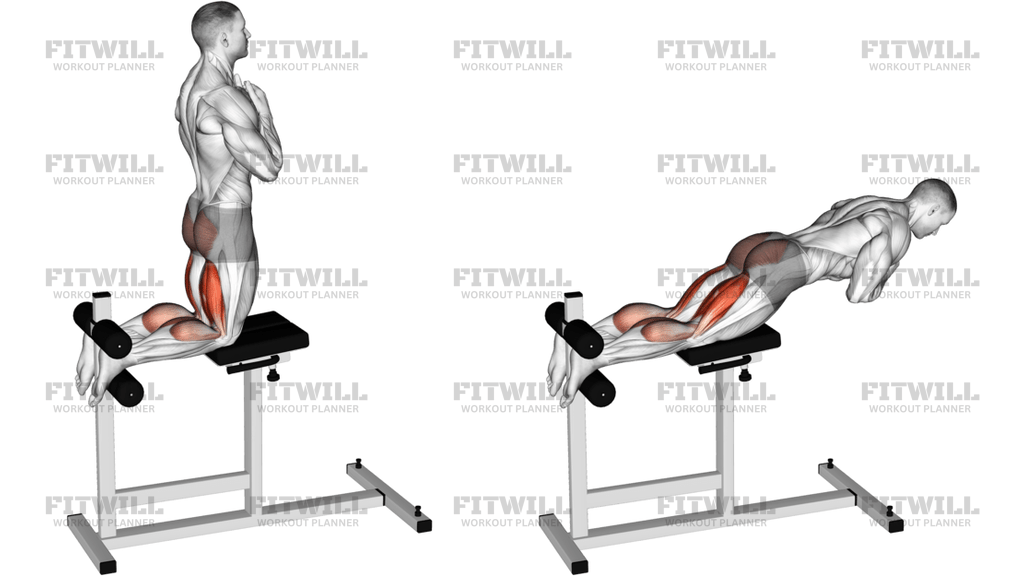
Hyperextension (Version 2) is a bodyweight back-extension pattern built around a supported hip hinge. It trains the posterior chain with a strong emphasis on the hips, glutes, hamstrings, spinal erectors, and the deep core muscles that keep the torso from folding or overextending. The movement works best when the setup is stable and the range is small enough to stay honest, because the goal is to move through the hips rather than swing the torso.
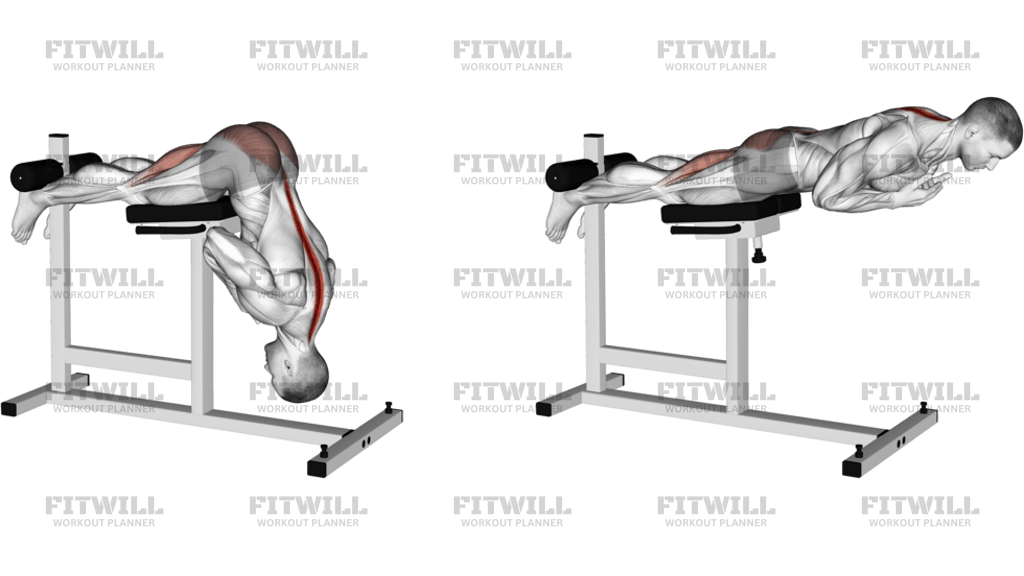
In the usual setup, your hips rest on the edge of a bench or Roman-chair style pad, your legs are anchored or planted for stability, and your torso hangs forward in a controlled position before you begin each rep. From there, you extend through the hips until your body forms a long line, then lower again under tension. That makes this version useful for learning control, building endurance in the lower back and glutes, and reinforcing a clean hip hinge without needing external load.
This exercise is most effective when you treat the top position as a finish, not an invitation to crank your lower back. A strong rep finishes when the glutes and spinal erectors are working together and the ribs stay down. If the torso is swinging, the neck is jutting forward, or the lower back is taking over by itself, the set has usually become too fast or too large in range.
Hyperextension (Version 2) fits well as accessory work in lower-body sessions, posterior-chain circuits, or warmups for squatting, hinging, running, and general trunk stability. Beginners can use it with body weight only and a short range of motion, while more experienced lifters can add a plate or dumbbell once the hinge pattern stays clean. The safest progression is the one that keeps the pelvis planted, the spine controlled, and the movement smooth from the first repetition to the last.
Fitwill
Log Workouts, Track Progress & Build Strength.
Achieve more with Fitwill: explore over 9600 exercises with images and videos, access built-in and custom workouts, perfect for both gym and home sessions, and see real results.
Start your journey. Download today!




Instructions
- Set your hips on the edge of a back-extension bench or sturdy support, then secure your legs so your torso can hinge freely at the hips.
- Start with your body draped forward, chest down, spine long, and your neck in line with your torso rather than craned upward.
- Brace your midsection and lightly squeeze your glutes before the first rep so the movement starts from a controlled position.
- Lower your torso by hinging at the hips until you feel the posterior chain lengthen, keeping the motion smooth and deliberate.
- Stop the descent before you lose control of the lumbar spine or let the shoulders collapse forward.
- Drive your torso back up by extending the hips and squeezing the glutes until your body reaches a straight line.
- Pause briefly at the top without leaning back into an exaggerated arch or throwing the head up.
- Lower yourself back to the start under control, inhale on the way down, and repeat for the planned reps.
Tips & Tricks
- Keep the pad or bench edge across the front of your hips, not your stomach, so the hinge stays free and the rep does not turn into a crunch.
- Think about pushing the hips into extension rather than swinging the chest upward.
- A small pause at the top helps you feel the glutes and spinal erectors working together instead of relying on momentum.
- Do not chase height with your torso if it forces a hard lumbar arch at the finish.
- If your hamstrings take over early, shorten the descent and keep the pelvis steadier against the support.
- Keep your ribs tucked so the lower back does not flare as you rise.
- Use body weight first; add load only after every rep looks identical from the side.
- If your neck feels tense, pick a fixed spot on the floor and keep your gaze there throughout the set.
Frequently Asked Questions
What muscles does Hyperextension (Version 2) work?
It mainly trains the glutes, hamstrings, spinal erectors, and deep core stabilizers, with the hips driving most of the motion.
Is Hyperextension (Version 2) a beginner-friendly exercise?
Yes. Beginners should use body weight only, keep the range short, and focus on a smooth hip hinge before adding load.
Where should my hips sit on the bench?
The front edge of the pad should sit across the hip crease so your torso can hinge freely without the bench digging into your stomach.
How far should I lift on each rep?
Lift only until your torso and legs form a straight line. Going higher usually turns the rep into a lower-back arch instead of a clean extension.
What is the most common mistake on this movement?
Rushing the rep and using momentum. The exercise should look controlled on the way down and on the way up.
Should I feel this in my lower back?
Yes, but the effort should feel shared between the lower back and glutes. If the low back is taking over sharply, reduce the range or slow down.
Can I add weight to Hyperextension (Version 2)?
Yes. Hold a plate or dumbbell only after you can keep every rep strict with body weight and no swinging.
How is this different from a floor hyperextension?
This version uses a supported bench-style setup, which gives you a longer hinge and more range through the hips than the floor version.