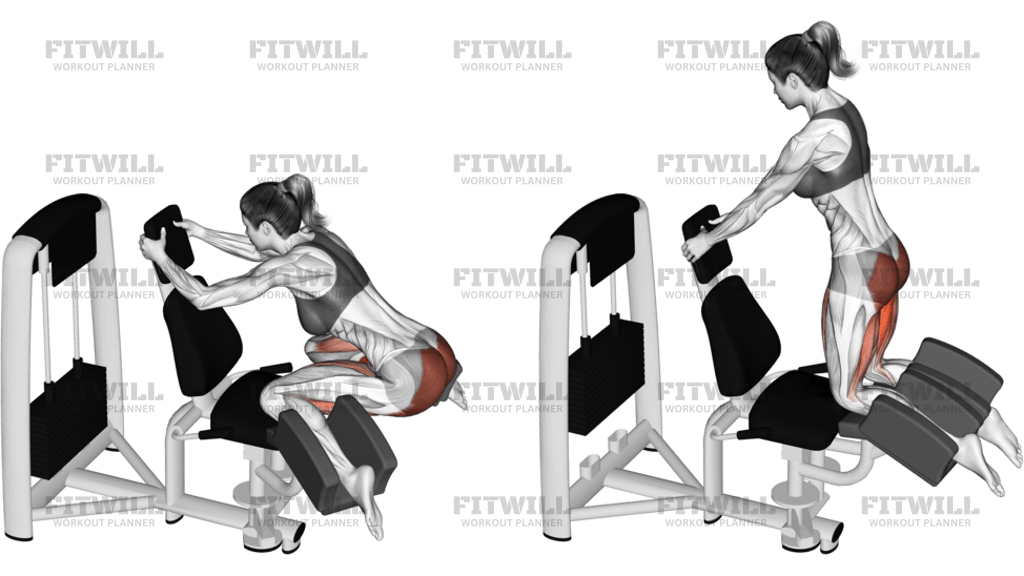
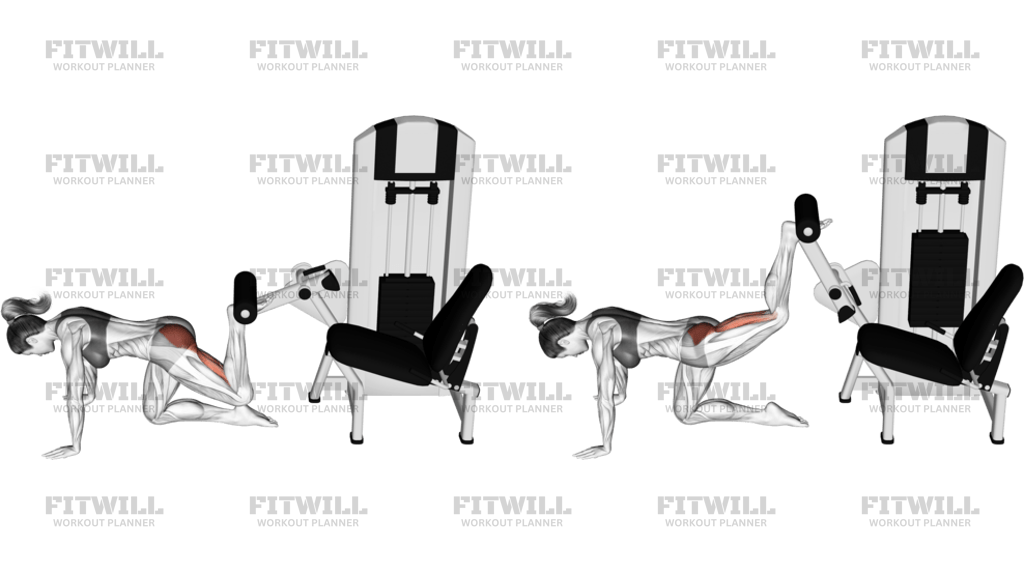
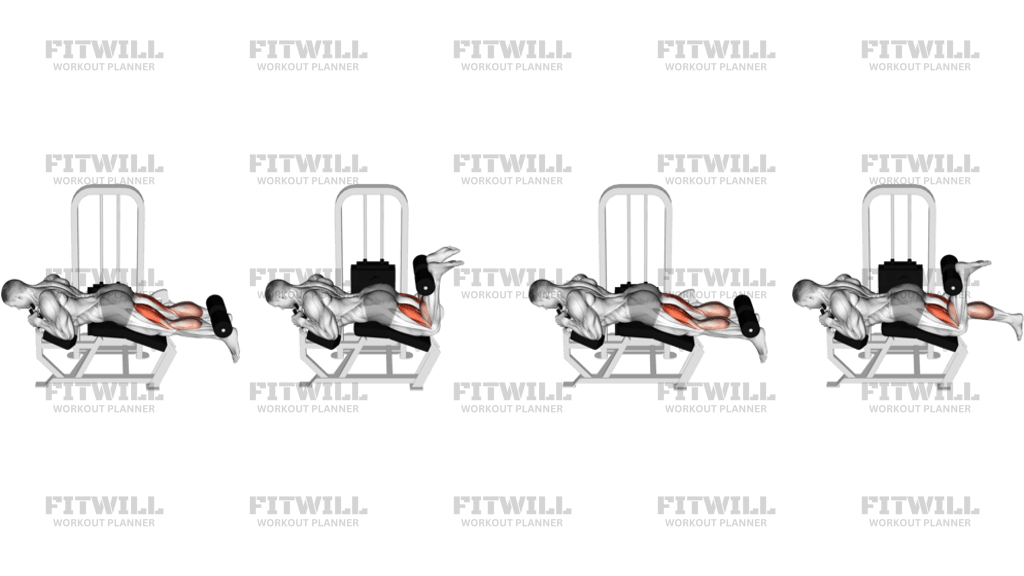
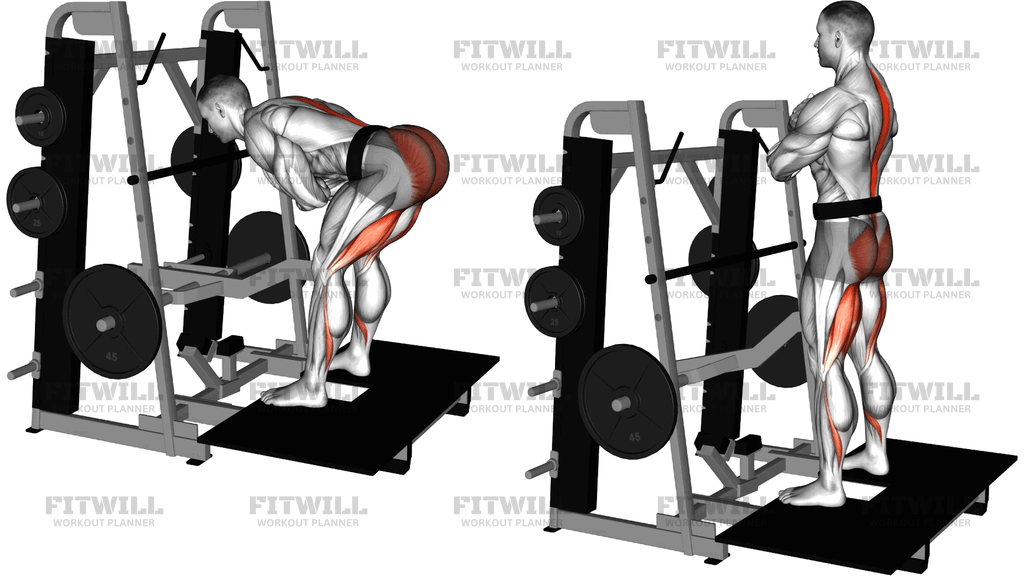
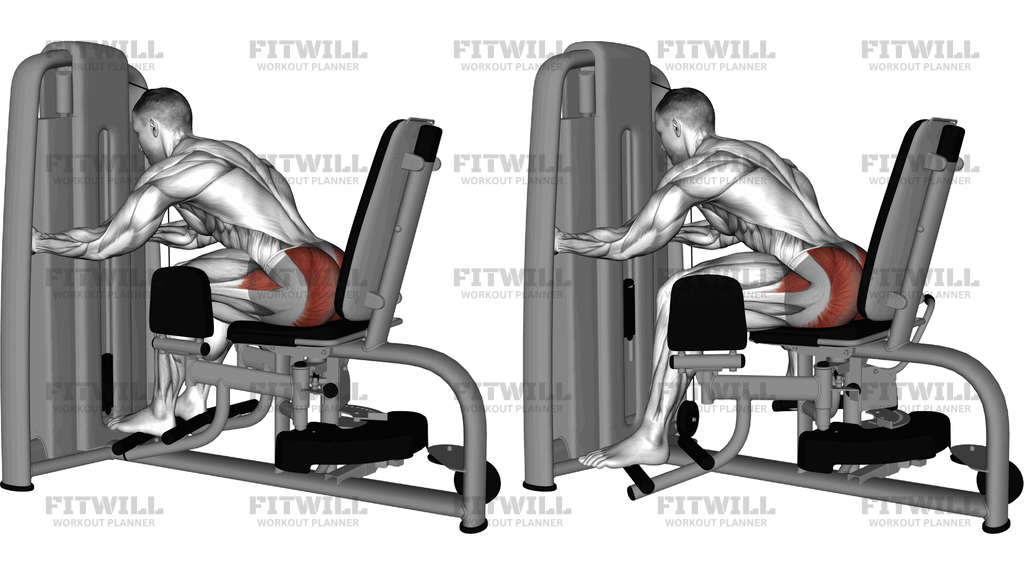
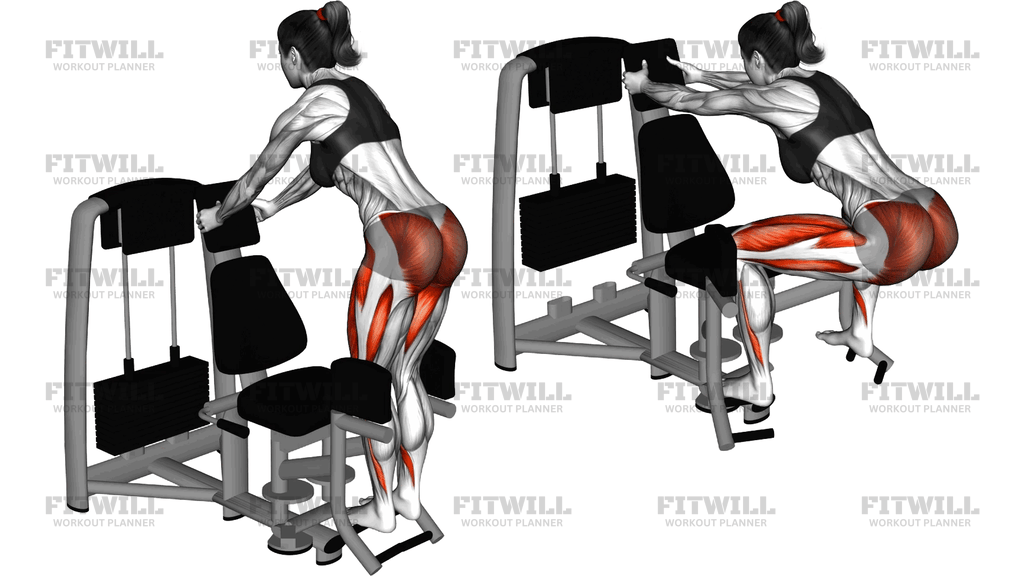
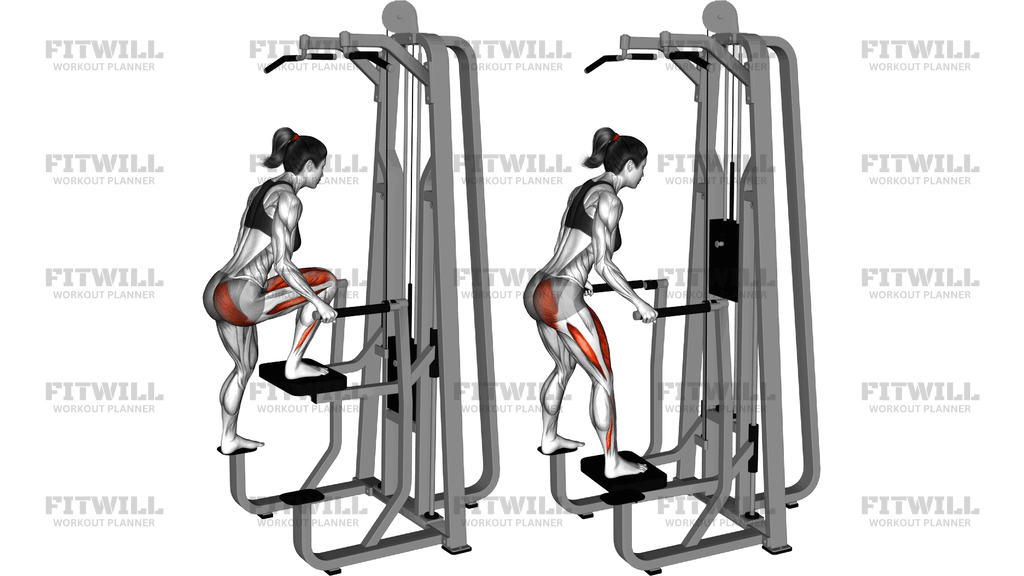
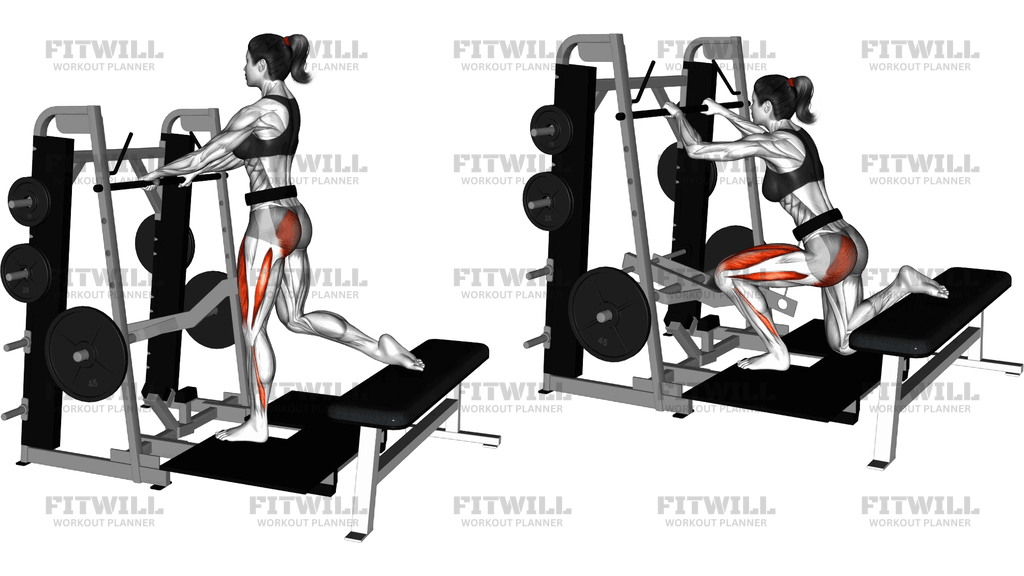
Lever Standing Rear Kick
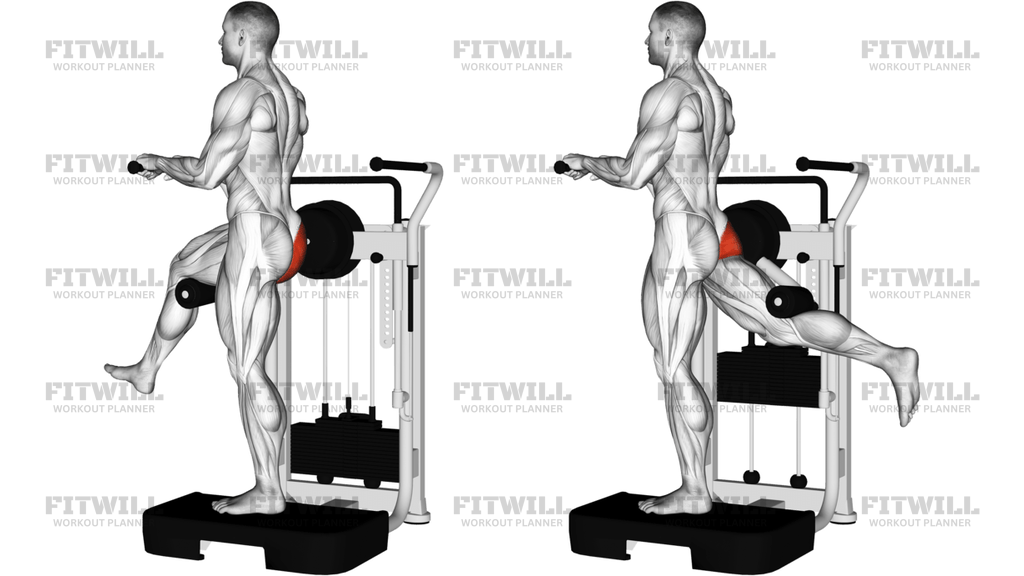
Lever Standing Rear Kick is a machine-assisted glute exercise built around a guided hip extension. One foot stands on the platform while the working leg drives the lever arm backward, letting you train the glutes with a fixed path and less balance demand than a free-standing kickback. The handles and pad help you stay organized so the rep stays focused on the hip instead of on keeping yourself upright.
This movement is especially useful when you want direct glute work without adding much stress to the lower back. It fits well as accessory work after squats or deadlifts, as a glute activation drill before heavier lower-body training, or as a higher-rep finisher when you want local fatigue and a strong squeeze. The machine setup makes it easier to keep the pelvis square, which matters more here than chasing a huge range of motion.
Start by planting the standing foot firmly, holding the handles, and positioning the working leg against the lever pad so it feels secure through the whole path. Keep a soft bend in the kicking knee, stack your ribs over your pelvis, and avoid twisting the torso toward the moving leg. The rep should begin from a stable base, not from momentum or a swing through the trunk.
Press the working leg backward by extending the hip, then finish the rep with the glute rather than with a lumbar arch or a hip rotation. Pause briefly near the top if you can keep the machine steady, then lower the lever slowly until the glute stays loaded and the stack settles under control. Breathing should stay smooth and predictable so each rep looks the same instead of turning into a heave.
Lever Standing Rear Kick works well for beginners, but it rewards patience more than load. Light to moderate resistance, a clean setup, and a controlled return usually produce the best glute stimulus. If the stance becomes unstable, the hips open up, or the low back starts to take over, shorten the range and make the rep stricter before adding weight.
Fitwill
Log Workouts, Track Progress & Build Strength.
Achieve more with Fitwill: explore over 9600 exercises with images and videos, access built-in and custom workouts, perfect for both gym and home sessions, and see real results.
Start your journey. Download today!




Instructions
- Stand on the platform with the support foot planted flat and the working leg set against the lever pad, then grip the handles and square your hips to the machine.
- Keep a soft bend in the working knee and settle the pad against the back of the thigh or lower leg so the contact point feels secure before you start.
- Stack your ribs over your pelvis and brace lightly through the midsection so the lower back stays out of the rep.
- Drive the working leg backward by extending the hip, keeping the torso tall and the pelvis facing forward.
- Press back only as far as you can without twisting open the hips or arching the low back.
- Squeeze the glute at the end of the kick, then pause briefly if the machine stays still.
- Return the lever forward under control until the working leg comes back to the starting bend and the weight stack settles.
- Repeat for the planned reps, then step off the platform carefully before switching sides.
Tips & Tricks
- Root the standing foot through the heel and forefoot so the platform stays stable while the working leg moves.
- If you feel the low back taking over, shorten the kick and keep the ribs down instead of forcing a bigger rear position.
- A small forward lean is acceptable, but it should come from the hip hinge, not from collapsing the chest.
- Keep the pelvis square; opening the hip to cheat the top position usually turns the rep into a twist.
- Use a slower return than the kick-back so the glute stays under tension instead of letting the lever drop.
- Check the pad height before loading up; if it slides too high or low, the lever path gets awkward fast.
- Moderate reps usually work better than very heavy singles because the machine can be easy to jerk with momentum.
- Stop the set when the support handles start doing the work that your standing leg should be doing.
Frequently Asked Questions
What muscle does Lever Standing Rear Kick target most?
It primarily targets the glutes, especially the working-side glute max, with the hamstrings and core helping keep the machine path controlled.
Can beginners perform this exercise?
Yes. The leverage machine gives you balance support, so beginners can learn the hip extension pattern with light resistance and a steady tempo.
Where should the pad sit on my leg?
It should rest securely against the back of the working leg at the machine's contact point, high enough to stay stable but not so high that it digs into the hip.
Should my torso stay upright on Lever Standing Rear Kick?
Mostly yes. A slight forward lean is fine, but the torso should stay organized and the lower back should not turn the rep into an arching motion.
What is the biggest mistake on this machine?
The most common mistake is swinging the torso or rotating the hips open to make the kick look bigger. Keep the pelvis square and shorten the range if needed.
Can Lever Standing Rear Kick replace cable kickbacks?
Yes, it can fill a similar glute-isolation role, but the machine gives you a more fixed path and less demand on balance.
How heavy should I go on Lever Standing Rear Kick?
Use enough load to feel the glute work, but not so much that the lever jerks or your standing side starts shifting to help.
When does this exercise fit best in a workout?
It works best after compound lower-body lifts or as a higher-rep glute accessory when you want extra volume without much spinal loading.