Standing Hip Out Adductor Stretch
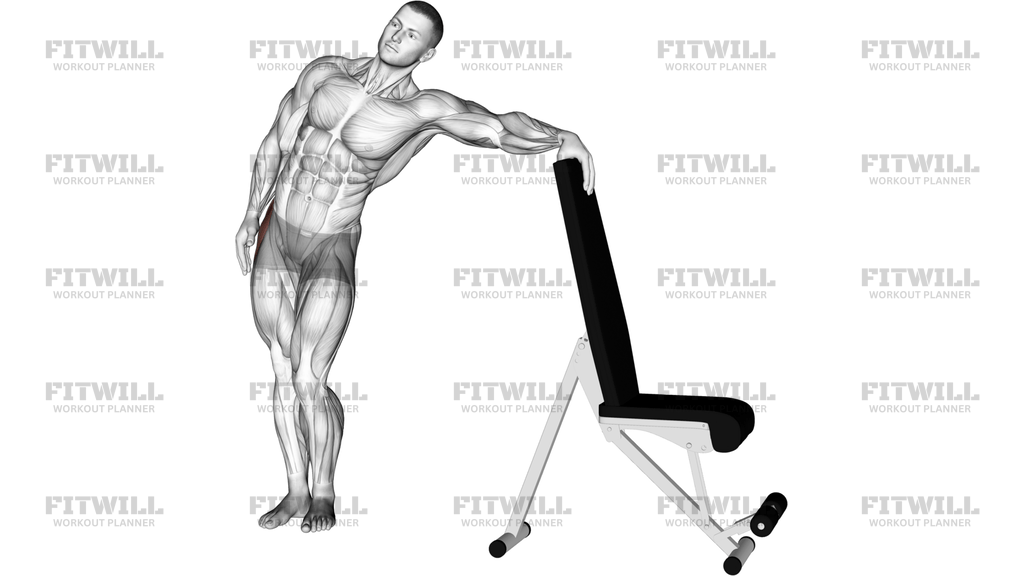
Standing Hip Out Adductor Stretch is a standing inner-thigh mobility drill that uses a light support, usually a bench or similar stable surface, to help you settle into a controlled adductor stretch. The image shows a side-on setup with one hand resting on the support while the body leans slightly away from it, which makes balance easier and lets you focus on the stretch instead of fighting to stay upright.
This exercise is mainly about opening the adductors and surrounding hip tissues with a position you can hold calmly. It is useful when the inner thigh feels tight from squats, lunges, change-of-direction work, or long periods of sitting. The support hand is there to keep the torso from drifting and to help you shift the hips cleanly, not to hang your body weight off the bench.
The key setup detail is the lower body. Stand tall, keep the feet close and organized, and then shift the pelvis outward until you feel a clear stretch along the inner thigh of the lengthened leg. The torso can tilt a little, but the motion should come mostly from the hips and pelvis rather than a deep side bend through the spine. If the chest collapses or the shoulders twist, the stretch stops being specific and turns into a balance exercise.
As you hold the position, breathe slowly and let the exhale soften the groin and inner thigh. The goal is not to force the biggest possible range; it is to find a position you can own without pinching at the hip or knee. A small change in foot angle, stance width, or how far you shift away from the support can make the stretch much cleaner.
Use it as part of a warm-up, cooldown, or dedicated mobility block when you want to restore hip comfort and improve lower-body range of motion. Beginners can use it easily because the support hand reduces balance demands, but the stretch still needs patience and control. If you feel sharp pain, numbness, or a pinch in the hip joint, shorten the range and recheck the stance before trying again.
[ Workout Log & Planner ]
Put your next workout in Fitwill
Keep your plan and training log ready when you are.


Instructions
- Stand beside a bench or other sturdy support and rest one hand lightly on the top edge for balance.
- Set your feet close together, keep the toes mostly forward, and square your hips before you start the stretch.
- Keep the standing knee soft, lift the chest, and brace lightly so your torso stays long instead of folding at the waist.
- Shift your hips away from the support side until you feel a clear stretch along the inner thigh of the lengthened leg.
- Let the pelvis move outward as one piece; do not twist your shoulders toward the bench or let the support arm carry your weight.
- Hold the end position for a controlled stretch while breathing slowly through the nose or a relaxed mouth exhale.
- If the stretch feels too sharp, shorten the stance or reduce the hip shift until the pull stays in the adductors, not the groin joint.
- Return to the tall starting position under control, reset your feet, and repeat on the other side for the same hold time.
Tips & Tricks
- Use the bench only for balance. If you lean heavily into the hand, the stretch usually shifts away from the adductors.
- Keep the standing knee unlocked. A hard lock often sends tension into the knee and makes the pelvis harder to shift.
- Think about moving the hip away from the support, not about side-bending the ribs. The stretch should feel like the inner thigh lengthens, not the waist compresses.
- A small foot angle change can help. If the pull lands in the hip crease, turn the toes slightly out and try again.
- If both feet are planted too wide, the motion turns into a wide-stance squat. Keep the stance narrow enough that the inner thigh stretch is obvious.
- Breathe out as you settle deeper. The exhale should soften the groin without making you bounce.
- Stop the set if you feel a pinching sensation in the front of the hip or a sharp tug near the groin attachment.
- Hold each side long enough to feel the tissue relax before you add more range. Rushing the stretch usually makes it less useful.
Frequently Asked Questions
What does Standing Hip Out Adductor Stretch target?
It mainly targets the adductors, especially the inner-thigh tissues that tighten when the hips feel restricted.
Why does the image show a bench?
The bench gives you a light point of contact so you can shift the hips away from it without losing balance.
Where should I feel the stretch?
You should feel it along the inner thigh and groin side of the leg that is being lengthened, not in the lower back.
Can I keep my support hand on the bench the whole time?
Yes. The hand should stay light and steady so it helps balance without taking over the movement.
What is the most common mistake with this stretch?
Most people collapse sideways through the waist instead of shifting the hips cleanly away from the support.
Can beginners do this stretch?
Yes. It is beginner-friendly because the bench reduces balance demands and you can control the stretch with a small hip shift.
How long should I hold each side?
A short to moderate hold is usually enough, as long as you can breathe calmly and keep the pull in the inner thigh.
What if I feel pinching in the hip?
Shorten the stance, reduce how far you shift away from the bench, and check that the toes are not turned too far in.