Leaning Abductor Stretch
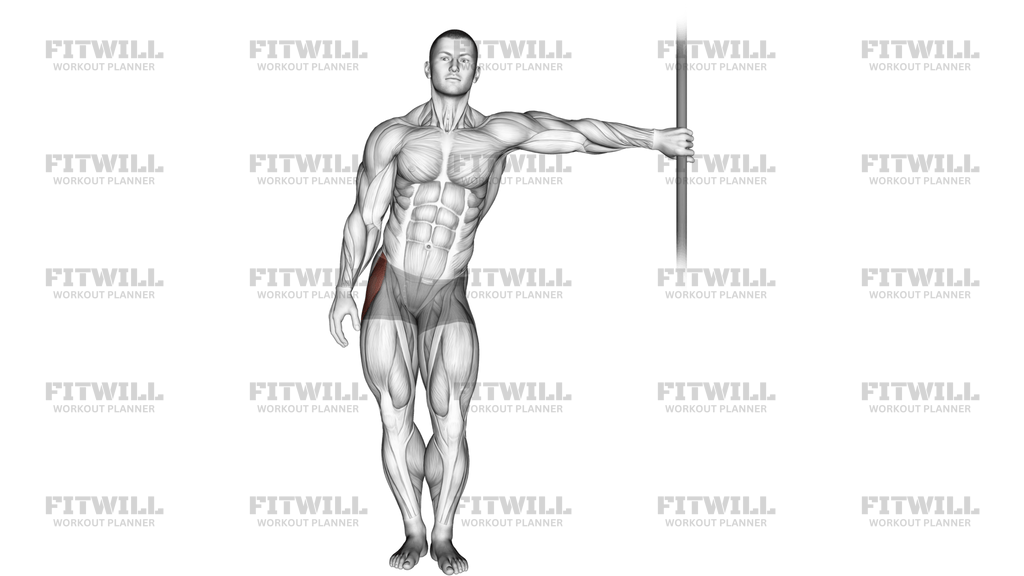
Leaning Abductor Stretch is a standing mobility drill for the outer hip and upper glute. One hand anchors to a pole or upright support while the body leans away, creating a long line from the shoulder through the hip on the stretched side. The movement is simple, but the setup decides whether you feel a clean side-hip stretch or an awkward twist through the low back.
The exercise is most useful when the hip abductors and the tissue around them feel tight after running, squatting, lateral work, or long periods of sitting. In the image, the support arm stays long and the torso stays tall while the lower body finds a narrow stance. That arrangement helps isolate the outer hip instead of turning the drill into a generic side bend.
Good execution depends on keeping the ribs stacked over the pelvis as you lean. The goal is to open the outside of the hip, especially the glute medius/minimus and the upper lateral thigh area, without hiking the shoulder, collapsing the chest, or forcing the pelvis to rotate open. A small shift in foot placement or torso angle can change where the stretch lands, so start conservatively and refine the position before going deeper.
Use a slow inhale to prepare, then exhale as you ease farther from the support until you feel a strong but comfortable pull. The sensation should stay broad and controlled, not sharp in the groin, pinchy at the front of the hip, or strained in the low back. This is best treated as a mobility and recovery exercise, not a max-effort stretch. It works well in a warm-up, cooldown, or between lower-body sets when you want to restore hip range without getting on the floor.
[ Workout Log & Planner ]
Put your next workout in Fitwill
Keep your plan and training log ready when you are.


Instructions
- Stand beside a sturdy pole or upright support and hold it with the hand on the side you want to stretch.
- Keep that arm long, the shoulder relaxed, and the hand near shoulder height on the post.
- Bring the feet close together or cross the non-stretched leg behind the other to narrow the base.
- Stack the ribs over the pelvis so the torso stays tall before you lean.
- Shift the hips slightly away from the support and let the upper body tilt with the same shape.
- Lean farther from the pole until you feel the outer hip of the supported side lengthen.
- Keep the chest facing mostly forward and avoid rotating the pelvis open.
- Breathe slowly and hold the end range for 15 to 30 seconds without bouncing.
- Return to standing under control, reset your feet, and repeat on the opposite side.
Tips & Tricks
- Keep the support-side arm straight enough to create a clean line, but do not lock the elbow hard.
- If the stretch moves into the low back, shorten the lean and bring the ribs back over the pelvis.
- Crossing the legs narrows the stance and usually increases the outer-hip sensation without needing more force.
- A small exhale often gives more range than trying to yank the body farther away from the post.
- Do not shrug the support shoulder toward the ear; let the neck stay long while you lean.
- If the front of the hip pinches, reduce the side bend and keep the toes pointed more forward.
- Use the same setup on both sides so you can compare which hip is tighter instead of guessing.
- Hold the stretch long enough for the hip to relax, but leave while the position still feels smooth.
- A mild pull in the outer glute and upper lateral thigh is the desired sensation.
Frequently Asked Questions
What does Leaning Abductor Stretch target most?
It primarily stretches the outer hip and upper glute on the side that is leaning away from the support.
Which hand should hold the pole or upright support?
Use the hand on the same side you want to stretch so the support arm can help you create a controlled side lean.
How far should I lean away from the support?
Only far enough to feel a strong, even stretch along the outer hip. If you feel pinching or low-back tension, back off.
Why does the exercise use a narrow stance or crossed legs?
A narrower base helps isolate the side of the hip and keeps the stretch from turning into a general whole-body side bend.
Should I feel this in my low back?
No. Most of the sensation should stay in the outer hip, glute, or upper lateral thigh. Reduce the lean if your back starts doing the work.
Is this better before or after a workout?
It works well either as a gentle warm-up stretch or as a cooldown mobility drill after lower-body training.
Can I do this without a pole?
Yes. Any sturdy vertical support, such as a rack post, doorway edge, or fixed machine frame, can work.
How long should I hold each side?
A 15 to 30 second hold is a practical starting point. Repeat for a few rounds if you need more mobility work.