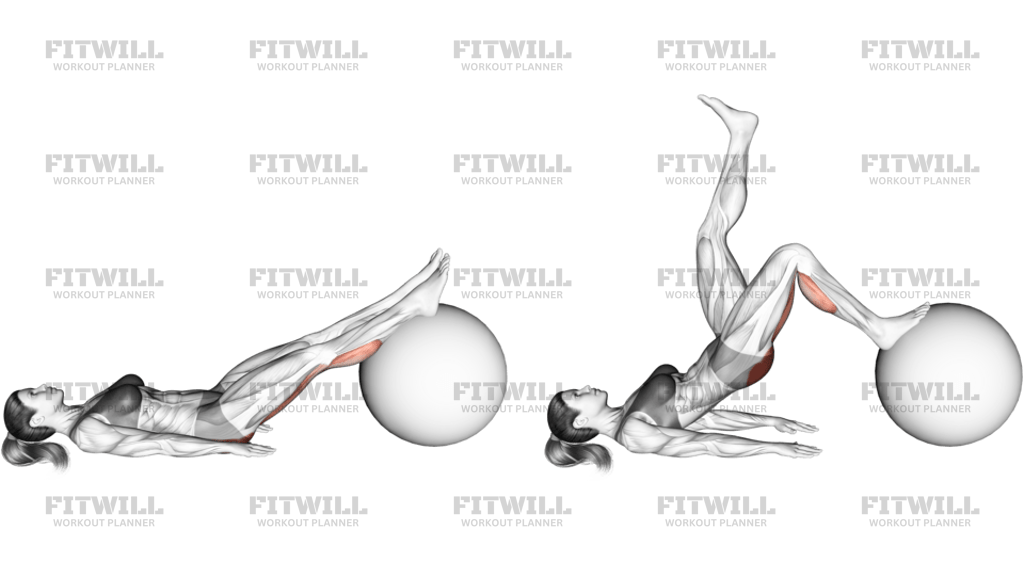
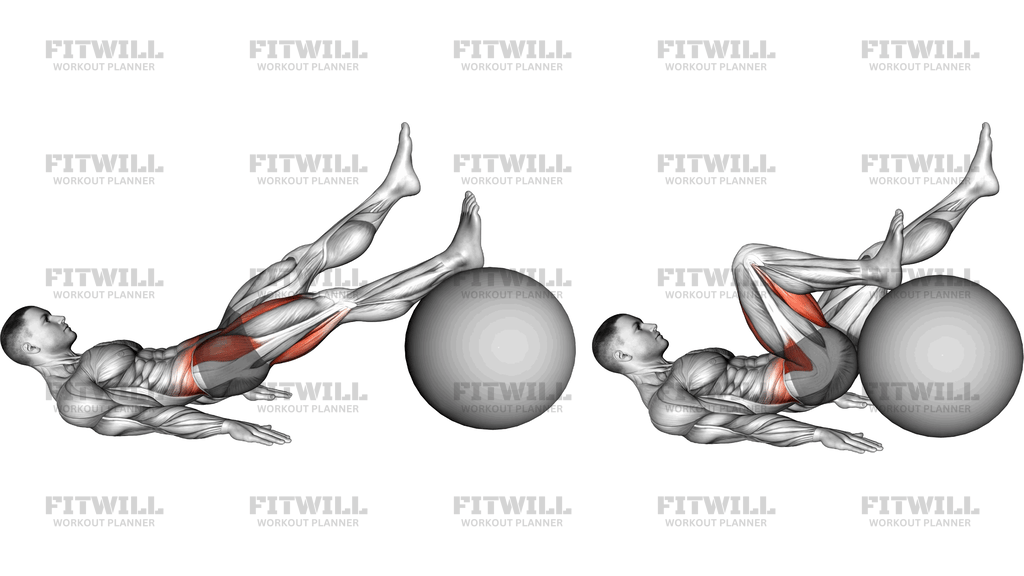
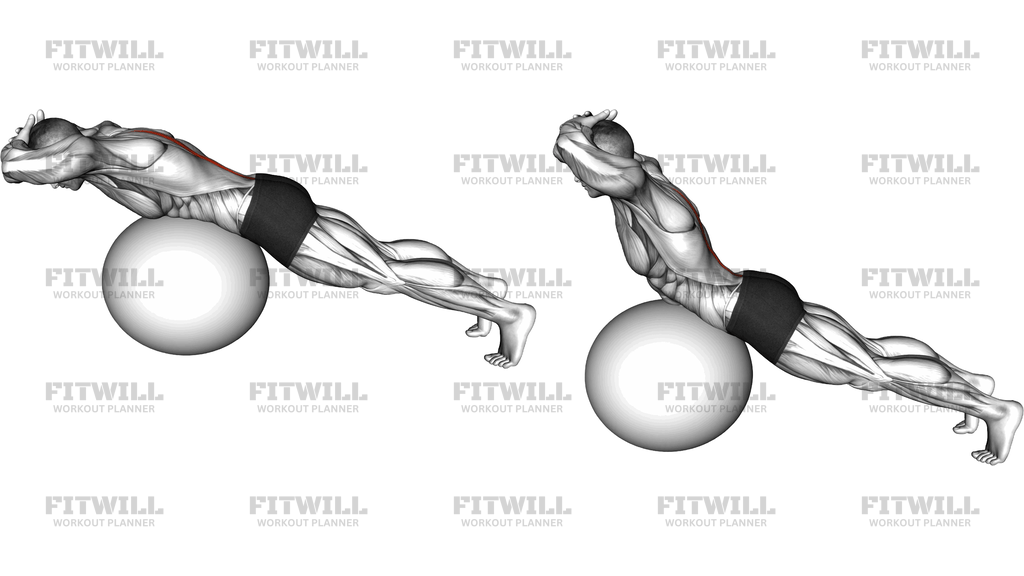
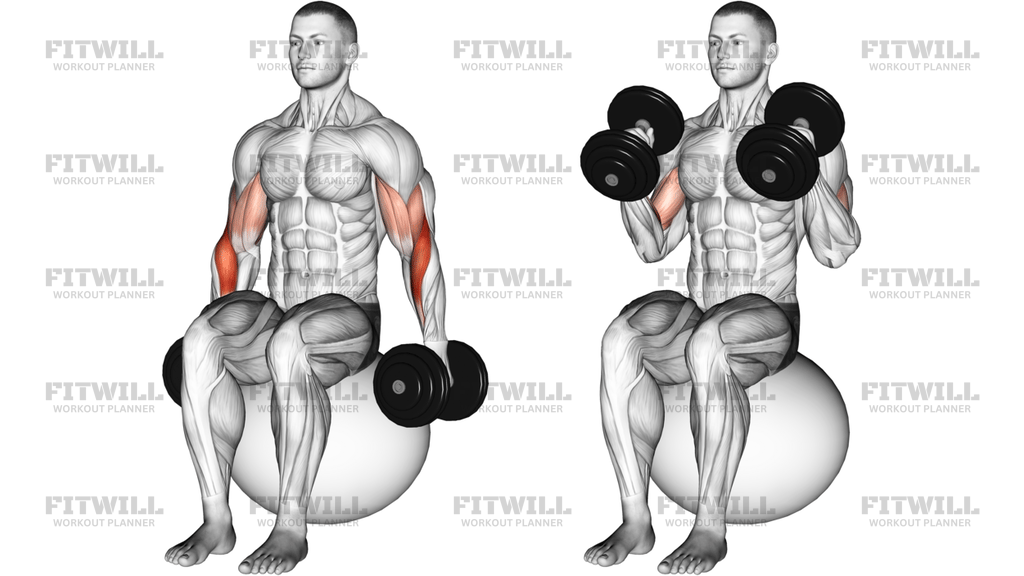
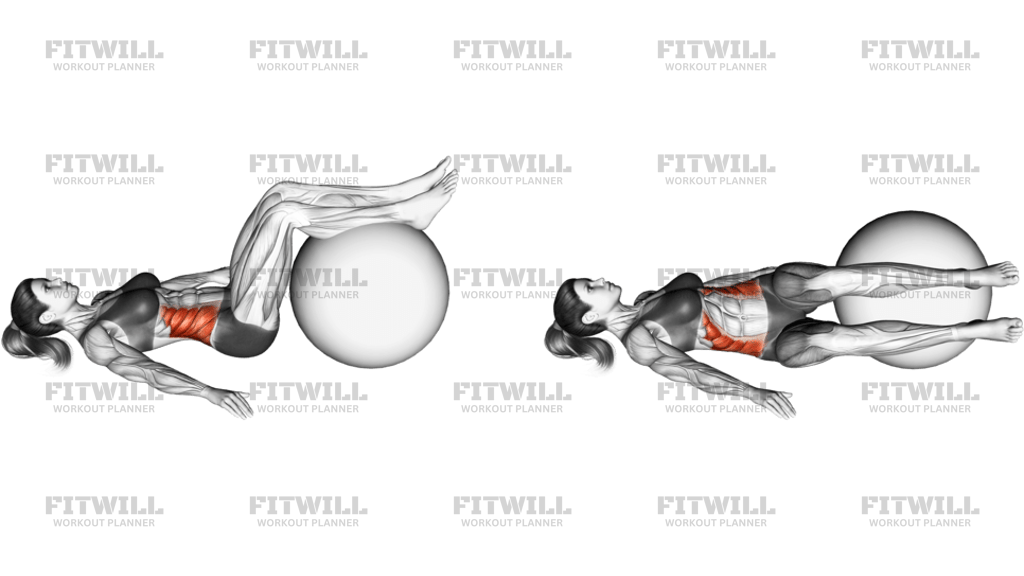
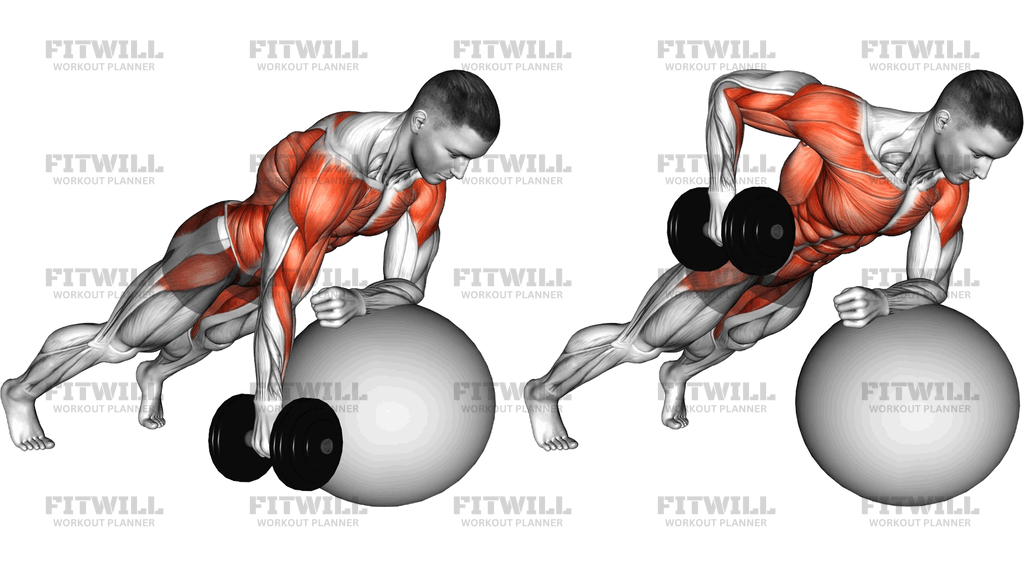
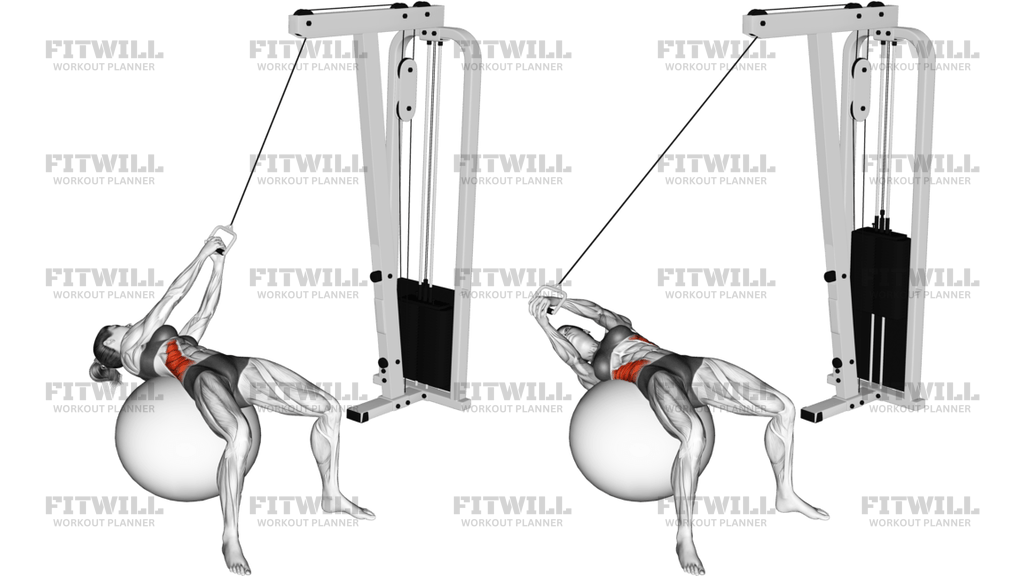
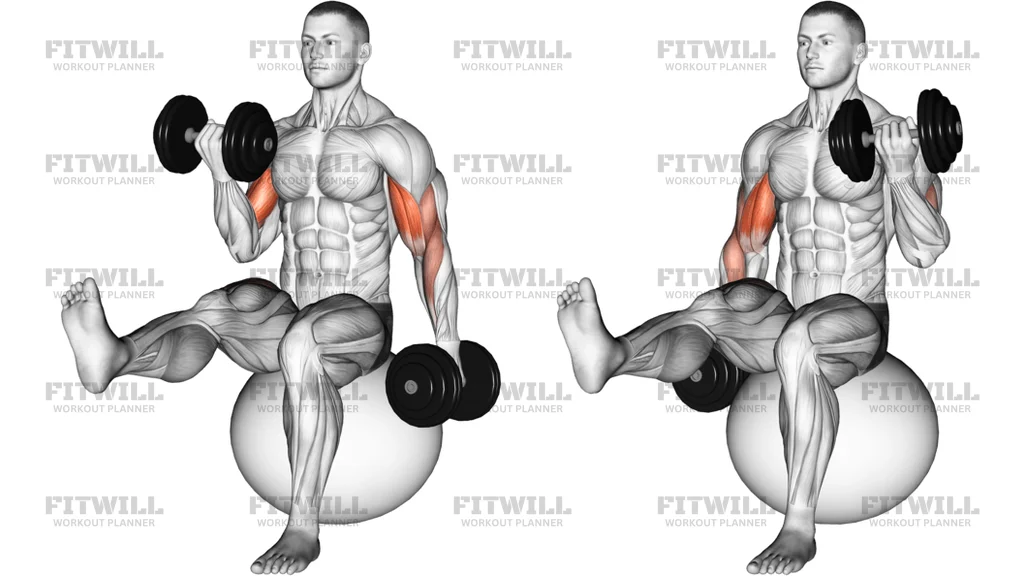
Exercise Ball Lying Abductor Stretch
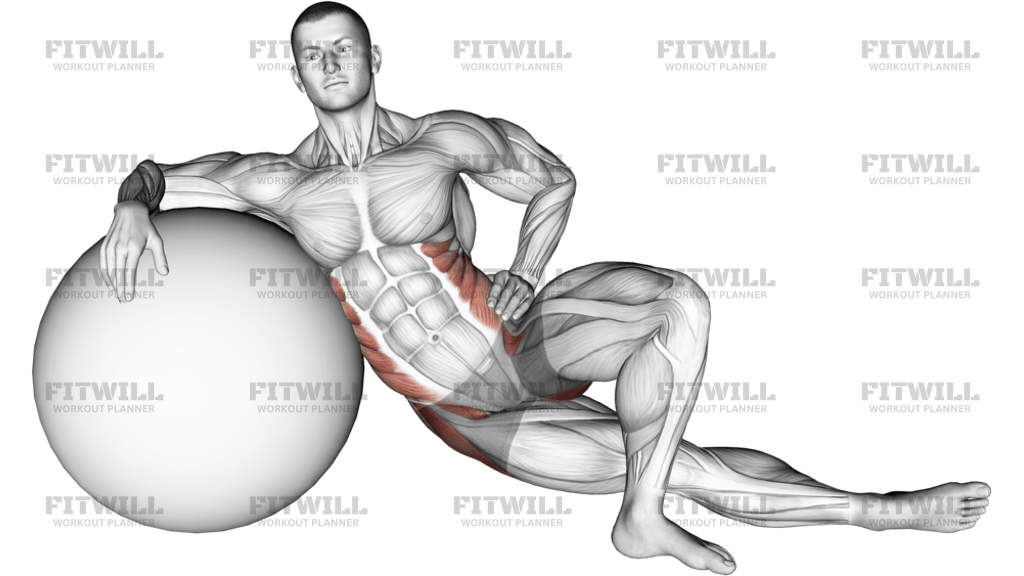
Exercise Ball Lying Abductor Stretch is a supported hip-opening stretch that uses a stability ball and mat to let the pelvis settle while the legs and outer hip relax into a longer position. The ball gives you a broad, forgiving contact point so you can ease into the stretch without fighting the floor, which makes it useful when the hips feel tight from sitting, running, squatting, or lower-body lifting.
The position is designed to reduce strain while you work on the outer hip, glute area, and the muscles that help control the legs away from the midline. Because the torso is partially supported, the stretch should feel organized and calm rather than compressed through the low back or rushed through the groin. The goal is steady opening, not forcing the knees or legs farther apart than the hips can manage comfortably.
Setup matters here. Slide onto the ball so one side of the torso and hip can rest against it, then arrange the legs so the stretch lands where you want it instead of pulling you off balance. Keep the neck relaxed, the ribs down, and the abdomen lightly braced enough to keep the lower back from over-arching. Small changes in foot placement, knee bend, and how much weight you let the ball support can significantly change the stretch on the outer hip.
Move slowly into the stretch and let the exhale soften tension. If the hips are very tight, stay in a smaller range and hold it longer rather than chasing a bigger position. The best version of this movement feels controlled, even, and easy to breathe through. If you have sharp groin pain, pinching in the hip, or low-back discomfort, shorten the range or stop and reset.
Use Exercise Ball Lying Abductor Stretch as part of a warmup, mobility block, recovery session, or lower-body accessory day when you want a supported way to open the hips without aggressive leverage. It works well after prolonged sitting or before movements that need freer hip motion, as long as the stretch remains pain-free and the torso stays stable on the ball.
[ Workout Log & Planner ]
Put your next workout in Fitwill
Keep your plan and training log ready when you are.


Instructions
- Place an exercise mat beside a stability ball and sit beside it with one hip and the side of your torso ready to rest on the ball.
- Lean your upper body onto the ball so it supports your ribs and outer hip without letting your low back collapse or arch hard.
- Arrange the legs into the stretch position shown by the exercise, keeping the side that is opening relaxed and the planted foot stable on the floor.
- Set your ribs down and lightly brace your abdomen so the stretch comes from the hips, not from twisting through the lower back.
- Let your body sink gradually toward the ball until you feel a strong but manageable pull through the outer hip and groin area.
- Hold the end position and breathe out slowly, using each exhale to let the hips soften a little more without bouncing.
- Keep the neck and shoulders relaxed while you stay in the stretch; avoid shrugging or pressing hard through the supporting arm.
- If you want more intensity, make small adjustments to knee bend, leg angle, or torso lean instead of forcing the range all at once.
- Come out of the stretch slowly, reset your hips, and repeat on the other side if the exercise is being done bilaterally.
Tips & Tricks
- Let the ball support you; if you are muscling yourself into position, you are probably too far out of alignment.
- Keep the pelvis level enough that the stretch stays in the outer hip instead of being dumped into the low back.
- A longer hold usually works better here than trying to force a larger position.
- If the groin feels pinchy, reduce the leg spread and adjust the ankle or knee angle before going deeper.
- Keep the supporting hand relaxed on the floor or ball so the shoulder does not become the limiting factor.
- Exhale slowly during the hold; a hard breath-hold tends to tighten the hips again.
- Use this as a mobility drill, not a pain challenge. Mild to moderate tension is enough.
- Move one side at a time and compare sides so you do not chase symmetry by over-stretching the tighter side.
Frequently Asked Questions
What does the Exercise Ball Lying Abductor Stretch target?
It primarily opens the outer hip and adductor-abductor line around the pelvis, with the glutes and surrounding stabilizers helping control the position.
Why use a stability ball instead of doing the stretch flat on the floor?
The ball supports part of your torso so you can ease into the stretch more gradually and stay in it longer without feeling pinned to the floor.
How do I know if I am in the right position on the ball?
You should feel supported through the side of the torso and hip, with the stretch landing in the outer hip or groin area rather than the low back.
Should this stretch feel uncomfortable in the lower back?
No. If the low back is taking over, reduce the range and reset the ribs and pelvis so the stretch comes from the hips.
Can I make this stretch deeper by pushing the knee farther down?
Only a little, and only if it stays smooth and pain-free. Small changes in leg angle are safer than forcing the knee or hip into a bigger range.
Is this a good warmup stretch before squats or lunges?
Yes, if you keep it gentle. It can help free up the hips before lower-body training without aggressive loading.
What are the most common mistakes with this stretch?
Rushing into the position, arching the low back, and trying to chase a bigger range than the ball setup can support.
How long should I hold the stretch?
Long enough to feel the tissue soften, usually several slow breaths, without bouncing or losing your setup.