Standing Heel Back Achilles Stretch
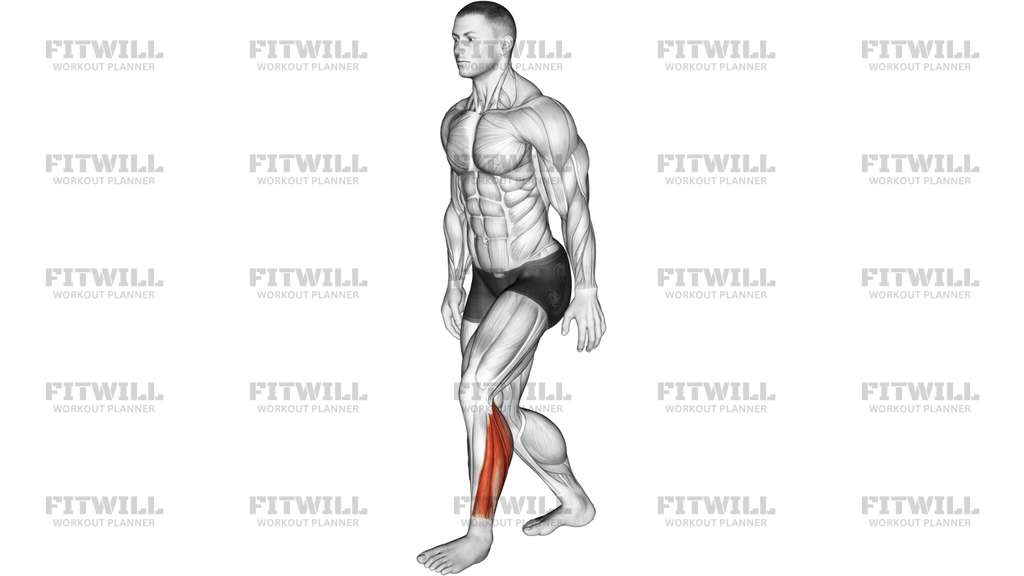
Standing Heel Back Achilles Stretch is a standing calf and Achilles mobility drill that uses your own body weight and an exercise mat. It is designed to lengthen the calf complex, especially the lower calf and tendon line that limits ankle bend when you walk, squat, lunge, or run. The value of the movement comes from a calm setup: when the stance is too short, the stretch disappears; when the stance is too long, the ankle and foot can twist instead of opening the calf.
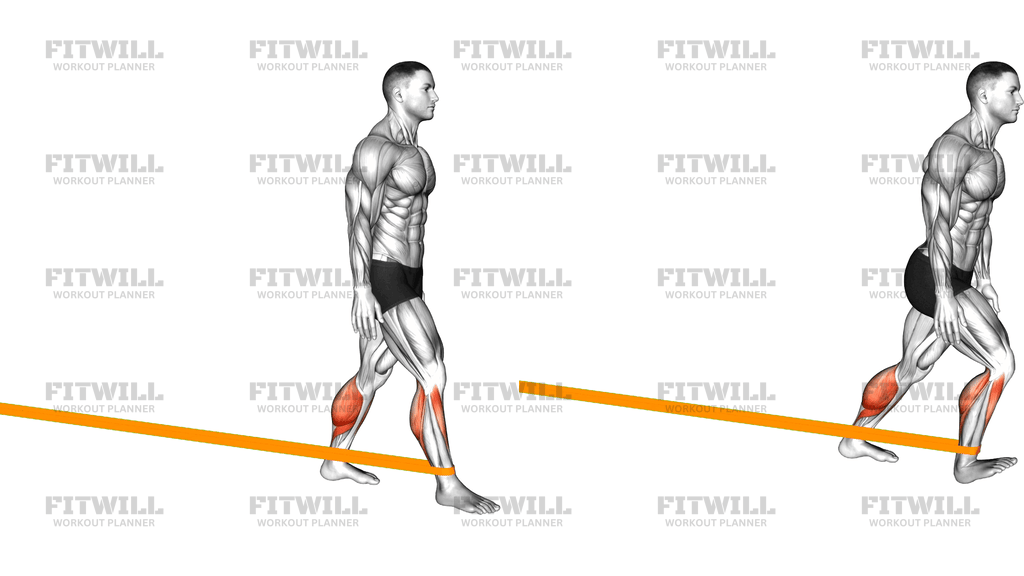
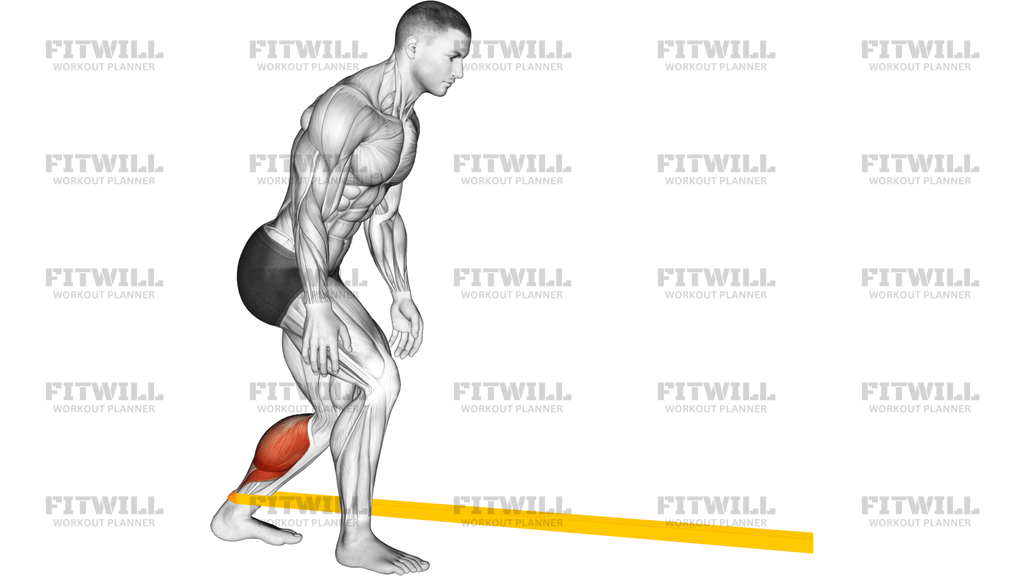
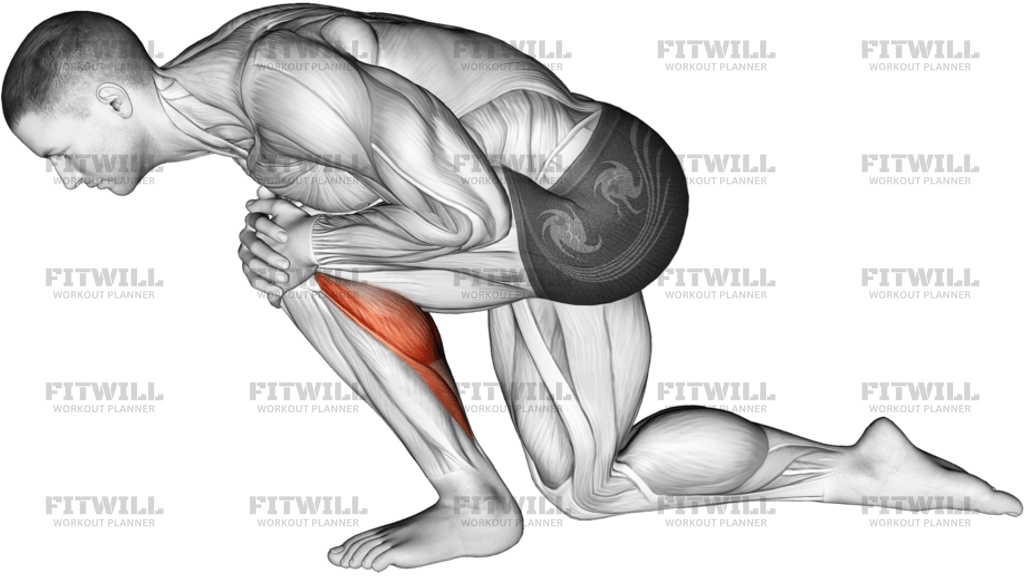
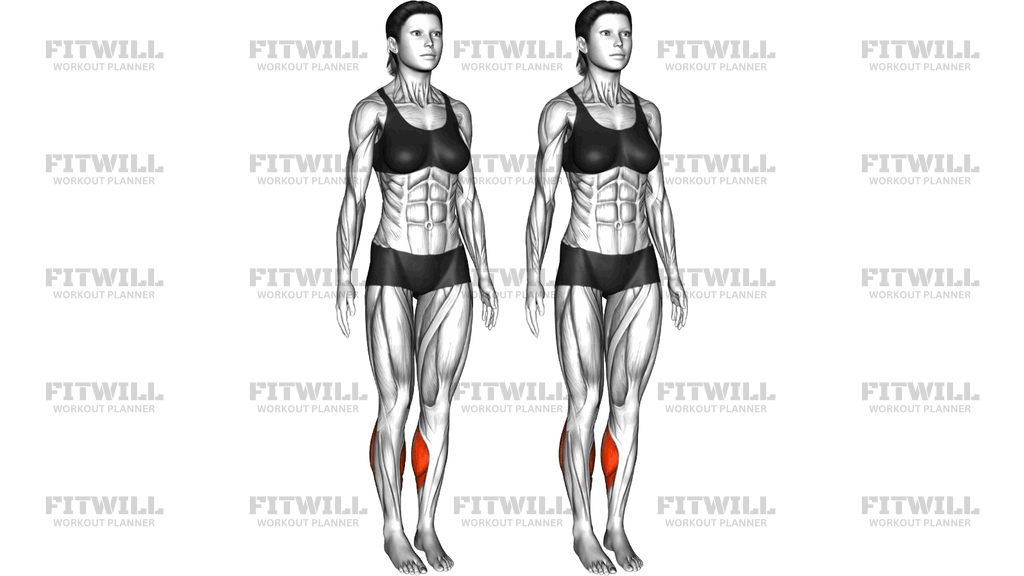
The image shows a staggered standing stretch with one leg acting as the base and the other leg reaching back for support. That setup lets you load the calf in a controlled way without needing a wall or machine. You should feel a steady pull along the lower leg and into the Achilles area, not a sharp pinch in the heel or a cramp in the foot. The torso stays tall and the hips stay square so the stretch goes into the calf line instead of into the low back.
To perform it well, step into a split stance, keep both feet facing forward, and let the rear heel settle as far toward the floor as your ankle allows. From there, shift your body weight forward until you find a firm but manageable stretch. Breathing matters here: slow exhales help the calf relax, while rushed breathing usually makes the ankle and foot guard against the stretch. If you want a slightly different emphasis, a small bend in the rear knee shifts more of the work toward the soleus and Achilles area.
This is a useful warm-up or cooldown drill for running, jumping, lower-body lifting, and any session where ankle stiffness is a problem. It is also helpful after long periods of sitting or standing. The stretch should be controlled, not aggressive, and it should never be bounced. If the heel lifts, the foot collapses, or the stretch becomes painful, shorten the stance and reduce the range until the position feels clean again.
Fitwill
Log Workouts, Track Progress & Build Strength.
Achieve more with Fitwill: explore over 9600 exercises with images and videos, access built-in and custom workouts, perfect for both gym and home sessions, and see real results.
Start your journey. Download today!




Instructions
- Stand tall on the mat and step one foot back into a staggered stance with both toes pointing forward.
- Keep your feet about hip-width apart so you are on two rails rather than a tight rope.
- Set the front foot flat and let the back heel reach back toward the floor.
- Keep your torso upright, ribs stacked over your pelvis, and your hands relaxed at your sides or lightly on your thigh for balance.
- Bend the front knee slightly and shift your weight forward until you feel a firm stretch through the back calf and Achilles area.
- Keep the back leg long and the rear foot straight; do not let the heel roll inward or the toes flare out.
- Breathe slowly and hold the stretch for the desired time without bouncing or forcing the range.
- If you want more soleus and Achilles emphasis, soften the back knee a little while keeping the heel heavy.
- Return to standing under control, then repeat on the other side with the same stance and depth.
Tips & Tricks
- A shorter stance usually feels more Achilles-friendly; a stance that is too long often turns the stretch into a balance fight.
- Keep the front knee tracking over the second toe so the ankle opens without collapsing inward.
- If the back heel starts to pop up, reduce the forward shift instead of pushing harder.
- A small bend in the rear knee shifts more work toward the lower calf and soleus near the Achilles tendon.
- Keep the rear foot pointed forward; turning it out can make the stretch feel easier but less precise.
- Use a wall or light fingertip support if balance is limiting the stretch quality.
- You should feel a steady pull behind the ankle and low calf, not a sharp pinch in the heel or arch.
- Exhale into the hold to let the calf relax; holding your breath usually makes the stretch fight back.
- Switch sides only after you fully reset your stance so both calves get the same setup.
Frequently Asked Questions
What does Standing Heel Back Achilles Stretch target?
It mainly targets the calf complex and Achilles tendon, with the lower leg doing the bulk of the work.
Where should I feel the stretch in the back foot or ankle?
You should feel it along the lower calf and just above the heel, not in the knee or the arch of the foot.
Should the back heel stay down the whole time?
Yes. If the heel keeps lifting, shorten the stance or reduce how far you shift forward.
What is the difference between a straight rear knee and a bent rear knee?
A straighter rear knee usually puts more emphasis on the upper calf, while a slight bend shifts more tension toward the soleus and Achilles area.
Is this a good stretch before running or jumping?
Yes, it is a useful warm-up drill when your ankles feel tight before impact work or lower-body training.
Can beginners do this without a wall?
Yes, but using a wall or a fingertip on support makes it easier to keep the stance clean and balanced.
What is the most common mistake with this stretch?
People often take too big a stance and start twisting the foot instead of loading the calf and Achilles.
How long should I hold each side?
A steady 20 to 40 second hold is common, but the right time is whatever lets you stay relaxed and pain-free.