Sitting Toe Pull Achilles Stretch
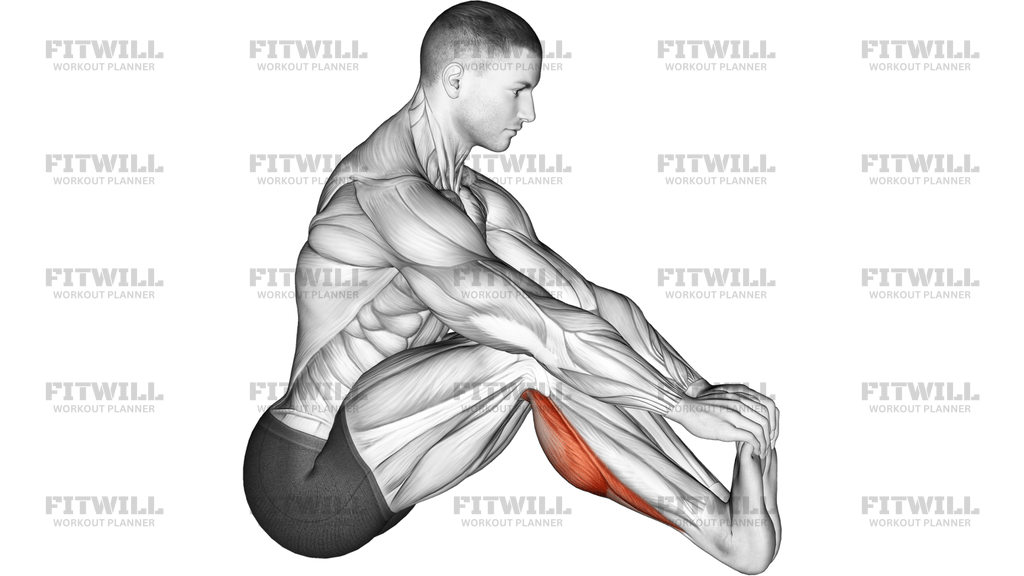
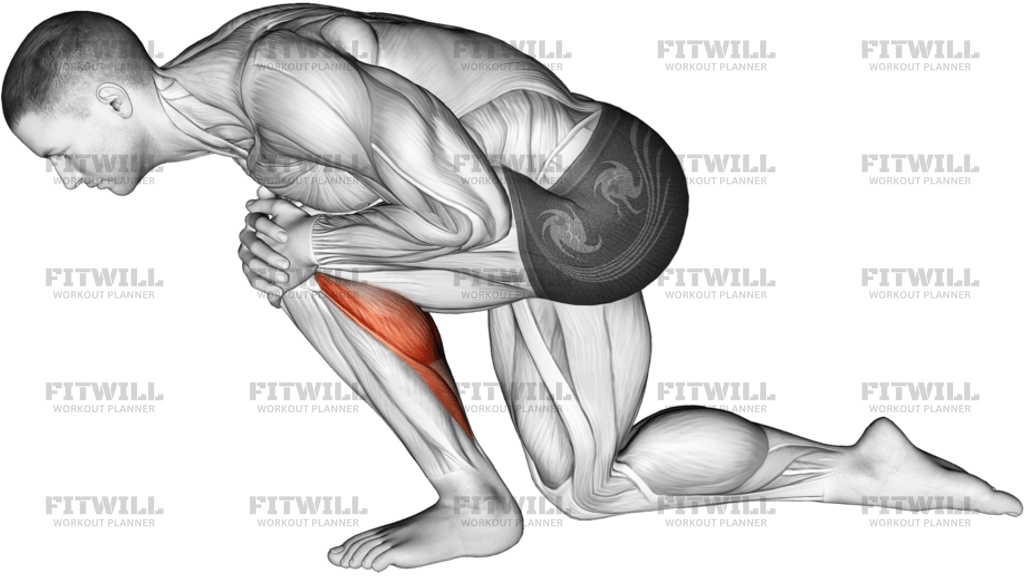
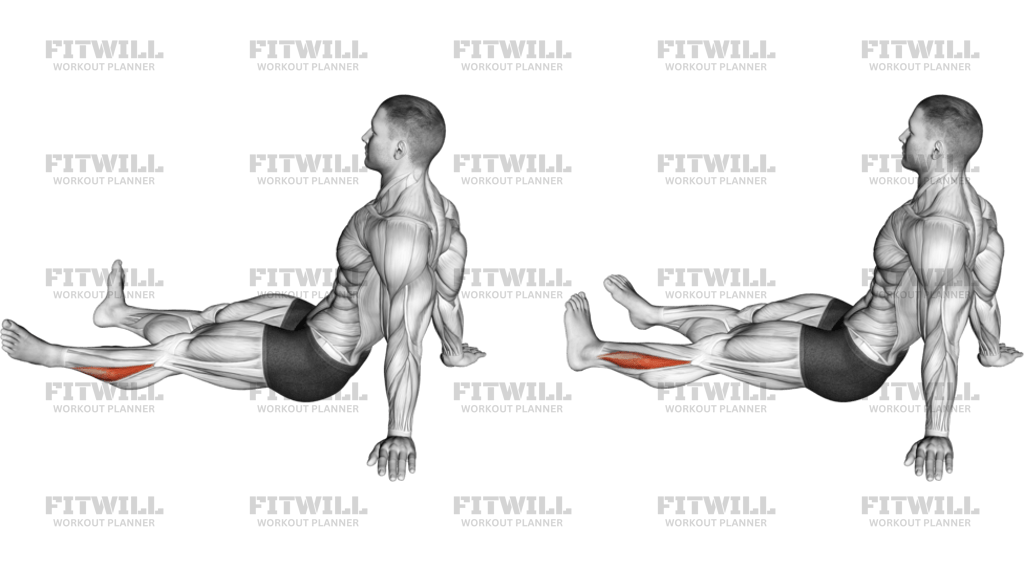
Sitting Toe Pull Achilles Stretch is a seated calf and ankle mobility drill that uses body weight and an exercise mat to lengthen the calf complex while you pull the toes back toward the shin. The position shown in the image places the body in a compact seated shape so you can isolate the lower leg without needing load or equipment. That makes it useful when you want a controlled stretch for the Achilles tendon, calf musculature, and ankle dorsiflexion rather than a dynamic leg swing or standing calf stretch.
The setup matters because this stretch is easy to turn into a sloppy reach if the spine collapses or the ankle is twisted inward. Sit tall, anchor the working leg in front of you, and keep the heel and forefoot aligned while you draw the toes back. The non-working leg should stay relaxed and out of the way so the stretch stays on the calf line instead of becoming a hip opener or a rounded-back hamstring reach. A clean setup makes the stretch easier to repeat on both sides.
As you pull into the stretch, the goal is a firm but tolerable lengthening sensation through the calf and Achilles area, not a sharp pinch in the ankle or a cramp in the foot. Move slowly into end range, hold the position long enough to let the tissue settle, and keep your breathing calm so the lower leg can relax. If one side feels much tighter, use the tighter side as the reference point and avoid forcing the looser side past its comfortable end range.
This exercise is a good fit after walking, running, jumping, squatting, or any session that leaves the calves and ankles feeling stiff. It can also work as part of a warm-up when you need better ankle motion before lower-body training. Because it is a stretch rather than a strength movement, the quality comes from position control, not effort. Keep the movement smooth, avoid bouncing, and come out of the hold gradually so the ankle does not rebound into a cramp or a sudden tug.
Used consistently, Sitting Toe Pull Achilles Stretch can help you keep the lower leg more mobile for squats, lunges, running mechanics, and daily ankle bending tasks. It is beginner-friendly, but it should still be treated with respect if the Achilles tendon is irritated or if the ankle has limited tolerance for deep dorsiflexion. Work in a pain-free range, use a strap or towel if your hands cannot reach comfortably, and favor clean alignment over trying to pull the toes as far back as possible.
[ Workout Log & Planner ]
Put your next workout in Fitwill
Keep your plan and training log ready when you are.


Instructions
- Sit on the mat with one leg extended in front of you and the other leg bent comfortably out of the way.
- Reach to the foot of the working leg and grip the toes or forefoot so you can pull them back toward the shin.
- Keep the working heel grounded or lightly braced as you sit tall through the spine.
- Square your hips and let the chest stay lifted instead of folding hard over the thigh.
- Pull the toes toward you until you feel a strong stretch through the calf and Achilles line.
- Keep the knee of the stretched leg long but not aggressively locked if that creates discomfort.
- Breathe slowly and hold the end range without bouncing or jerking the foot.
- Ease the foot out of the stretch with control, then switch sides and repeat.
Tips & Tricks
- Pull from the toes or forefoot, not by yanking the whole leg toward you.
- If the hamstring starts to dominate, sit taller and reduce how far you fold forward.
- Keep the heel heavy so the stretch stays on the calf and Achilles instead of the arch of the foot.
- A slight knee bend is fine if a fully straight knee makes the ankle or back line feel too intense.
- Use a strap or towel around the foot if you cannot reach the toes cleanly without rounding hard.
- Let the ankle move into dorsiflexion gradually; a sudden pull often turns the stretch into a cramp.
- Hold each side long enough for the calf to soften before you try to go deeper.
- Stop if you feel sharp pain, numbness, or a pulling sensation directly on the Achilles tendon.
Frequently Asked Questions
What does Sitting Toe Pull Achilles Stretch target most?
It mainly stretches the calf complex and Achilles tendon line on the side you are pulling.
Is this more of a mobility drill or a strength exercise?
It is primarily a mobility and flexibility drill, not a strength movement.
Do I need to keep the knee completely straight?
A mostly straight knee is typical, but a small bend is fine if it helps you stay comfortable and keep the stretch clean.
Why does my hamstring take over when I reach for the foot?
That usually means you are folding too far at the hips. Sit taller and let the stretch come from the ankle and calf instead.
Can I use a towel or strap if my hands do not reach my toes?
Yes. A strap or towel around the forefoot is a good way to keep the pull smooth without forcing your torso forward.
When should I use this stretch in a workout?
It works well after running, lifting, or lower-body work, and it can also be used in a warm-up if you need ankle motion.
What is a common mistake with this movement?
Rounding the back and yanking the toes back too hard are the biggest mistakes; both reduce control and can make the stretch feel messy.
Is this safe if my Achilles feels irritated?
Only use a very mild range or skip it if the tendon is painful. A stretching sensation is fine, but sharp tendon pain is not.