Standing Leg Up Adductor Stretch
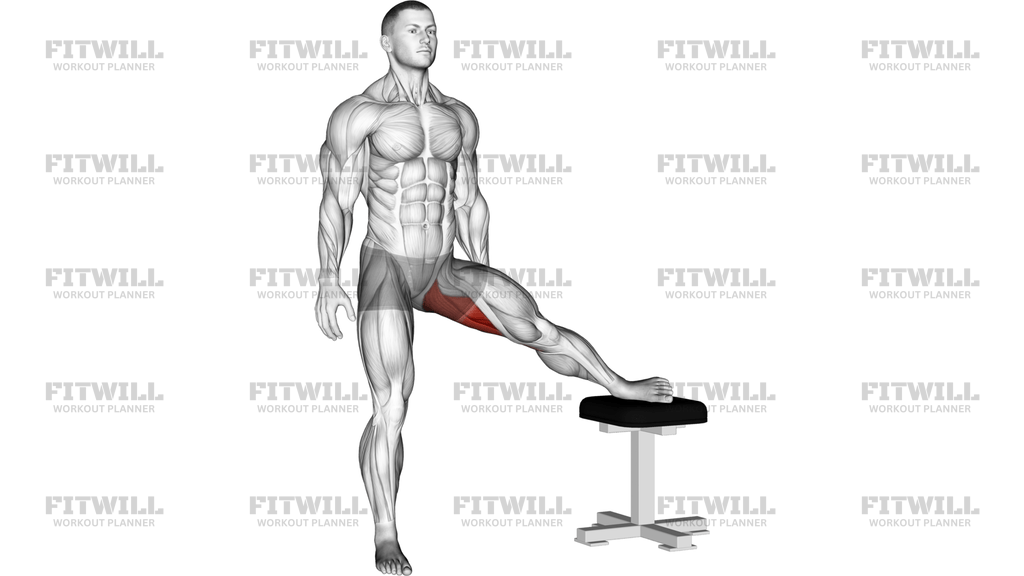
Standing Leg Up Adductor Stretch is a standing inner-thigh mobility drill performed with one leg supported on a bench, box, or similar stable surface. The raised leg stays long while the other leg supports your body weight, which lets you lengthen the adductors and groin area without needing a partner or a floor-based setup. It is a simple way to open the hip while also asking the standing leg, foot, and trunk to stay balanced.
The setup matters more than the range. A support that is too high, a foot that turns out, or a pelvis that twists open will shift the work away from the inner thigh and into the low back or the front of the hip. Keep the raised knee straight or only slightly soft, square your hips as much as the position allows, and use a tall spine so the stretch stays organized instead of collapsing forward.
The stretch should build gradually. After you place the foot and settle your stance, hinge or shift just enough to feel tension along the inner thigh of the elevated leg. Breathe slowly into the hold, then come out with control before repeating or switching sides. The goal is a clear, repeatable stretch, not a forced split or a bouncing reach.
This movement fits well in a warm-up, cool-down, or dedicated mobility block when you want to improve adductor length, hip comfort, or side-to-side balance. It is useful for athletes and general trainees alike, especially anyone who sits a lot or feels tightness when stepping wide. Keep the stretch pain-free, lower the support if the hip pinches, and use a smaller range on the side that feels tighter.
Fitwill
Log Workouts, Track Progress & Build Strength.
Achieve more with Fitwill: explore over 9600 exercises with images and videos, access built-in and custom workouts, perfect for both gym and home sessions, and see real results.
Start your journey. Download today!




Instructions
- Stand beside a stable bench or box and place one heel or the full foot on top with the raised leg straight.
- Keep your standing foot flat on the floor and point both hips and toes forward as much as the position allows.
- Brace lightly through your trunk and lift your chest before you move deeper into the stretch.
- Hinge at the hips or shift your body only until you feel a strong stretch in the inner thigh of the elevated leg.
- Keep the raised knee long and avoid letting that leg turn into a bent-knee balance drill.
- Breathe slowly and keep the shoulders relaxed while you hold the end position.
- Come back to upright with control instead of springing out of the stretch.
- Repeat on the other side and match the hold time or number of reps.
Tips & Tricks
- A lower bench or step usually gives a cleaner adductor stretch than a high surface.
- Flex the foot on the raised leg if that helps you keep the leg long and the knee from drifting open.
- If you feel the stretch mostly in the low back, reduce the hinge and keep the ribs stacked over the pelvis.
- A light fingertip touch on a wall or rack can help you stay square while you settle into the hold.
- Do not rotate the raised hip outward just to make the range look bigger.
- Exhale slowly as you enter the stretch; many people get a better inner-thigh release after the first long breath.
- If the groin feels pinchy rather than stretched, lower the support height and shorten the range.
- Use even holds on both sides so the tighter side does not get rushed.
Frequently Asked Questions
What does Standing Leg Up Adductor Stretch target most?
It mainly targets the adductors and groin of the raised leg, with the standing hip and trunk working to keep you balanced.
Where should I feel the stretch?
You should feel it along the inner thigh of the elevated leg. A mild balance challenge in the standing leg is normal, but the stretch itself should stay in the adductor line.
Should the raised knee stay straight?
Yes, a straight or nearly straight knee usually keeps the emphasis on the inner thigh. A small bend is fine if it helps you stay controlled and pain-free.
What if the bench feels too high?
Use a lower step, box, or platform. If the hip pinches before you feel the inner thigh stretch, the support is probably too high for your current mobility.
Can I hold onto something for balance?
Yes. A wall, rack, or post can make it easier to stay square so you can focus on the stretch instead of fighting for balance.
What is a common form mistake with this stretch?
People often twist the pelvis open or round the back to chase more range. Keep the chest tall and the hips as square as possible.
How long should I hold each side?
A controlled hold of about 20 to 40 seconds is a practical starting point, as long as you can keep the stretch smooth and pain-free.
Can this replace a lunge-based hip stretch?
It can complement one, but it is more adductor-focused. Use both if you want a broader hip mobility routine.