Recumbent Knee Flexor Stretch
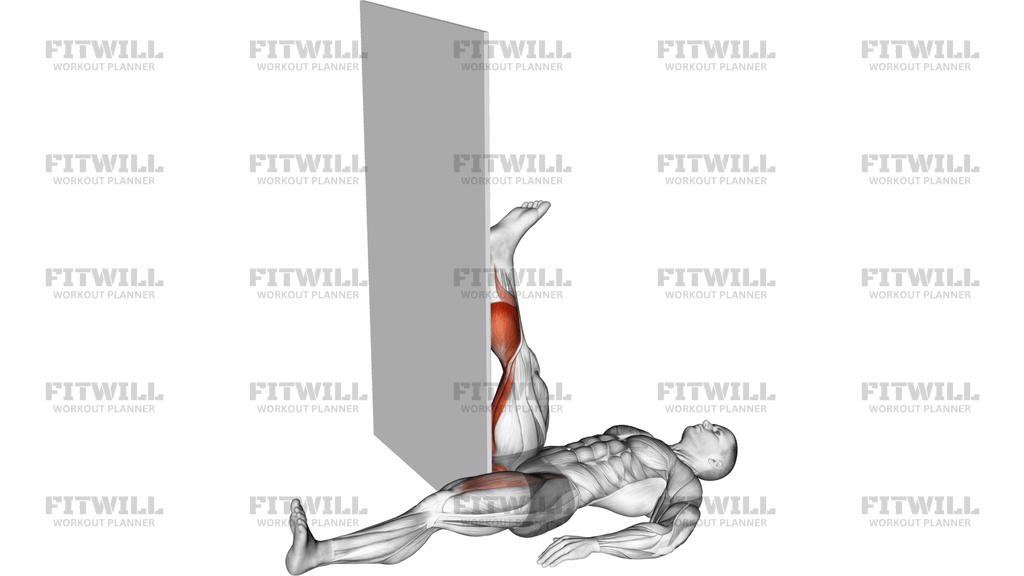
Recumbent Knee Flexor Stretch is a floor-based hamstring stretch that uses a wall and body weight to lengthen the back of the thigh without demanding much equipment. In this version, you lie on your back with one leg extended up the wall and the other leg resting long on the floor. That position lets you isolate the stretch more cleanly than standing versions because the wall helps support the lifted leg and keeps the pelvis from drifting too far out of place.
The exercise mainly targets the hamstrings and the tissues around the back of the thigh, with the hips, glutes, and trunk helping keep the body square. It is useful when you want to restore comfort after lower-body training, prepare for movements that need straight-leg hinging, or simply reduce the feeling of tightness that builds from sitting or running. Because the movement is passive, the quality of the setup matters more than effort: a small adjustment in hip distance or leg angle can change the stretch a lot.
Start close enough to the wall that the lifted leg can stay straight without the lower back arching hard, then adjust by inching closer or farther until the stretch is strong but still calm. The foot on the wall should be relaxed or lightly dorsiflexed, and the opposite leg should stay long on the floor instead of bending and stealing tension. Keep both hip points aimed upward as much as possible so the stretch stays in the hamstrings rather than turning into a twist through the lower back.
Each hold should feel like a steady lengthening, not a sharp pull. Breathe slowly, let the exhale soften the back of the thigh, and avoid bouncing or pushing the leg deeper just to chase range. If the back starts to arch, the knee bends, or the pelvis rotates, back off slightly and re-set the position. The goal is a repeatable stretch that you can hold with control, not an aggressive end-range test.
Use Recumbent Knee Flexor Stretch as a cool-down drill, between leg sessions, or as part of a mobility routine when you want a simple hamstring opener with very little joint stress. It is also a practical option for beginners because the wall provides support and makes the position easy to scale. Progress by holding the position more comfortably over time, not by forcing the leg higher than your pelvis can keep under control.
[ Workout Log & Planner ]
Put your next workout in Fitwill
Keep your plan and training log ready when you are.


Instructions
- Lie on your back with your shoulders flat on the mat and your hips close to a wall.
- Extend one leg straight up the wall with the heel or whole foot supported and the knee nearly straight.
- Keep the other leg long on the floor with the toes pointed up or slightly relaxed.
- Square your hips so both hip bones face the ceiling instead of rolling toward the wall.
- Scoot your hips a little closer to the wall until you feel a firm stretch along the back of the raised thigh.
- Keep the raised knee straight but not locked, and avoid letting the lower back arch hard off the floor.
- Hold the stretch and breathe slowly through your nose or a relaxed mouth.
- If the stretch becomes sharp or the pelvis twists, ease out slightly and re-set the position.
- Switch sides after the hold and repeat with the same hip and spine position.
Tips & Tricks
- Keep the wall contact light enough that the leg can stay straight without forcing the hamstring into a cramp.
- If your lower back arches, move your hips a few inches farther from the wall and re-check the pelvis.
- A slight bend in the raised knee is better than locking the joint and yanking on the back of the thigh.
- Pointing the toes back toward you increases the stretch, but only use that cue if it stays comfortable in the calf and hamstring.
- The floor leg should stay long and quiet; bending it makes the stretch easier but also less specific.
- Do not chase height with the lifted leg if it makes the hips rotate away from the ceiling.
- Exhale slowly into the hold instead of trying to push deeper with your hands or by bouncing.
- If the stretch feels more like nerve tension than a muscle pull, reduce the angle and back away from end range.
- Use shorter holds first and build duration before trying to increase range.
Frequently Asked Questions
What does Recumbent Knee Flexor Stretch target most?
It mainly stretches the hamstrings on the raised leg, especially the back of the thigh.
Why is the leg placed against the wall?
The wall supports the lifted leg so you can hold a steady hamstring stretch without having to balance or swing the leg.
How close should I be to the wall?
Close enough to feel the back of the thigh lengthen, but far enough that your lower back does not aggressively arch off the floor.
Should the raised knee stay locked?
Keep it nearly straight, but do not force it into a hard lock if that creates discomfort behind the knee or a cramp in the hamstring.
Do I need to point my toes toward the ceiling?
You can keep the foot relaxed or gently pull the toes back toward you if you want a stronger hamstring stretch.
What is the most common mistake with this stretch?
The usual mistake is letting the pelvis twist or the lower back arch so much that the stretch stops being specific to the hamstring.
Is this a good beginner hamstring stretch?
Yes. The wall makes it easy to control the range, so beginners can hold a comfortable position without needing advanced mobility.
When should I use Recumbent Knee Flexor Stretch?
It works well after lower-body training, after running, or anytime you want a low-stress hamstring mobility drill.