Roll Quadriceps Vastus Lateralis Lying On Floor
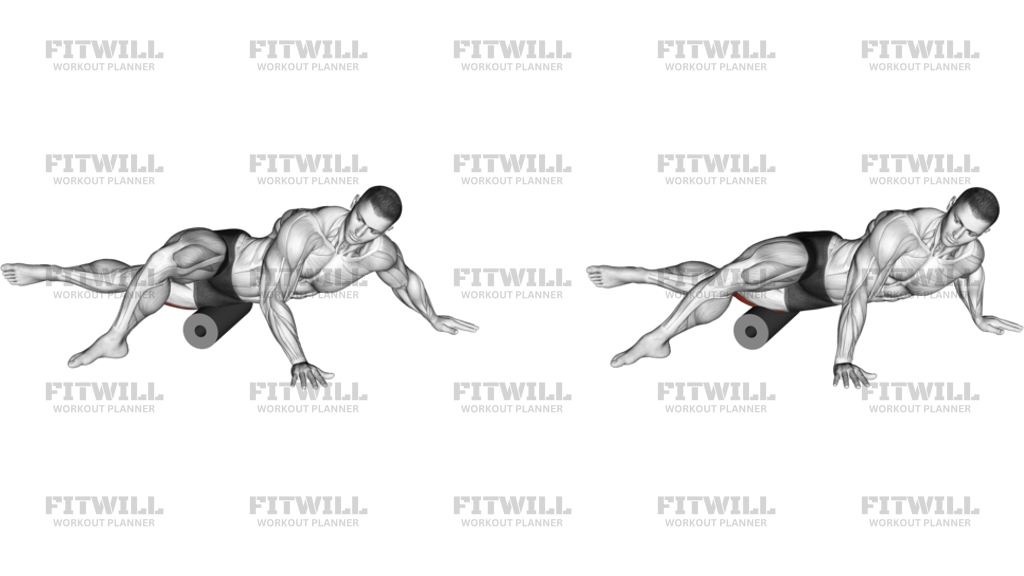
Roll Quadriceps Vastus Lateralis Lying On Floor is a floor-based self-myofascial release drill for the outside of the thigh. The roller sits under the lateral quadriceps, and you use your body weight to create steady pressure while you move from just above the knee toward the front and outer hip. The goal is not speed or range for its own sake. It is to find a pressure level that lets you breathe, relax the leg, and work the tissue without sliding into sharp pain or losing control.
This movement is especially useful when the outer quad feels tight from squats, running, cycling, jumping, or long periods of standing. The vastus lateralis helps extend the knee and supports the quadriceps group during lower-body work, so stiffness there can make the front of the thigh feel blocked or overworked. Rolling it on the floor can be a practical warm-up, recovery, or mobility accessory when you want the thigh to feel less bound up before training or easier to move after it.
The setup matters because the torso position determines how much pressure lands on the target area. In the image, the body is turned onto the side with the roller under the outer thigh, one forearm and the opposite hand helping support the body, and the free leg positioned to help control pressure. Small changes in hip height, elbow support, and how much body weight you rest on the roller can make the difference between useful pressure and a pinched, awkward position.
Perform each pass slowly and deliberately. Roll from the outer knee area up toward the outer hip, then reverse the path in control. Pause on tender spots long enough to let the muscle soften, but keep the pressure manageable and keep breathing. If the roller drifts too far forward onto the hip flexors or too far back into the glute, reset your body angle so the contact stays on the vastus lateralis. The best reps feel deliberate, repeatable, and easy to scale without needing to force through discomfort.
[ Workout Log & Planner ]
Put your next workout in Fitwill
Keep your plan and training log ready when you are.


Instructions
- Place a foam roller on the floor and lie on your side so the roller sits under the outer thigh, slightly above the knee.
- Stack the torso long and support your body with the forearm and opposite hand so you can control how much weight you place on the roller.
- Keep the lower leg relaxed and use the top leg or foot on the floor to fine-tune pressure and balance.
- Brace lightly through the trunk, then begin with the roller at the lower portion of the vastus lateralis near the outside of the knee.
- Slowly roll upward along the outer quadriceps toward the front-outer hip, keeping the movement smooth rather than jerky.
- When you find a tender spot, pause and let the pressure settle while you breathe steadily for a few seconds.
- Roll back down the same path under control, maintaining the same body angle so the contact stays on the target strip of thigh.
- Repeat for the planned number of passes, then carefully offload the roller and switch sides if needed.
Tips & Tricks
- Set the roller on the outside edge of the thigh, not directly on the kneecap or the bony top of the hip.
- Use your upper-body support to regulate pressure; a few centimeters of weight shift can make the spot tolerable or too intense.
- Keep the rolled leg loose so the quad can melt into the roller instead of staying braced and resisting the pressure.
- Move slowly enough that you can feel where the tissue changes from the lower outer quad to the upper outer quad.
- If the pressure feels sharp, reduce body weight on the roller before you stop the set entirely.
- A brief pause on a tender section is usually more useful than fast back-and-forth rolling.
- Keep the pelvis from twisting open; excessive rotation tends to move the roller off the vastus lateralis.
- Breathe out on the tender spots so the thigh and hip stay relaxed instead of guarding.
Frequently Asked Questions
What does Roll Quadriceps Vastus Lateralis Lying On Floor target?
It targets the outer quadriceps, especially the vastus lateralis along the outside of the thigh.
Is this a strength exercise or a recovery drill?
It is a recovery and mobility drill. The goal is to apply controlled pressure to the muscle, not to lift or grind through a heavy rep.
Where should the foam roller sit on the thigh?
It should sit under the outer quadriceps, traveling from just above the knee toward the front-outer hip without drifting onto the kneecap or glute.
How much pressure should I use?
Enough to feel firm tissue contact, but not so much that you have to tense, hold your breath, or slide awkwardly off the roller.
What if the outside of my thigh is very tender?
Shorten the range, use less body weight, and pause only briefly. The drill should feel productive, not bruising or sharp.
Can I do this before squats or running?
Yes. It can work well in a warm-up if the outer quad feels stiff, as long as you keep the passes smooth and low effort.
What are common mistakes on this exercise?
Common mistakes are rolling too fast, turning the hips too far open, and placing too much pressure directly on the bony points around the hip or knee.
How long should I stay on one spot?
Stay long enough to let the tissue settle, usually just a few slow breaths, then continue moving so the pressure does not become excessive.