Plantar Flexor And Foot Everter Stretch
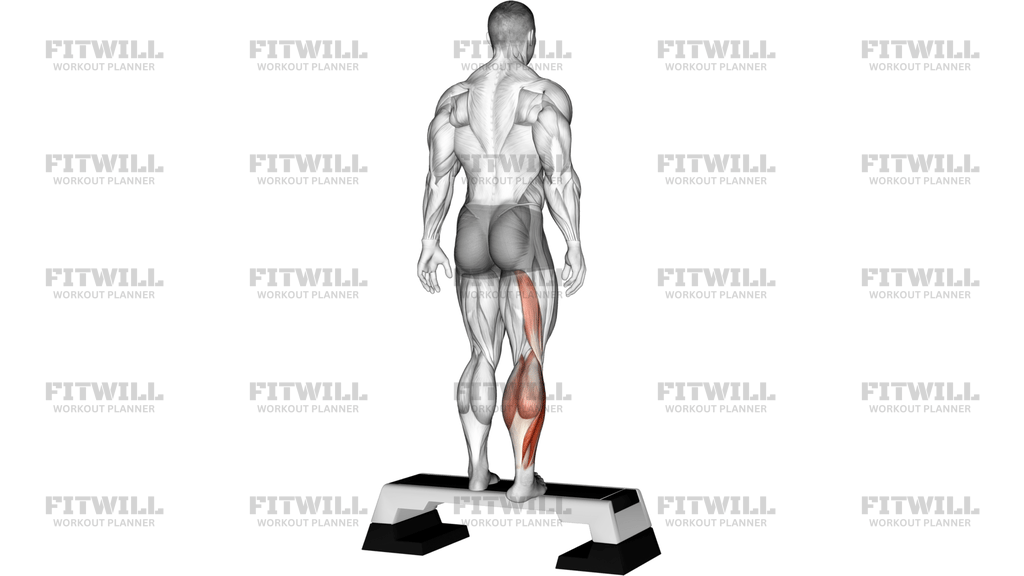
Plantar Flexor and Foot Everter Stretch is a standing lower-leg mobility drill done on the edge of a step, aerobic bench, or other firm raised surface. The ball of the foot stays on the platform while the heel drops below the edge, creating a direct stretch through the calf and the outer line of the lower leg. It is useful when the ankles feel stiff before walking, running, squatting, or jumping, and it gives you a controlled way to open the plantar flexors without forcing a big, sloppy range.
The setup matters because small changes in foot angle and knee position change where the stretch lands. A straighter knee shifts more of the work toward the gastrocnemius, while a slight bend in the knee brings more soleus into the stretch. If you are trying to bias the foot everters, keep the arch long and the ankle organized instead of letting the foot collapse inward. A light hand on a wall or rail is fine, but the working leg should still carry the stretch.
Done well, this stretch feels firm and measurable, not sharp. Stand tall, place the forefoot close to the edge, and lower the heel slowly until you feel tension through the calf and the outside of the lower leg. Breathe out as you settle into the bottom position, then hold without bouncing or yanking on the ankle. If you need more or less intensity, adjust the step height, the knee angle, or the foot rotation a little at a time instead of trying to force a bigger drop.
This movement fits warm-ups, recovery work, and accessory mobility blocks for lifters, runners, and court athletes who need better ankle range. It is also useful when the lower leg feels tight after long periods of standing. Keep the motion smooth, keep the foot stable, and stop short of any Achilles pinch or arch cramp. The goal is a repeatable stretch that leaves the ankle feeling open and ready, not irritated.
Fitwill
Log Workouts, Track Progress & Build Strength.
Achieve more with Fitwill: explore over 9600 exercises with images and videos, access built-in and custom workouts, perfect for both gym and home sessions, and see real results.
Start your journey. Download today!




Instructions
- Stand on a step or other firm raised surface with the ball of the working foot near the edge and the heel free to drop below it.
- Hold a wall, rack, or railing lightly for balance and place the other foot beside you or slightly behind you.
- Keep the working knee mostly straight but soft, and point the toes forward unless a small angle change helps you find the stretch.
- Shift your weight onto the forefoot and lower the heel slowly until you feel steady tension through the calf and outer lower leg.
- Keep the arch long and the ankle centered instead of letting the foot roll inward as the heel drops.
- Breathe out and hold the bottom position for the prescribed time without bouncing or pulsing.
- If you want more soleus emphasis, bend the knee slightly while keeping the heel low and the foot planted.
- Press back to the top under control, reset the foot position, and repeat on the other side.
Tips & Tricks
- Use a step height that lets the heel drop below the edge without forcing the ankle into a painful range.
- Keep the knee tracking over the second toe so the stretch stays in the calf instead of twisting the ankle.
- A straight knee loads the gastrocnemius more, while a small knee bend shifts tension lower into the soleus.
- Do not hang your bodyweight from the hands; the support is only there to help you balance.
- If the outside of the ankle feels pinched, reduce the toe angle before you shorten the stretch.
- A flat, stable platform is safer than a soft mat or a narrow ledge for this movement.
- Stop short of Achilles pain; you should feel a strong calf stretch, not a sharp tendon pinch.
- Reset the foot each rep if the arch starts to cramp or the toes begin gripping the edge.
Frequently Asked Questions
What does Plantar Flexor and Foot Everter Stretch target most?
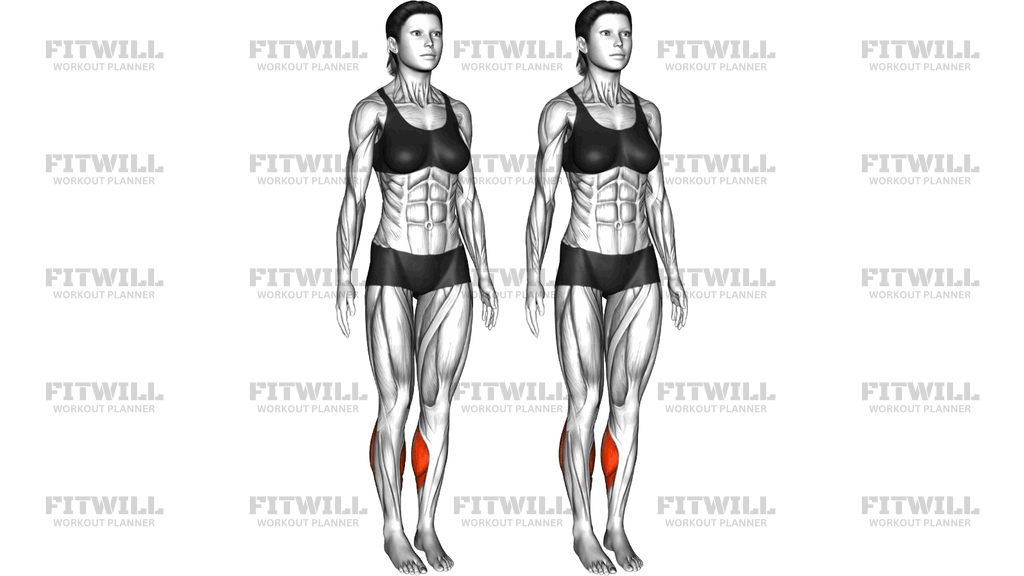
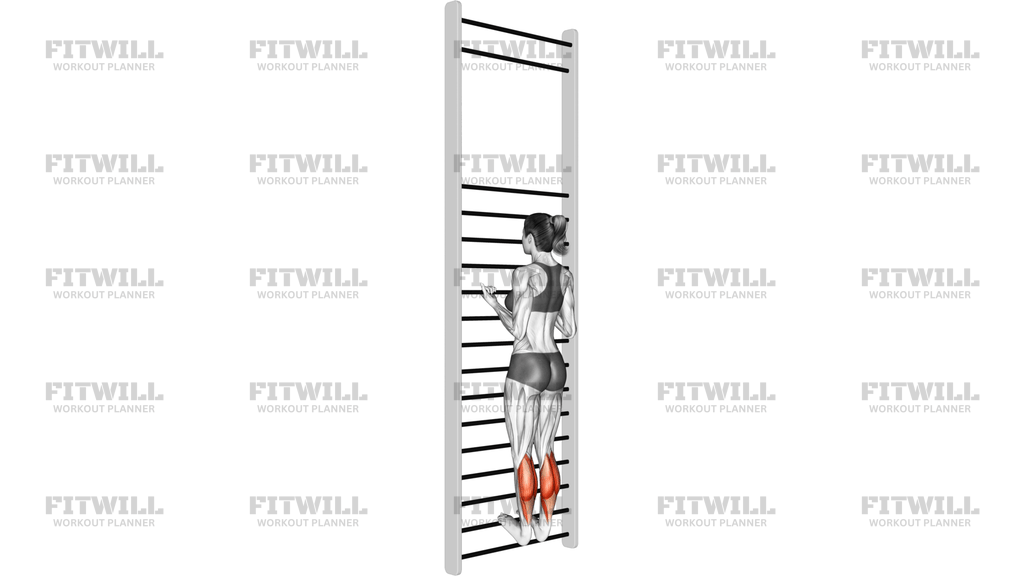
It mainly targets the calves, especially the plantar flexors, with extra stretch along the outside of the lower leg when the foot is biased for eversion work.
Why use a step instead of the floor?
The step lets the heel drop below forefoot level, which creates a deeper and more controlled calf stretch than a flat surface.
Should my knee stay straight during the heel drop?
A mostly straight knee emphasizes the gastrocnemius. A slight bend shifts more into the soleus, so both versions can be useful.
How do I know if I am stretching the right area on the step?
You should feel firm lengthening through the calf and lower leg, not sharp pain in the Achilles tendon, arch, or outside ankle.
Can I hold onto a wall or railing for this stretch?
Yes. A light hand on a wall, rack, or railing is fine as long as most of the stretch stays in the working leg.
What is the most common mistake on the raised edge?
Dropping the heel too fast or letting the ankle collapse inward usually makes the stretch less targeted and more irritating.
Is this a good warm-up before lifting or running?
Yes, especially if your ankles feel stiff. Keep the holds brief and controlled so you open the calf without fatiguing the leg.
How can I make this stretch easier?
Use a lower step, shorten the heel drop, or keep a small bend in the knee while you build tolerance.