Lying Cross Over Knee Pull-Up Stretch
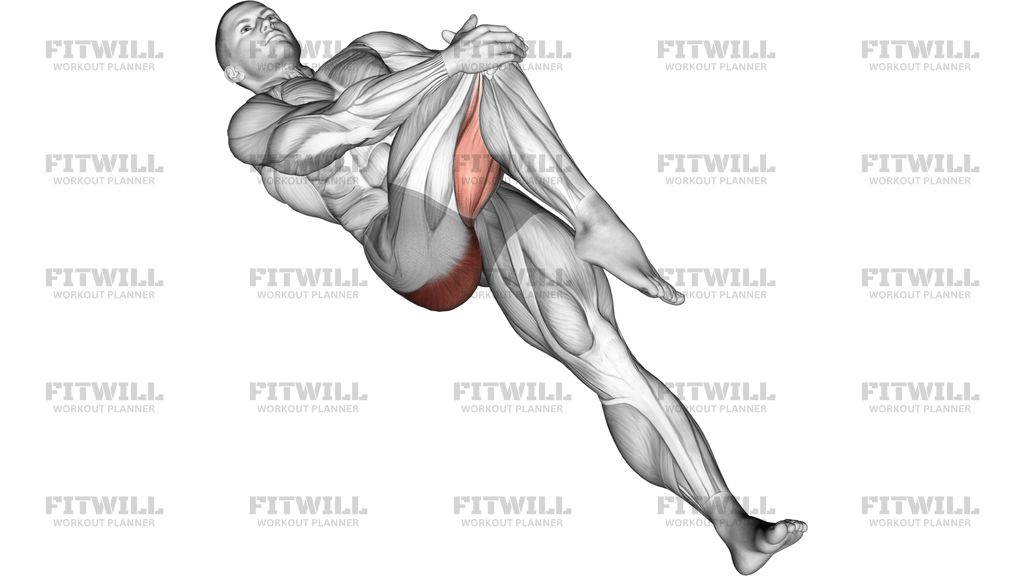
Lying Cross Over Knee Pull-Up Stretch is a floor-based hip and glute stretch that uses body weight and an exercise mat to open the outer hip while keeping the torso quiet. It is useful after lower-body lifting, running, or long periods of sitting when the glutes and the back of the hip feel stiff or compressed. The movement is simple, but the setup matters because a small change in shoulder position or knee path can shift the stretch from the glute into the low back.
The exercise emphasizes the glutes, deep hip rotators, and the tissues around the outer hip, while the core works to keep the ribcage and pelvis from twisting too far. That makes Lying Cross Over Knee Pull-Up Stretch valuable when you want a controlled mobility drill rather than a loose, passive pull. Keeping the shoulders heavy on the floor and the opposite leg long helps the stretch stay where it should instead of turning into a wrung-out spine position.
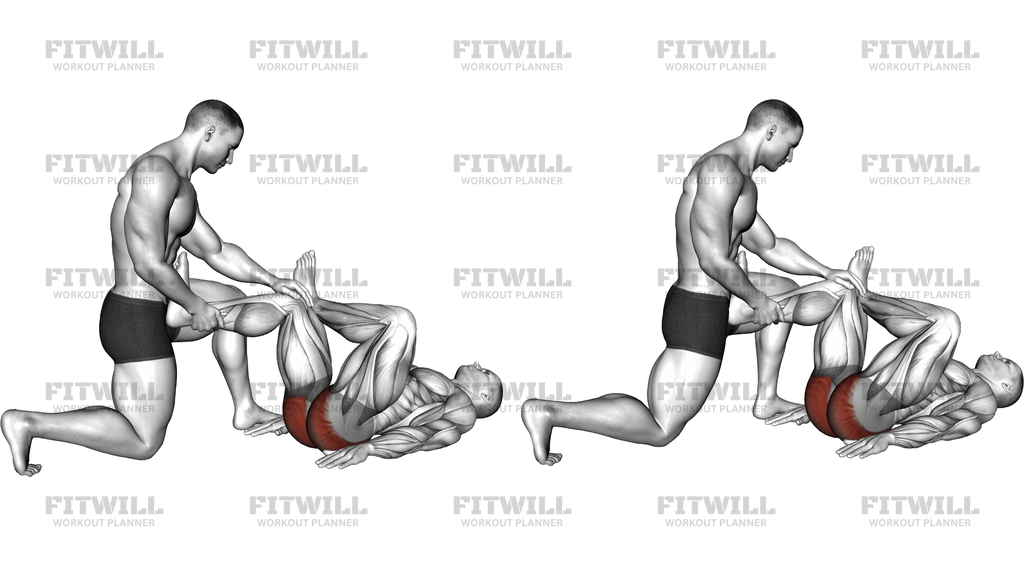
Start on your back with one leg extended and the other knee bent. Pull the bent knee across your body toward the opposite side while keeping the pelvis as level as possible, then settle into the end range without bouncing or forcing. The pull should feel like a clean line through the outer hip and upper glute, not a sharp pinch in the lower back or front of the hip. If the range feels too aggressive, shorten the distance and focus on breathing before trying to go deeper.
Lying Cross Over Knee Pull-Up Stretch is a good choice after squats, deadlifts, lunges, sled work, or any session that leaves the hips feeling locked up. It also works well as part of a warm-up when you need to restore hip rotation and calm down the trunk before training. Beginners can use it easily, but they should prioritize a relaxed neck, steady breathing, and a smooth return to the mat instead of chasing the biggest possible stretch.
The best repetitions are the ones you can repeat with the same shape on both sides. Hold the stretch long enough for the tissue to soften, then release gradually and switch sides with the same setup. If you feel the low back taking over, the knee drifting too far away from the chest, or the straight leg lifting off the floor, adjust the range and keep the motion centered on the hip.
[ Workout Log & Planner ]
Put your next workout in Fitwill
Keep your plan and training log ready when you are.


Instructions
- Lie on your back on an exercise mat with both shoulder blades and your pelvis resting on the floor.
- Extend one leg straight along the mat and bend the other knee so the thigh points toward your chest.
- Clasp the bent leg just below the knee or around the upper shin with both hands.
- Draw the bent knee across your torso toward the opposite shoulder while keeping your head and shoulders relaxed.
- Keep the straight leg long and quiet, with the foot relaxed and the thigh heavy on the mat.
- Exhale as you pull into the stretch, then stop before the low back starts to twist or lift.
- Hold the end position and breathe slowly into the outer hip and glute on the bent-leg side.
- Release the leg back to center with control, then repeat on the other side for the same amount of time.
Tips & Tricks
- Keep the opposite shoulder blade heavy on the mat; if it pops up, the stretch is getting too aggressive.
- Pull the knee across the body, not straight toward the chest, to bias the outer hip instead of the front of the thigh.
- If the low back feels pinchy, reduce the cross-body angle and keep the pelvis more square to the floor.
- A slightly bent straight leg is fine if the hamstring tension on that side is yanking your pelvis out of position.
- Relax the foot of the bent leg instead of actively pointing it, which helps the hip settle into the stretch.
- Use your hands to guide the knee in; do not jerk the leg or use momentum to force range.
- Breathe out longer than you breathe in so the glute and deep rotators can soften at the end range.
- Hold the position long enough for tension to drop, but stop if you feel numbness, sharp pain, or a pinch in the hip.
Frequently Asked Questions
What does Lying Cross Over Knee Pull-Up Stretch work most?
It mainly targets the glutes and the deep tissues around the outer hip. The core and the other side of the trunk help keep the pelvis from rolling too far.
Can beginners perform this exercise?
Yes. Beginners usually do well with a smaller cross-body angle and a slow, relaxed hold on the mat.
Should my shoulders stay on the floor during Lying Cross Over Knee Pull-Up Stretch?
Yes. Keeping both shoulders down helps isolate the hip stretch and prevents the torso from twisting into the movement.
What is the most common mistake with this stretch?
Pulling the knee too far across and letting the low back twist. A smaller range with steady breathing is usually more effective.
Why is one leg kept straight during Lying Cross Over Knee Pull-Up Stretch?
The straight leg helps anchor the pelvis and keeps the stretch focused on the bent leg's hip instead of turning it into a loose full-body twist.
What if I feel this more in my lower back than my glutes?
Reduce the cross-body pull, keep the ribs down, and bring the knee a little less across the torso so the stretch stays in the hip.
How long should I hold Lying Cross Over Knee Pull-Up Stretch?
A steady 20 to 40 second hold is usually enough for one side before you switch and repeat.
Is this the same as a figure-four stretch?
No. A figure-four stretch crosses the ankle over the opposite thigh, while this movement pulls the knee across the body toward the opposite shoulder.
Can I use a strap for Lying Cross Over Knee Pull-Up Stretch?
Yes. A strap can help if your hands cannot comfortably reach the shin or if you want a more relaxed hold on the leg.