Lying Cross Over Knee Pull Down Stretch
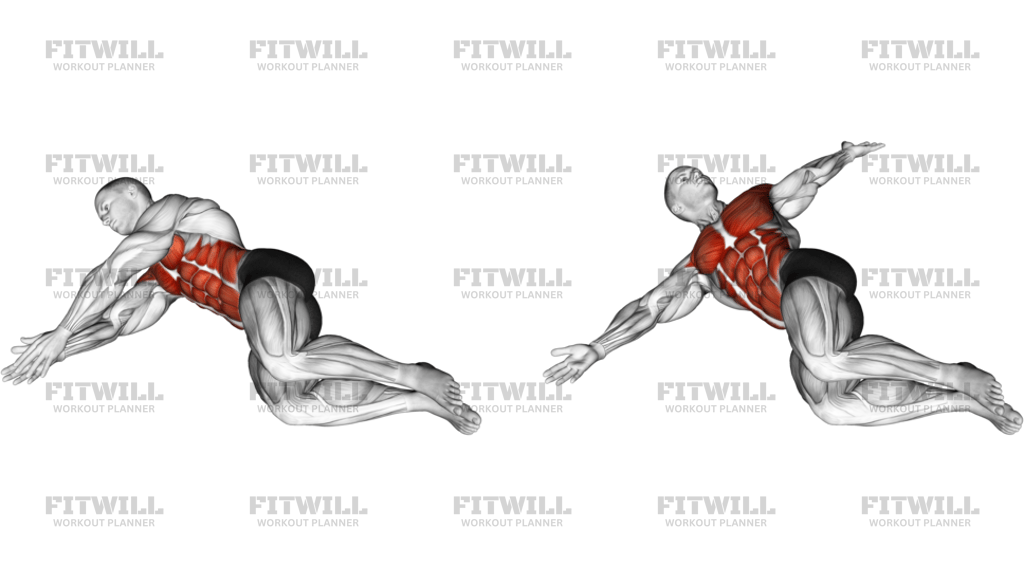
Lying Cross Over Knee Pull Down Stretch is a floor-based hip and glute stretch performed on an exercise mat with body weight only. You lie on your back, cross one knee over your body, and guide the leg into a diagonal pull-down so the hip, outer glute, and lower back can open without losing shoulder contact or spinal control. The image shows a relaxed supine position with one leg extended and the other knee drawn across, which is the key pattern to preserve: the stretch comes from controlled rotation and adduction, not from yanking the leg into a deeper twist.
This movement is most useful when the hips feel tight after lifting, running, or any session that loads the glutes and pelvis. It can help reduce the stiffness that builds in the piriformis, lateral hip, and surrounding tissues when you spend a lot of time sitting or when one side of the body does more work than the other. Because the position is asymmetrical, the body will naturally try to roll or shorten through the ribs and shoulders; the stretch is more effective when you keep the upper back quiet and let the hip do the work.
Setup matters more here than force. The supporting leg should stay long and relaxed, the crossed knee should travel across the body only as far as you can keep the opposite shoulder down, and the pelvis should stay heavy instead of tipping aggressively. A small range with steady breathing usually gives a better result than a big crank through the lower back. If the knee is pulled too far, the sensation shifts from the outer hip into the spine, which is a sign to back off and shorten the range.
Use this stretch as part of a warm-up, cool-down, recovery circuit, or mobility block when you want to restore motion through the hips without adding fatigue. The goal is a calm, repeatable pull into the stretch, a brief hold at the end range, and a controlled return to neutral before switching sides. Done well, the exercise should feel targeted and easing, not aggressive or pinchy. It is a good option for beginners because the movement is easy to scale by changing how far the knee crosses and how much pressure you use to hold the position.
[ Workout Log & Planner ]
Put your next workout in Fitwill
Keep your plan and training log ready when you are.


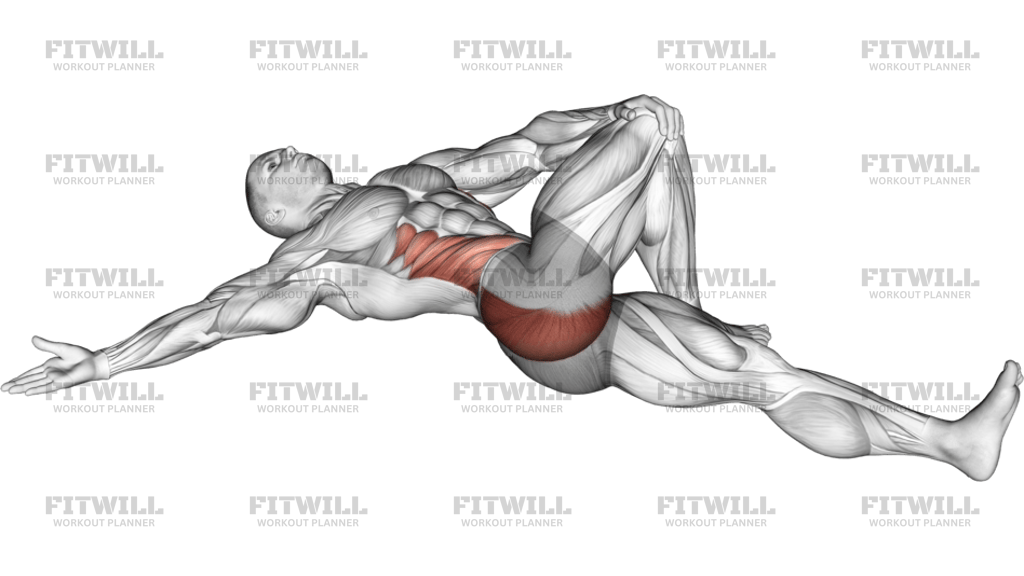
Instructions
- Lie on your back on an exercise mat and extend both arms out to the sides for support.
- Bend one knee and cross it over your body toward the opposite side while keeping the other leg long.
- Let the crossed knee travel only as far as you can keep the opposite shoulder and upper back down.
- Set your pelvis so both hip bones stay as level as possible instead of rolling all the way over.
- Use the hand on the crossed side to guide the knee into the pull-down stretch, not to wrench it.
- Exhale as you move into the end range and pause for a steady hold through the outer hip and glute.
- Keep the extended leg relaxed and the foot loose so the stretch stays in the hip instead of the thigh.
- Return slowly to center with control, reset your shoulders, and repeat on the other side.
Tips & Tricks
- Keep the opposite shoulder pinned to the mat if you want the stretch to stay in the outer hip instead of turning into a full spinal twist.
- A smaller knee-cross angle usually works better than trying to force the leg all the way across the body.
- If the lower back starts to pinch, back off the pull and let the pelvis stay heavier on the floor.
- Use a long exhale at the end range to soften the glute and reduce guard tension.
- Do not bounce the knee downward; the best version of this stretch is a steady pull and a quiet hold.
- Keep the head neutral and the neck relaxed so you are not straining through the upper body to gain range.
- If one side is much tighter, spend a little extra time there rather than cranking harder on the short side.
- This should feel like a targeted hip and glute stretch, not a sharp pull through the knee joint.
Frequently Asked Questions
What does the Lying Cross Over Knee Pull Down Stretch target most?
It mainly targets the outer hip, glute, and deep rotators on the crossed-leg side, with some low-back release if the pelvis stays controlled.
Why do my shoulders need to stay down on the mat?
Keeping the shoulder blades on the mat stops the movement from turning into an aggressive spinal twist and keeps the stretch focused on the hip.
Should the crossed knee touch the floor?
Not necessarily. Stop where you can keep control and feel a stretch in the hip without forcing the knee or lower back.
Is this stretch good before or after leg day?
It is especially useful after lower-body training or after long periods of sitting, but it can also work in a gentle warm-up if you keep the range small.
Can beginners do this safely?
Yes. The movement is easy to scale because you control how far the knee crosses and how much pressure you use to hold the position.
What is a common mistake with this stretch?
The most common error is yanking the knee across so hard that the hips roll and the stretch shifts away from the intended side.
Where should I feel the stretch if my setup is correct?
You should feel it mostly in the outer glute, side of the hip, and sometimes the upper glute rather than in the knee.
How long should I hold each side?
A short, steady hold is usually enough. Hold until the hip eases a little, then return to center and switch sides without rushing.