Recumbent Hip External Rotator And Hip Extensor Stretch
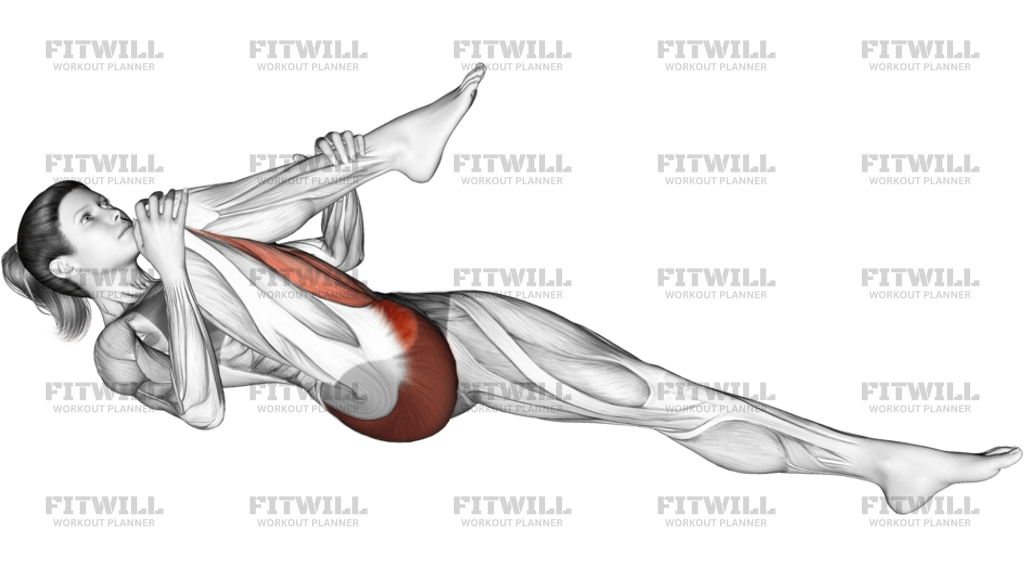
Recumbent Hip External Rotator And Hip Extensor Stretch is a supine figure-four stretch for the back of the hip. It is used to open the glutes, deep external rotators, and the tissues around the outside of the hip while the legs stay supported on an exercise mat. The position matters because the stretch changes a lot depending on how far the crossed knee is drawn in and how strongly the pelvis stays level.
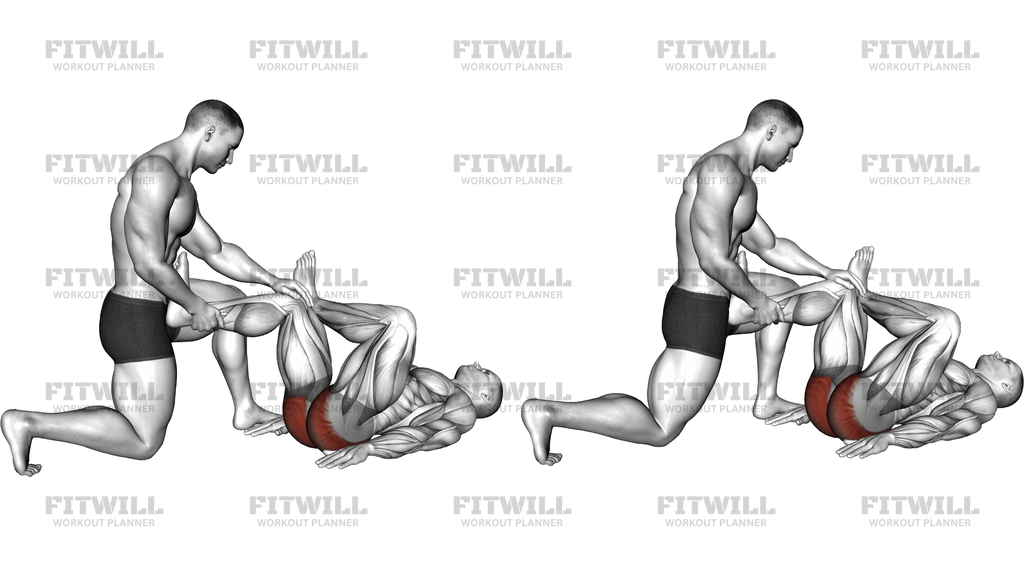
The image shows a person lying on the back with one ankle crossed over the opposite thigh and the supporting leg drawn in toward the torso. That setup puts most of the stretch into the glute of the crossed leg and the hip rotators around the outside of the hip, with the non-crossed side helping create the pull. The exercise is especially useful after lower-body training, long periods of sitting, or any session where the hips feel tight and compressed.
A good rep starts by keeping the spine long, the neck relaxed, and the crossed foot active rather than floppy. Pull the thigh in only until you feel a strong but manageable stretch through the outer hip and glute, not a pinch in the front of the hip or a twist in the low back. If the pelvis rotates hard or the low back arches, the stretch shifts away from the intended tissues and becomes harder to control.
Because this is a mobility stretch rather than a lift, the goal is calm breathing and repeatable positions. Use the inhale to settle into the setup and the exhale to soften the hip a little farther if the range stays pain-free. Short holds can be enough for a warmup, while longer holds work better after training when the hips need a deeper release.
Recumbent Hip External Rotator And Hip Extensor Stretch fits well in cooldowns, recovery sessions, or mobility blocks before squats, lunges, deadlifts, running, or other lower-body work. It is usually beginner-friendly because the floor supports the body, but the stretch should still be adjusted carefully if the knee, hip, or low back is sensitive. Keep the movement honest and controlled so the pressure stays in the glute and outer hip instead of turning into a forced position.
[ Workout Log & Planner ]
Put your next workout in Fitwill
Keep your plan and training log ready when you are.


Instructions
- Lie on your back on an exercise mat and cross one ankle over the opposite thigh just above the knee to form a figure-four shape.
- Keep the crossed-leg foot active and let the knee open outward instead of collapsing inward.
- Thread both hands behind the supporting thigh, or around the shin if that is the grip shown, and keep the shoulders resting on the floor.
- Draw the supporting leg toward your chest until you feel the stretch in the crossed-side glute and outer hip.
- Keep both hips as level as you can so the pelvis does not twist away from the floor.
- Hold the position with a long exhale, then soften a little deeper only if the stretch stays comfortable and the low back stays quiet.
- Pause at the end range for the chosen hold time without bouncing or forcing the knee farther open.
- Release the grip slowly, uncross the leg, and reset before switching sides.
- Repeat on the other side with the same range and breathing pattern.
Tips & Tricks
- If the stretch lands in your low back instead of the outer hip, pull the thigh in less and keep the tailbone heavier on the mat.
- A small change in foot placement on the crossed thigh changes the feel; keep the ankle above the knee, not sliding toward the hip crease.
- Pulling the supporting leg too aggressively often turns the stretch into a hamstring tug, so stop when the glute opens and the hamstring is only assisting.
- Keep the crossed knee gently opening outward; forcing it down can irritate the hip or knee joint.
- If your shoulders round off the floor, use a towel or strap behind the thigh so you can hold the position without straining the upper body.
- Long exhales usually work better than hard stretching here because the hip rotators relax gradually when the breath stays smooth.
- Shorter holds are better for a warmup, while longer holds are better after training when the goal is to reduce tension.
- Switch sides only after the first hip feels comparable to the second; this stretch is easy to overdo on one side if you chase extra range.
Frequently Asked Questions
What does Recumbent Hip External Rotator And Hip Extensor Stretch target most?
It mainly targets the glutes and the deep external rotators on the side of the crossed leg. You will usually feel it most in the outer hip and the back of the hip rather than in the quad.
How do I know if I am set up correctly in the figure-four position?
Your ankle should sit just above the opposite knee, and the supporting leg should be the one you pull toward your chest. If the crossed knee is drifting toward your face or your pelvis is twisting, the setup is off.
Should I keep the crossed knee pushed wide or relaxed?
Let it open naturally, but do not force it down. A gentle outward angle is enough; the stretch should come from the hip position and the pull of the supporting leg, not from pressing on the knee.
Why does this stretch sometimes feel like it is in my low back?
That usually means you are pulling the knee too far or letting the pelvis rotate. Back off the range, keep both hips heavier on the floor, and aim the stretch into the crossed-side glute instead.
Can I use a strap or towel for Recumbent Hip External Rotator And Hip Extensor Stretch?
Yes. A strap behind the supporting thigh can help if you cannot comfortably reach your leg, and it also keeps the shoulders relaxed while you hold the stretch.
Is this more of a glute stretch or a hip mobility drill?
It is both, but the main goal is a controlled glute and hip rotator stretch. Because the floor supports your body, it is also a simple mobility drill for restoring hip range.
What is the safest way to deepen the stretch?
First exhale and relax the hips, then pull the thigh in a small amount if the stretch is still comfortable. Do not yank the leg or force the crossed knee open.
When should I avoid this stretch?
Skip it or shorten the range if the knee, hip, or low back feels sharp, pinchy, or unstable. If the position hurts instead of creating a mild to moderate stretch, it needs to be adjusted.