Quadriceps Stretch On Box
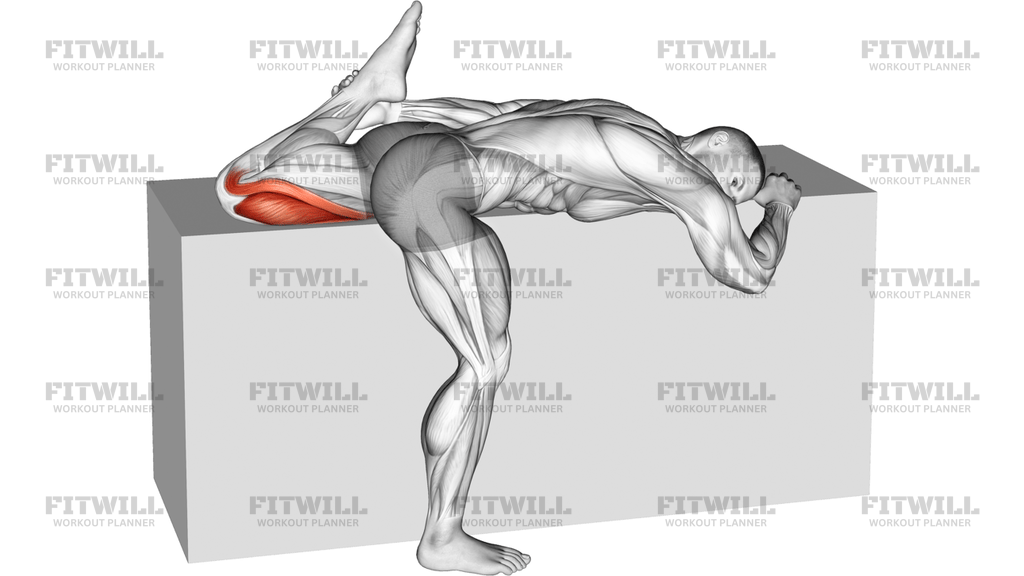
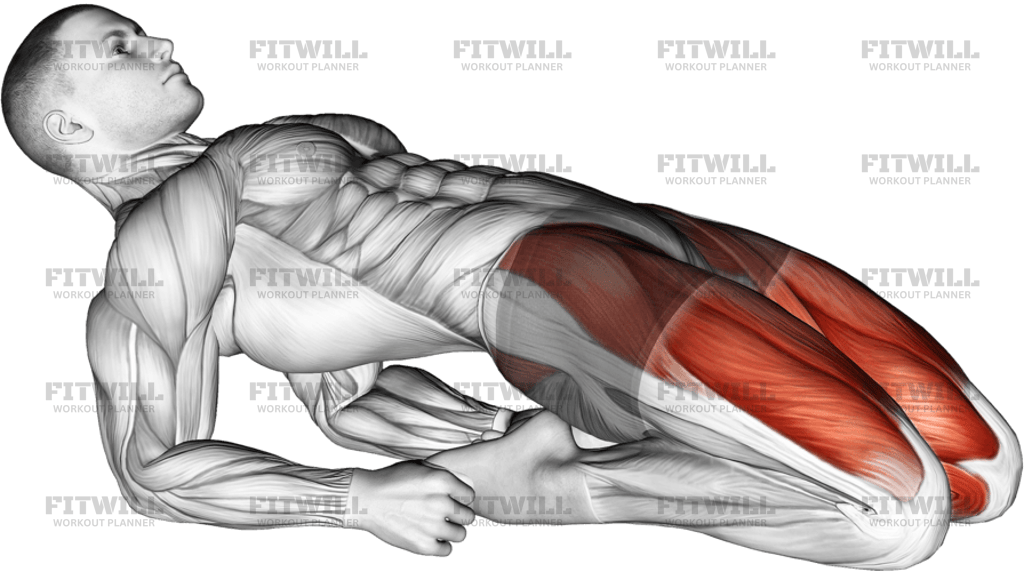
Quadriceps Stretch On Box is a supported lower-body mobility drill that opens the front of the thigh on the rear leg while giving you a stable place to brace through the torso. The box lets you keep the back foot and knee elevated so you can bias the quadriceps and hip flexor of the stretched side without needing to balance in a deep lunge.
This movement is best thought of as a position-based stretch, not a strength rep. The target side should feel lengthening through the front of the thigh, often with some tension at the hip as the pelvis rotates under. The front leg and forearms help you manage balance so the stretched side can relax into the position instead of fighting to stay upright.
The setup matters. A higher box will create a stronger stretch, but it also increases the demand on the knee and ankle of the rear leg, so start with a lower surface if you are tight or if your knees do not like deep flexion. The front foot should stay planted and far enough away that you can lower your torso without dumping all your weight into the box.
As you settle in, fold forward until you feel a clear but tolerable pull through the quadriceps of the elevated leg. Keep the hips as square as possible, lightly squeeze the glute on the stretched side, and breathe slowly to keep the front of the hip from bracing up. The goal is steady pressure and controlled relaxation, not forcing the knee or arching the lower back to chase more range.
Use Quadriceps Stretch On Box after leg training, during a warm-up, or in a recovery session when you want a more supported way to open the quads and hip flexors. It is especially useful if bodyweight lunges or floor-based stretches feel too unstable. Stay in a pain-free range, keep the motion smooth, and come out of the position gradually so the knee and hip can reset cleanly.
Fitwill
Log Workouts, Track Progress & Build Strength.
Achieve more with Fitwill: explore over 9600 exercises with images and videos, access built-in and custom workouts, perfect for both gym and home sessions, and see real results.
Start your journey. Download today!




Instructions
- Place a box or bench behind you and stand facing away from it with enough room to step forward for balance.
- Rest the top of one foot and shin on the box, with that knee bent and the elevated leg pointing back behind you.
- Step the opposite foot forward on the floor and keep it flat so you have a stable base.
- Fold your torso forward and place your forearms on the box, using the support to stay steady.
- Tuck the pelvis slightly and keep the hips as square as you can toward the floor.
- Lightly squeeze the glute on the side being stretched to increase the quad and hip-flexor stretch.
- Shift your weight until you feel a strong but tolerable stretch through the front of the elevated thigh.
- Breathe slowly for the chosen hold, then press through the front foot and step the rear leg off the box to come out.
- Repeat on the other side with the same box height and torso angle.
Tips & Tricks
- Use a lower box first if your rear knee feels crowded or if the stretch is too aggressive at full height.
- Keep the front foot far enough forward that your torso can lean without collapsing all your weight into the forearms.
- A small glute squeeze on the stretched side usually does more for the quad stretch than forcing the torso lower.
- Do not let the lower back arch hard in an attempt to create more range; keep the ribs stacked over the pelvis.
- If the stretch is mostly in the knee or ankle, reduce the box height and retest the position.
- Keep the shin and top of the rear foot resting on the surface instead of rolling to the side.
- Use slow exhales to help the front of the hip soften while you hold the position.
- Stop short of sharp pain in the knee, especially if the surface is hard or the joint does not tolerate deep bend.
- Match the stance and hold time on both sides so you can compare left and right tightness accurately.
Frequently Asked Questions
What does Quadriceps Stretch On Box target most?
It mainly stretches the quadriceps of the elevated leg, with a strong secondary stretch through the hip flexor on that side.
Why is the forearm support on the box useful?
The forearms let you balance and relax instead of bracing hard through the upper body, which makes it easier to sink into the quad stretch.
How high should the box be?
Start with a lower box or bench if you are tight, then move higher only if the stretch stays smooth and your knee feels comfortable.
Should I squeeze the glute on the stretched side?
Yes. A light glute squeeze helps tip the pelvis and usually increases the stretch through the front of the thigh without forcing the lower back.
What is the most common mistake on this stretch?
People often arch the lower back or shove the hips forward instead of keeping the ribs and pelvis controlled, which reduces the quality of the stretch.
Can I do this if my knees are sensitive?
Usually yes, but only with a lower surface and a pain-free setup. If the rear knee does not tolerate the position, switch to a floor-based quad stretch.
What should I feel during the hold?
You should feel a clear lengthening along the front of the elevated thigh and possibly the front of the hip, not a sharp pinch in the knee.
Is this better for warm-ups or cooldowns?
It can work in either place, but it is especially useful after leg training or in a mobility block when you want a longer supported hold.
How do I make the stretch easier?
Shorten the stance, lower the box height, and keep a little more weight in the front foot so the rear leg is not forced into as much bend.