Squatting Toe Stretch
Squatting Toe Stretch is a bodyweight floor mobility drill that loads the toes, forefoot, arch, and lower leg while you sit into a deep supported squat on an exercise mat. The position looks simple, but the value comes from how precisely you place the feet and how calmly you settle into the bottom range. Small changes in knee direction, torso angle, and how much weight you keep in your hands change where the stretch is felt.
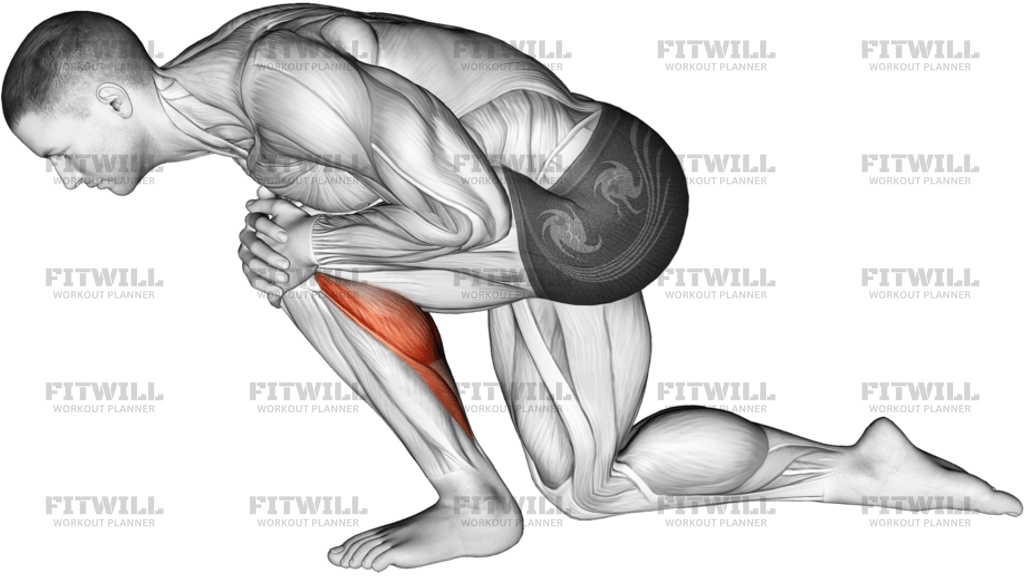
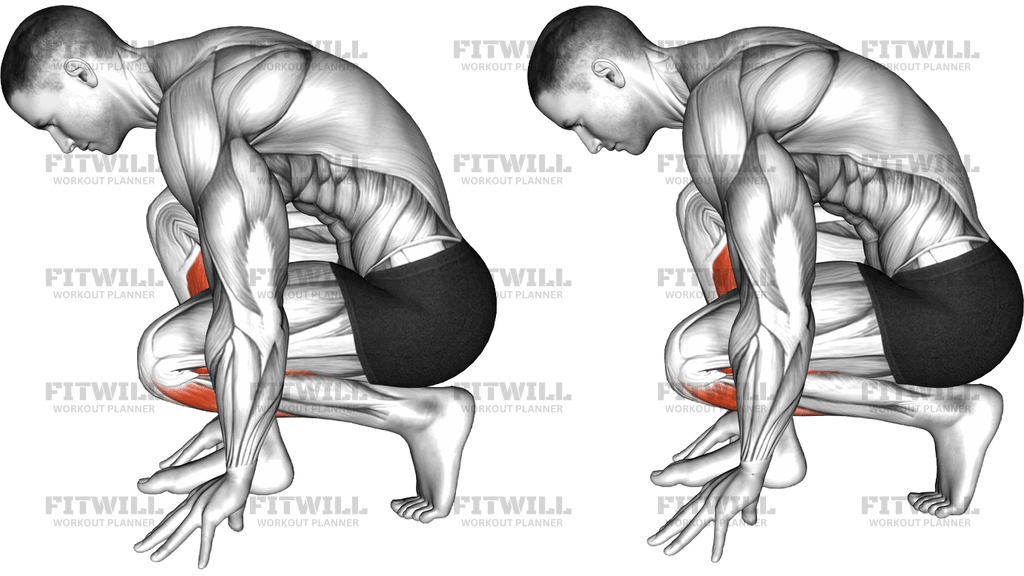
In the image, the athlete is folded into a compact squat with both hands on the floor for balance. That hand support is important because it lets you control how much body weight goes into the toes instead of collapsing onto the joints or forcing the stretch. The goal is a steady, repeatable hold where the feet stay organized and the breath stays relaxed.
Use this stretch when the feet and ankles feel stiff before squats, lunges, jumps, or running, or after long periods of sitting and standing. It can also work as a cool-down when you want to restore some toe extension and ease the lower-leg tension that builds up during training. It is more effective as a careful mobility drill than as a painful end-range test.
As you move in and out of the squat, keep pressure spread across the foot, track the knees over the middle toes, and breathe out slowly as the stretch deepens. If the toe joints feel sharp or cranky, reduce the depth or shift more support into the hands. Consistent, controlled practice usually helps the feet tolerate the position better than forcing a bigger range too soon.
Fitwill
Log Workouts, Track Progress & Build Strength.
Achieve more with Fitwill: explore over 9600 exercises with images and videos, access built-in and custom workouts, perfect for both gym and home sessions, and see real results.
Start your journey. Download today!




Instructions
- Place an exercise mat on the floor and sink into a low squat with your chest folded over your thighs.
- Set both hands on the mat in front of you so they can share some of your body weight.
- Position the working foot so the toes are loaded on the floor and the heel stays as close as you can manage without forcing it.
- Keep the knee tracking over the middle toes instead of rolling inward.
- Shift your hips back slightly until you feel the stretch through the toes, arch, and lower calf.
- Hold the bottom position and breathe out slowly without losing balance.
- Ease the pressure forward or back until you find the deepest pain-free line.
- Return out of the stretch with control, then repeat or switch sides as needed.
Tips & Tricks
- Use your hands as light support, not as a way to collapse your chest onto the floor.
- If the toes cramp, shorten the hold and reduce how much body weight you let settle into the foot.
- Keep the pressure spread across the big toe mound and little toe mound instead of dumping onto the inside edge.
- A softer mat can make the stretch more tolerable when the toe joints are sensitive.
- Do not force the heel down if the ankle or toes resist; the stretch should feel strong, not sharp.
- Let the exhale soften the lower leg instead of trying to push deeper with a breath hold.
- Keep the knees from caving in, especially when the hips are sitting low and balance gets harder.
- Use this as a steady mobility drill before lower-body training rather than a bounce-through stretch.
Frequently Asked Questions
What does Squatting Toe Stretch work most?
It mainly targets the toes, forefoot, foot arch, ankle, and the lower-leg tissues that limit toe extension in a deep squat.
Do I need to keep both hands on the floor?
No, but the hands should stay close enough to help you balance and unload some body weight while you settle into the stretch.
Why is this stretch done in such a deep squat?
The squat puts the feet under load in a position that exposes toe and ankle stiffness, which makes the stretch more specific to lower-body training.
Can beginners do this exercise safely?
Yes, as long as they stay shallow at first, keep the hands supporting the body, and avoid forcing the toe joints.
What should I do if the toe stretch feels too intense?
Reduce the squat depth, shift more weight into your hands, or use a softer surface until the stretch stays comfortable.
Should my knees travel over my toes here?
Yes, but they should track in line with the middle toes instead of collapsing inward or twisting the foot.
Is it normal to feel this in the calves too?
A lower-calf stretch is common, but the main sensation should still come from the toes, forefoot, and foot arch.
When is the best time to use Squatting Toe Stretch?
It fits well before squats, lunges, jumps, and running, or after training when you want to unwind foot stiffness.