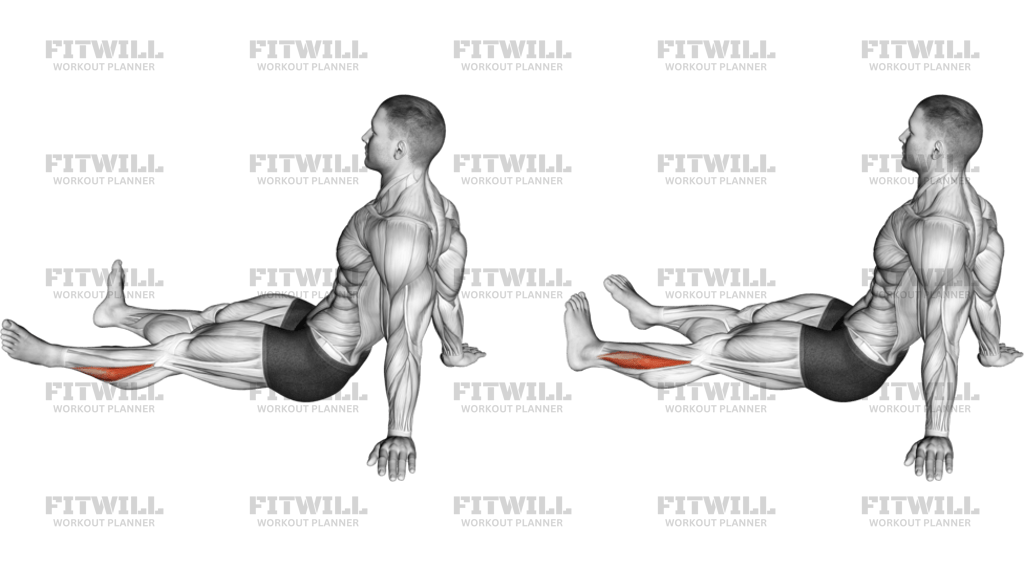
Seated Toe Extensor And Foot Inverter Stretch
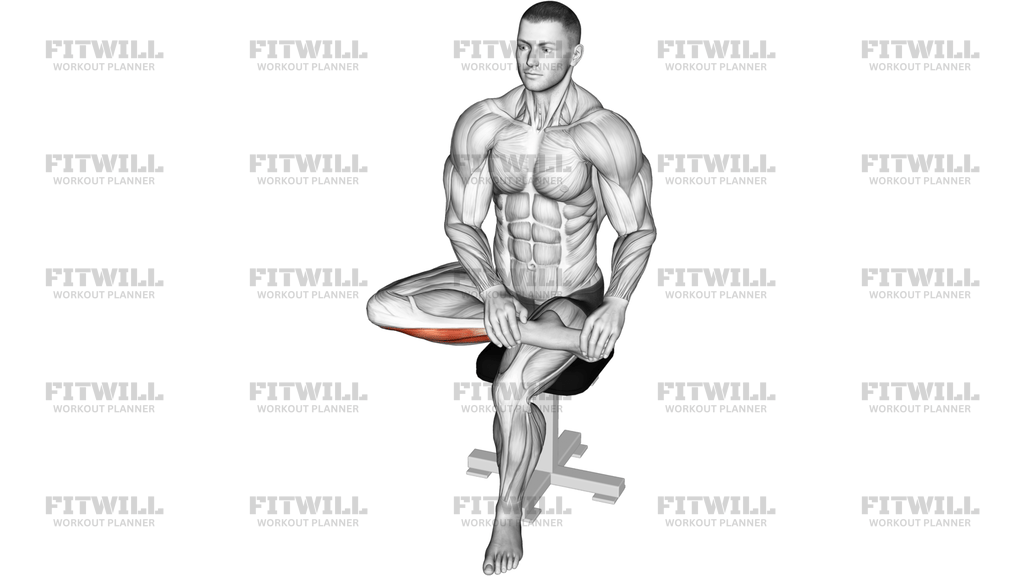
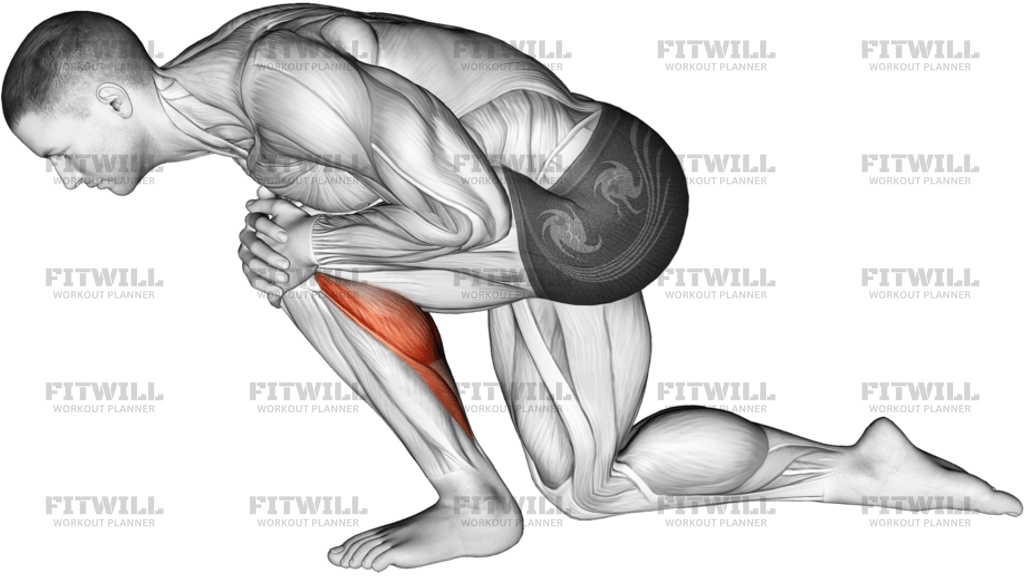
Seated Toe Extensor And Foot Inverter Stretch is a seated lower-leg mobility drill where you cross one ankle over the opposite thigh and use your hands to guide the foot into a controlled stretch. The position lets you isolate the ankle, forefoot, and toes without having to brace through the floor or fight balance, which makes it useful when the goal is to open the top of the foot, the ankle, and the tissues around the shin and calf.
The exercise matters because the setup changes what you feel. With the lifted leg supported on the opposite thigh, the hip stays relaxed and the knee is kept out of the way, so the stretch can focus on the foot and ankle instead of turning into a whole-leg twist. A clean setup also makes it easier to compare sides and notice whether one foot resists inversion or toe extension more than the other.
In the working position, the hands control the amount of toe extension and inward foot turn. That controlled pressure is what makes this a stretch instead of a passive hang. You should feel a strong but manageable opening through the top of the foot, the front of the ankle, and the lower leg, not a sharp pinch through the joint or a cramp in the arch. Small adjustments matter more than forcing a bigger range.
Use this stretch before training if your ankles feel stiff, after running or jumping if the lower leg feels tight, or anytime your feet and calves need a reset. It is especially helpful for people who spend a lot of time in stiff shoes, do a lot of standing, or need better ankle control for squats, lunges, and landing mechanics. Keep the movement smooth, breathe slowly, and stop short of pain so the stretch stays productive and repeatable.
Fitwill
Log Workouts, Track Progress & Build Strength.
Achieve more with Fitwill: explore over 9600 exercises with images and videos, access built-in and custom workouts, perfect for both gym and home sessions, and see real results.
Start your journey. Download today!




Instructions
- Sit upright on a bench or chair and cross one ankle over the opposite thigh just above the knee.
- Keep the planted foot flat on the floor so you stay tall and stable before you reach for the lifted foot.
- Place both hands around the lifted forefoot, with one hand helping near the toes and the other supporting the heel or outer foot.
- Relax the ankle first, then gently pull the toes back toward the shin to create toe extension.
- Add a small inward turn of the foot if the stretch calls for inversion, but keep the motion subtle and controlled.
- Hold the end range only until you feel a strong stretch through the top of the foot, front of the ankle, or lower leg without pain.
- Breathe slowly and let the exhale soften the tension while you keep your shoulders and neck relaxed.
- Release the pressure gradually, bring the foot back to neutral, and repeat the same setup on the other side.
Tips & Tricks
- Keep the ankle supported on the opposite thigh so you are stretching the foot, not twisting the hip.
- Pull through the forefoot and toes instead of yanking on the skin or levering the knee.
- A very small inward turn is usually enough; forcing a big inversion can irritate the ankle joint.
- If the arch starts to cramp, back off the toe extension and let the foot relax for a few seconds.
- Stay tall through the torso so the stretch stays local to the foot and lower leg.
- Move the foot gradually into the stretch instead of bouncing into the end range.
- Use a longer exhale to reduce guarding when the top of the foot feels tight.
- Match the hold time on both sides so left and right ankles get the same treatment.
Frequently Asked Questions
What muscle does Seated Toe Extensor And Foot Inverter Stretch target most?
It mainly targets the lower-leg and foot tissues around the calves, shin, and ankle while emphasizing toe extension and foot inversion.
Can beginners perform this exercise?
Yes. The seated setup is beginner-friendly because you can support the lifted leg on the opposite thigh and control the stretch with your hands.
Where should I feel the stretch when the forefoot is pulled back?
You should feel it through the top of the foot, the front of the ankle, and sometimes into the shin or calf, depending on how tight the foot is.
How much should I turn the foot inward during the stretch?
Only a small amount. The goal is to guide the sole inward enough to bias the inverter muscles, not to force the ankle into a hard twist.
Why is the ankle crossed over the opposite thigh?
That position isolates the foot and ankle, keeps the lower leg supported, and makes it easier to control toe extension without losing posture.
What if the arch or outer ankle cramps during the hold?
Back off the intensity, reduce the inward turn, and shorten the hold. Cramps usually mean the stretch is too aggressive for the current position.
Can I do this before squats or running?
Yes. It works well as a warm-up drill when your feet or ankles feel stiff and you want cleaner lower-leg motion.
What is the most common mistake with this stretch?
People usually pull too hard on the toes or twist the whole leg instead of keeping the stretch focused in the foot and ankle.
How long should I hold each side?
Hold long enough to settle into the stretch with steady breathing, then switch sides and keep the duration even.