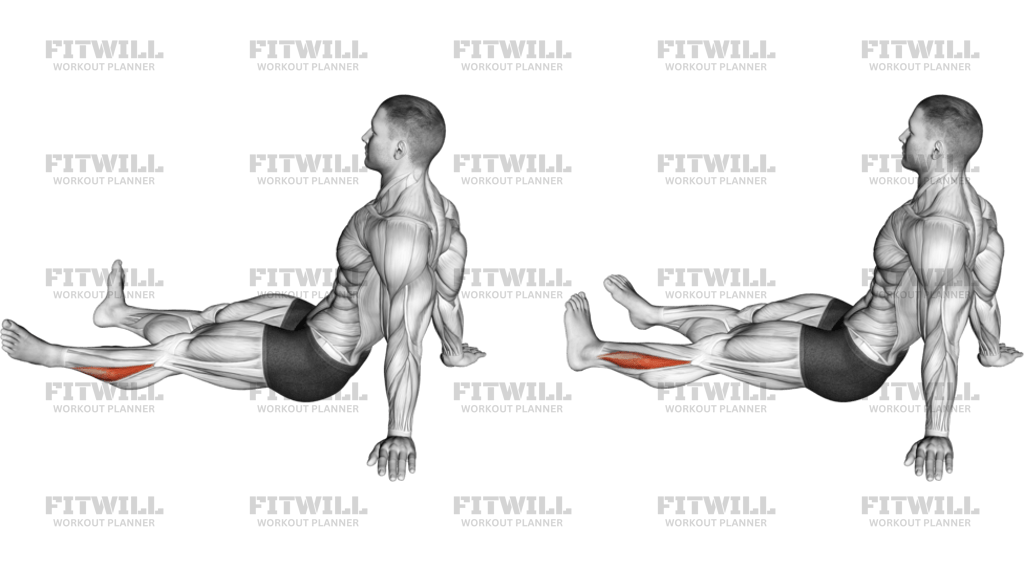
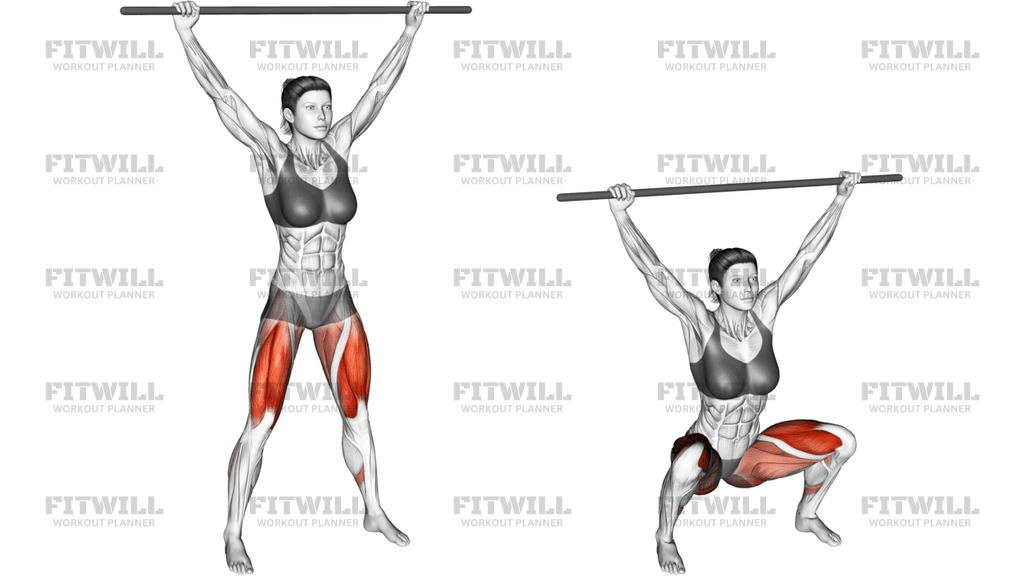
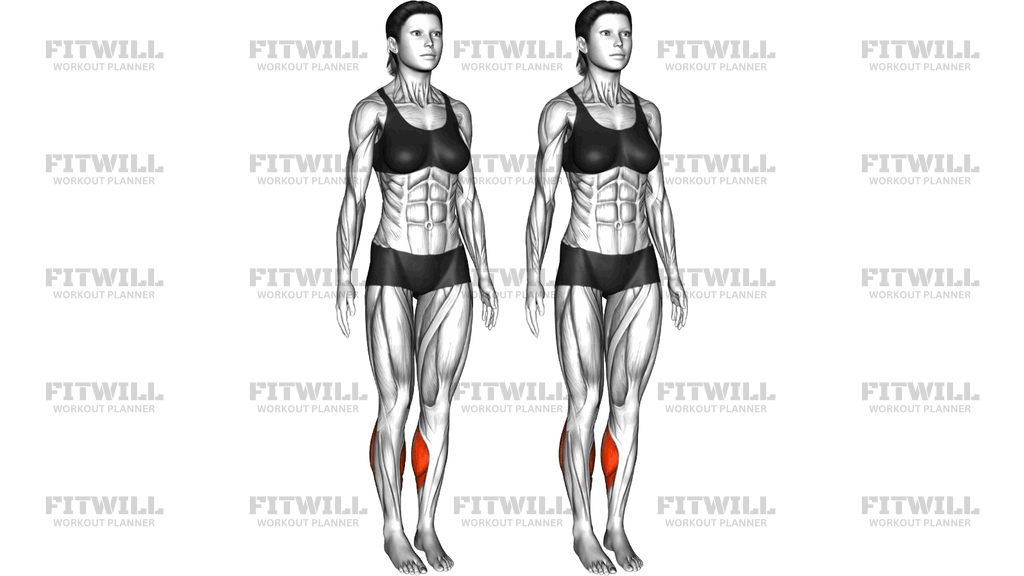
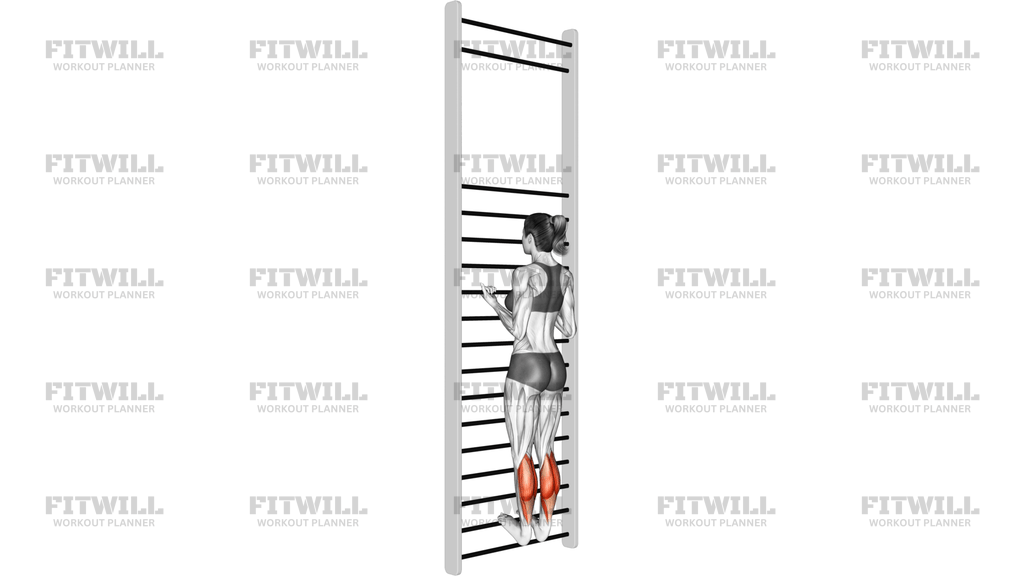
Seated Toe Flexor And Foot Inverter Stretch
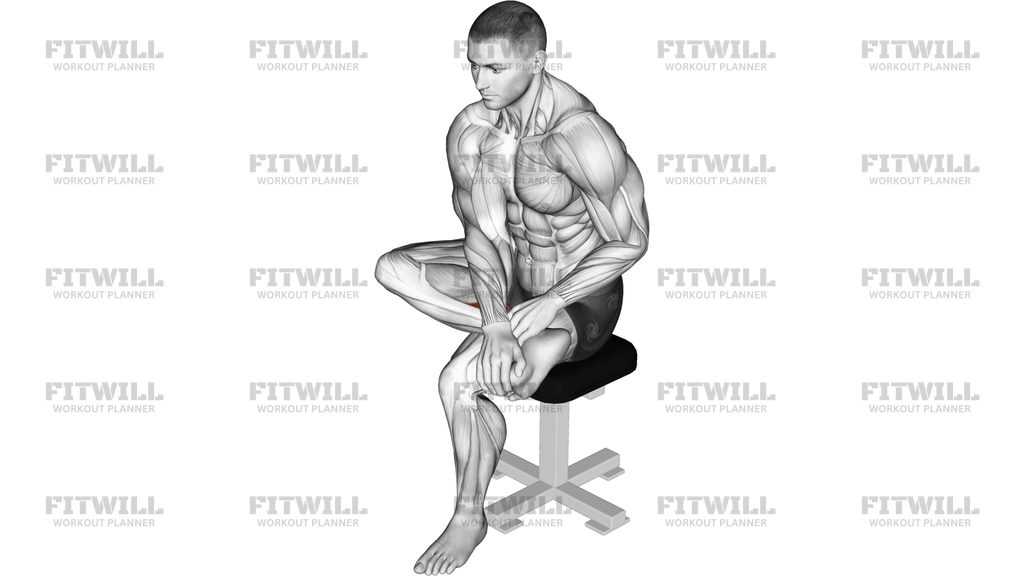
Seated Toe Flexor And Foot Inverter Stretch is a seated lower-leg mobility drill that opens the foot, ankle, and inner calf while you stay supported on a bench. It is useful when the arch, toes, and ankle feel stiff from running, jumping, long periods of standing, or shoe wear that keeps the foot in one position for too long. The goal is not to force a dramatic range, but to create a clear, repeatable stretch that you can hold without losing posture.
The seated setup matters because it takes balance out of the equation and lets you focus on the exact foot position. With one ankle crossed over the opposite thigh, you can work into the toes, arch, and inversion pattern without tipping your torso or gripping the floor. That support also makes it easier to keep the stretch focused on the lower leg instead of compensating through the hip or knee.
In a well-done repetition, the toes back away from the shin while the foot is gently guided through the stretch that matches the exercise name. You should feel length through the toe flexors, the inner ankle, and the side of the lower calf that helps control foot position. If the stretch shifts into a sharp pinch on the top of the foot or a cramp in the arch, reduce the force and settle back into a smaller range.
Seated Toe Flexor And Foot Inverter Stretch is often used after lower-body lifting, running, or sports work that loads the feet repeatedly. It can also be a good part of a warmup when the ankles feel restricted and you want better contact with the floor before squats, lunges, or calf work. Because the movement is slow and supported, it works well for beginners, but it still rewards careful hand placement and calm breathing.
Treat each side separately and keep the same setup on both legs so you can notice side-to-side differences. The best version of Seated Toe Flexor And Foot Inverter Stretch feels controlled, not aggressive, and leaves the foot more organized rather than irritated. A short, clean hold is usually more useful than forcing farther and losing the line of the stretch.
[ Workout Log & Planner ]
Put your next workout in Fitwill
Keep your plan and training log ready when you are.


Instructions
- Sit upright on a bench or stool and cross one ankle over the opposite thigh so the working foot is easy to reach.
- Let the knee of the crossed leg open slightly to the side and keep the supporting foot flat on the floor.
- Cup the forefoot with both hands, keeping one hand around the toes and the other steadying the heel or midfoot.
- Pull the toes back toward the shin until you feel the toe flexors and the arch begin to lengthen.
- Guide the foot gently into the stretch that fits the movement, keeping the motion smooth instead of twisting hard.
- Hold the end position for a steady breath, then ease the pressure before the foot starts to cramp or shake.
- Use small adjustments to find the deepest stretch you can control through the arch, inner ankle, and lower calf.
- Release the foot slowly, set it back down, and repeat on the other side with the same setup.
Tips & Tricks
- Keep the crossed ankle on the thigh, not on the knee joint, so the stretch stays in the foot and ankle.
- If the arch starts to cramp, ease off the toe pull and shorten the hold before trying again.
- Use your hands to guide the foot, not to wrench it into a bigger angle than the ankle tolerates.
- A slight lean forward can increase the stretch, but the torso should stay long instead of collapsing.
- The best sensation is a firm pull through the toes, arch, and inner lower leg, not a sharp pinch on the top of the foot.
- Exhale as you settle into the position; holding your breath usually makes the arch tighten up.
- If one side feels much stiffer, compare the starting angle before you push farther on the tighter side.
- Do not force the toes straight with pressure from the thumb if the forefoot or big toe joint feels irritated.
Frequently Asked Questions
What does Seated Toe Flexor And Foot Inverter Stretch target most?
It mainly targets the toe flexors, arch, and the muscles that control foot inversion, with some stretch reaching into the inner lower leg.
Can beginners do Seated Toe Flexor And Foot Inverter Stretch?
Yes. The seated, supported setup makes it beginner-friendly as long as you keep the pull gentle and avoid forcing the foot.
Where should I feel Seated Toe Flexor And Foot Inverter Stretch?
You should feel it through the arch, the toes, and the inner side of the lower leg. If the top of the foot feels pinched, back off the angle.
Why cross the ankle over the opposite thigh?
That position supports the leg and gives you better access to the forefoot so you can work the toes and ankle without balancing.
Should I lean forward during Seated Toe Flexor And Foot Inverter Stretch?
A small forward lean can deepen the stretch, but it should come from a controlled hip hinge, not from rounding the back.
What if my arch cramps during this stretch?
Reduce the toe pull, shorten the hold, and reset the foot angle. A cramp usually means the stretch is too aggressive.
Is Seated Toe Flexor And Foot Inverter Stretch useful after running or calf work?
Yes. It is a good cooldown choice after running, jumping, calf raises, or any session that leaves the feet and ankles stiff.
How long should I hold each side?
Hold long enough to let the tissues settle, usually around 15-30 seconds, then release before the foot starts to tighten or shake.
Can I do Seated Toe Flexor And Foot Inverter Stretch on both sides?
Yes, and you should. Side-to-side comparison is useful because one foot often feels much stiffer than the other.