Weighted Captains Chair Leg Raise
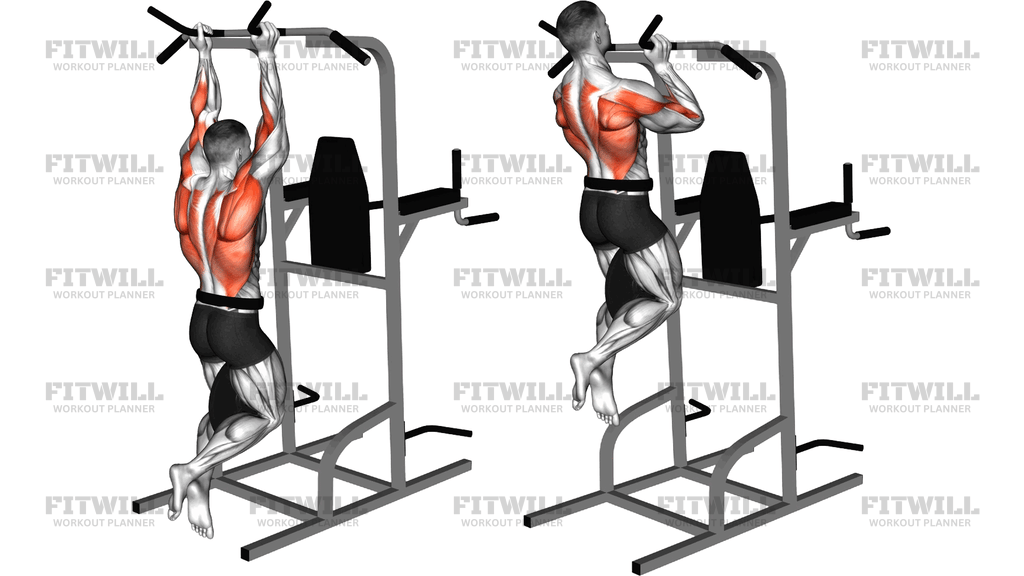
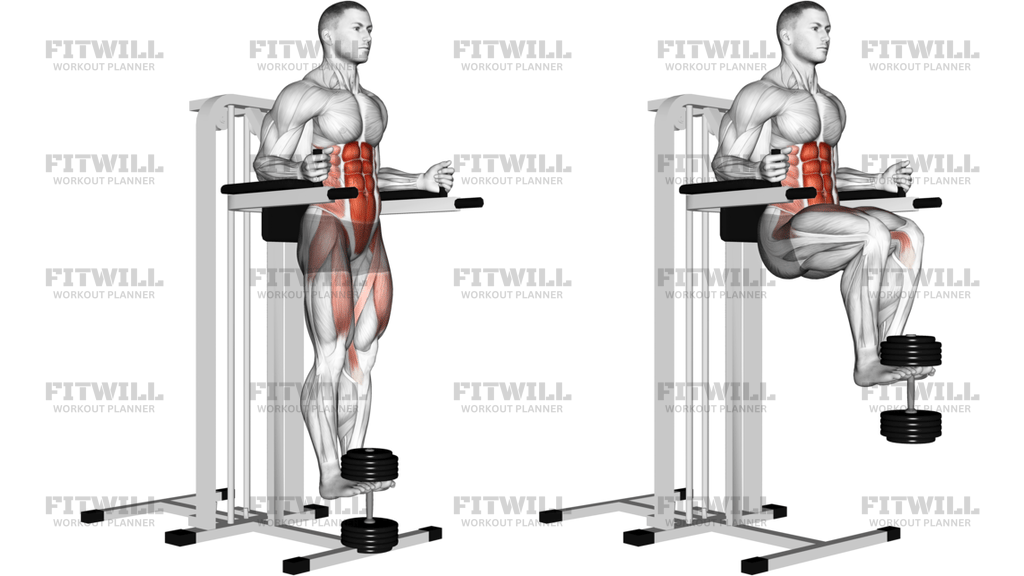
Weighted Captains Chair Leg Raise is a hanging-style core exercise performed on a captain's chair with your forearms supported on the pads and a dumbbell or ankle weight secured between the feet. The pictured version loads the legs by clamping a dumbbell between the feet, which makes the rep less about leg swing and more about controlling the pelvis as the knees travel upward. It is a direct way to train lower-abdominal strength, hip flexion control, and the ability to keep the torso quiet while the legs move.
The setup matters because this exercise becomes sloppy fast if the shoulders, ribs, or pelvis are not organized before the first rep. With the forearms planted and the shoulders depressed, the trunk should stay tall and stable while the legs hang beneath the hips. That position lets the abs take over instead of the lower back arching or the body rocking to create momentum. The weight between the feet also raises the demand on the inner thighs and makes the lowering phase more important, because the load wants to pull the legs apart and downward.
Each repetition should begin from a dead stop or near-dead stop. From there, brace the ribcage down, slightly curl the pelvis, and lift the knees toward the chest in a smooth arc. The goal is not to fling the thighs upward, but to shorten the space between the pelvis and the sternum while keeping the upper body fixed. A short pause at the top helps you own the contraction, and a slow return under control keeps tension on the abs and hip flexors instead of letting gravity do the work.
This variation is useful as an accessory core movement when you want a strict, equipment-based exercise that is easy to load and easy to progress. It fits well in core blocks, upper/lower split finishers, or as part of a conditioning session where you want precise reps rather than explosive power. Start with very light load, because a weight that is too heavy quickly turns the lift into a swing and can stress the hips, groin, or lower back. If the dumbbell shifts between the feet, reduce the load or use a more secure ankle-weight option before adding volume.
[ Workout Log & Planner ]
Put your next workout in Fitwill
Keep your plan and training log ready when you are.


Instructions
- Step onto the captain's chair and set your forearms firmly on the pads, hands on the handles, shoulders down, and chest tall.
- Secure a light dumbbell or ankle weight between the feet, then stand tall in the support and let the legs hang straight beneath the hips.
- Brace the ribcage down and lightly tuck the pelvis so the lower back stays out of an arched position before you start.
- Exhale and lift the knees upward by curling the pelvis and bringing the thighs toward the chest, keeping the torso still.
- Raise the legs until the knees are near hip level or as high as you can manage without swinging or losing the load.
- Pause briefly at the top and squeeze the lower abs before starting the descent.
- Lower the legs slowly until they hang under control again, stopping before the weight pulls you into a swing.
- Reset the body position, take another breath, and repeat for the planned number of reps.
Tips & Tricks
- Use the lightest load that stays clamped securely between the feet; this movement gets sloppy fast when the weight is too heavy.
- Keep the shoulders depressed against the pads so the torso does not shrug up as the legs rise.
- A small bend in the knees is fine and often makes the weighted hold more secure.
- Think about curling the pelvis upward, not just lifting the knees, to keep the abs driving the rep.
- If the low back arches on the way down, shorten the range and slow the eccentric phase.
- The lowering phase should be deliberate; letting the legs fall removes most of the training effect.
- If the dumbbell shifts or slides between the feet, stop the set and reduce the load before continuing.
- Keep the neck relaxed and the eyes forward instead of craning the head toward the knees.
Frequently Asked Questions
What does the weighted captain's chair leg raise train most?
It primarily trains the lower abs and hip flexors, with the obliques and inner thighs helping to stabilize the legs and pelvis.
How is the weight used in this variation?
In the pictured version, a dumbbell is held between the feet to add resistance. Some gyms use ankle weights instead when a dumbbell feels unstable.
Should I keep my knees straight or bent?
A slight knee bend is usually better, especially when you are holding a weight between the feet, because it helps you control the load and avoid swinging.
How high should I raise my legs?
Raise them only as high as you can while keeping the torso quiet and the pelvis curling upward. Chasing extra height with momentum usually shifts work away from the abs.
What is the most common mistake on this exercise?
The biggest mistake is swinging the legs and arching the lower back instead of controlling the lift and the return.
Is this a good beginner core exercise?
Yes, if you start with a very light load or bodyweight and keep the range short enough to stay strict.
How should I breathe during the rep?
Exhale as the knees rise and the pelvis curls, then inhale as you lower under control.
Can I substitute a different load if the dumbbell feels awkward between my feet?
Yes. Ankle weights or a lighter dumbbell are usually safer options if the load cannot stay stable during the full rep.