Ski Ergometer
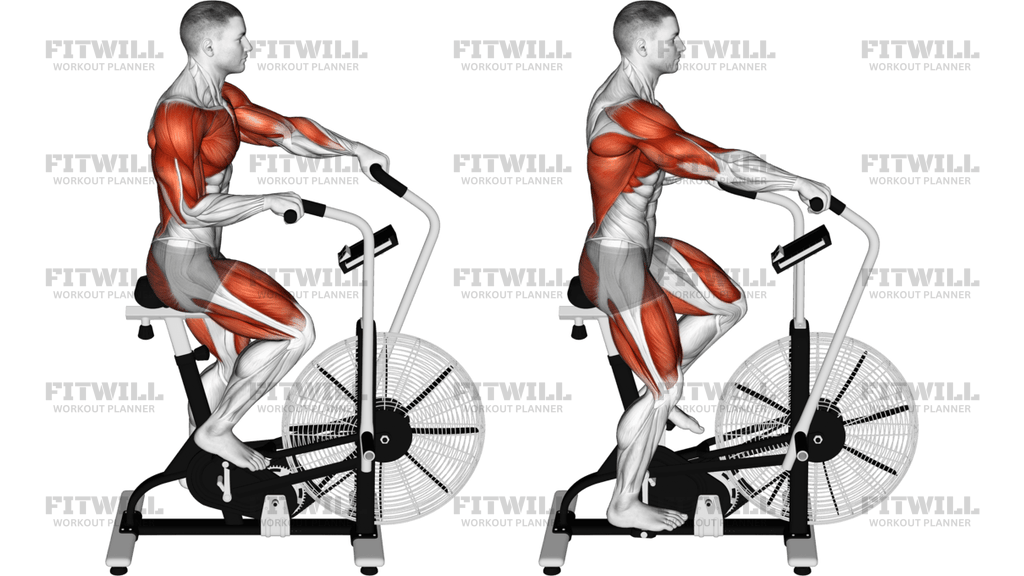
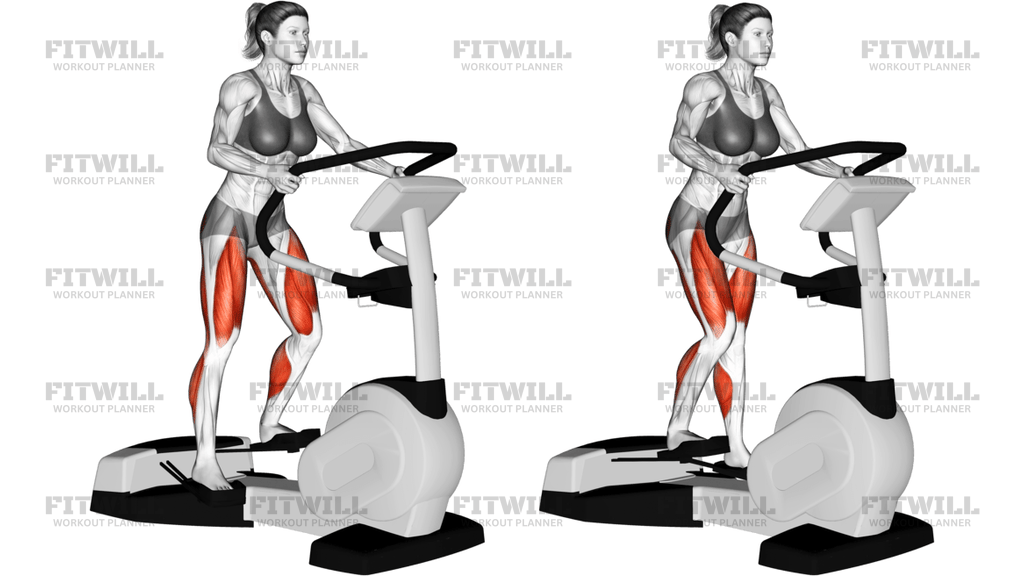
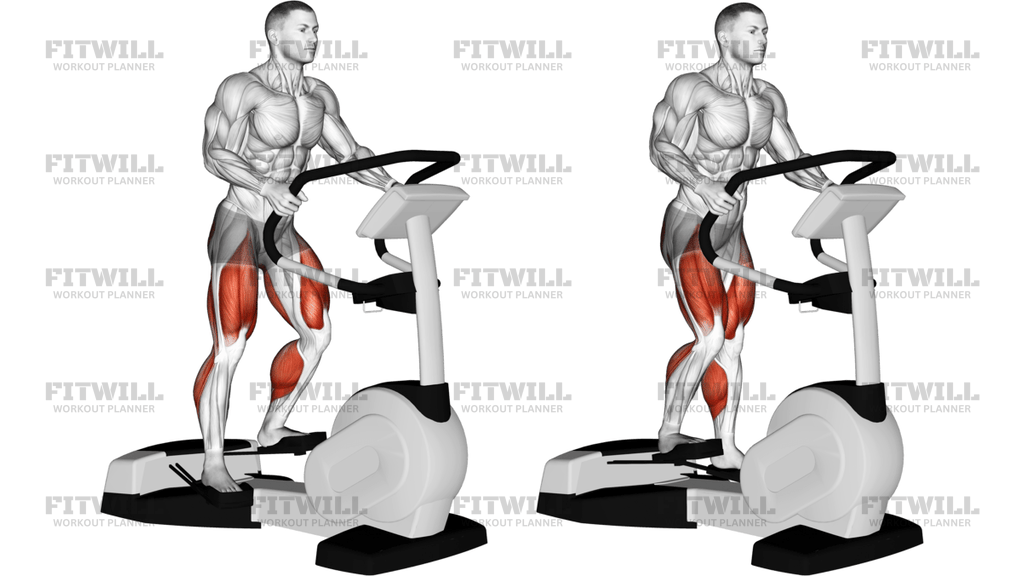
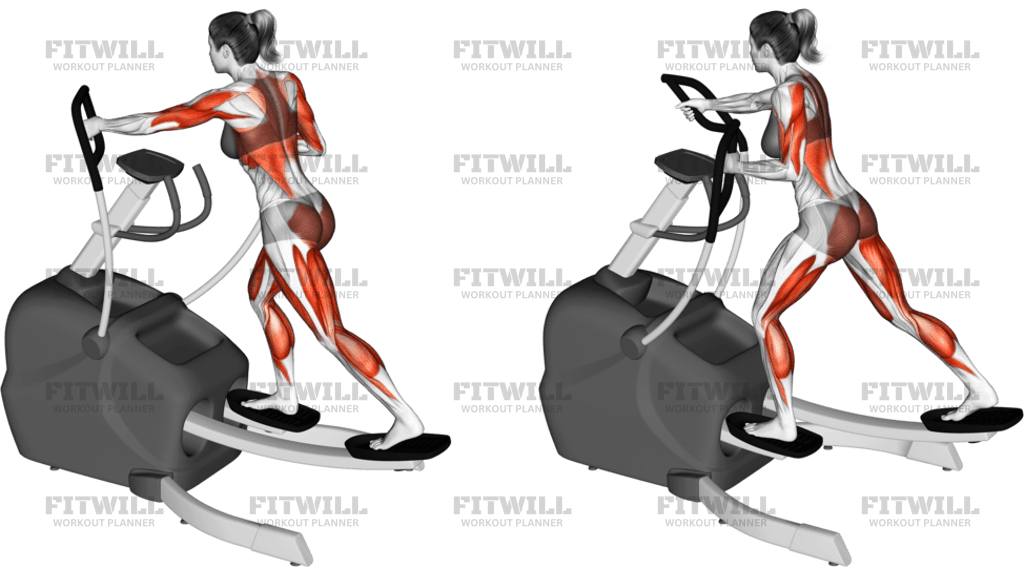
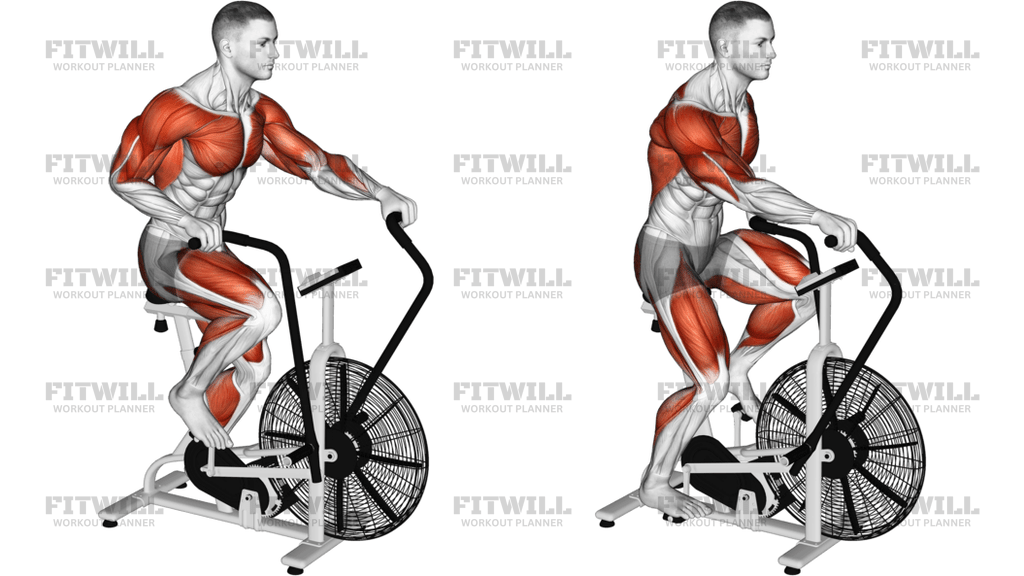
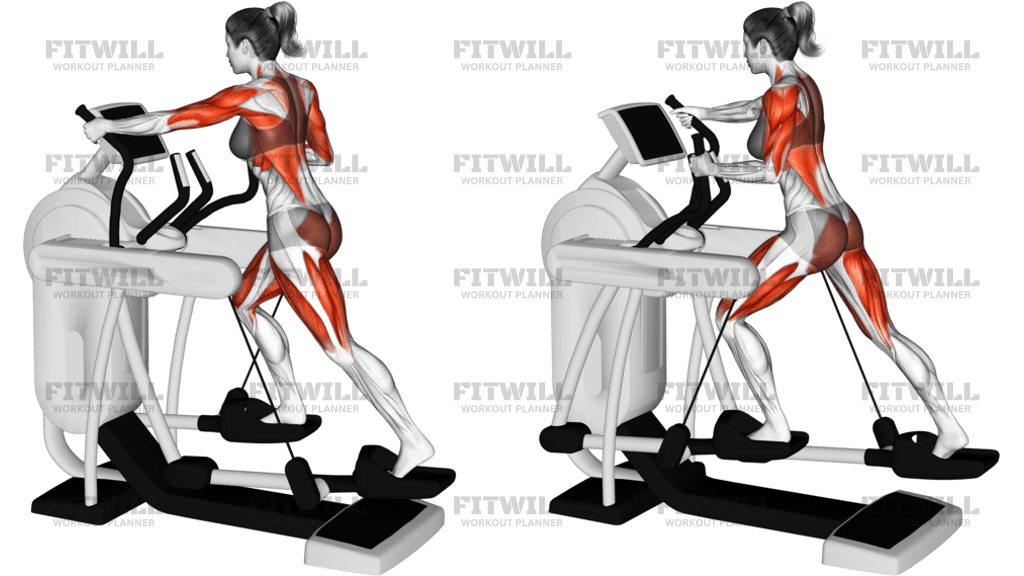
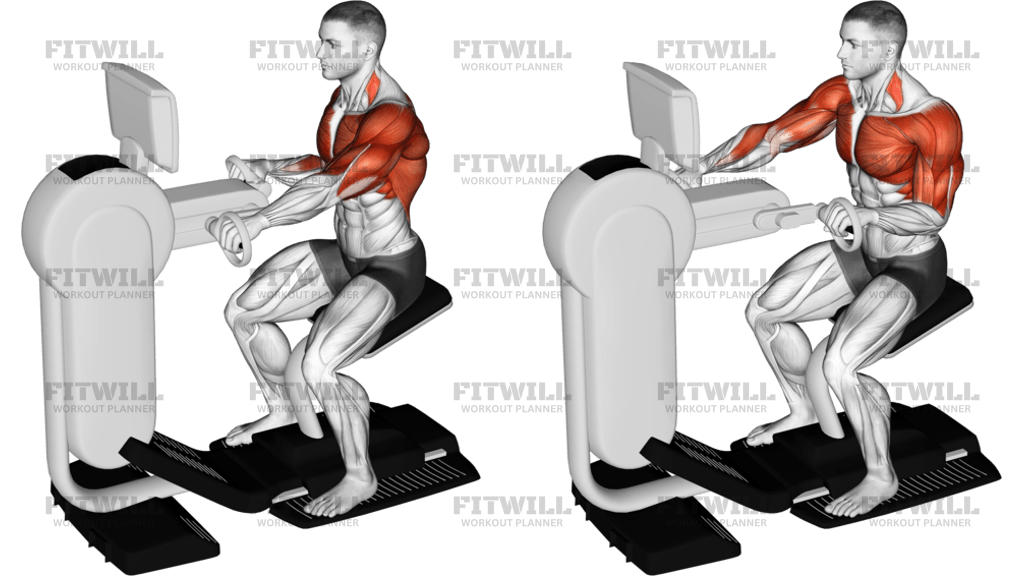
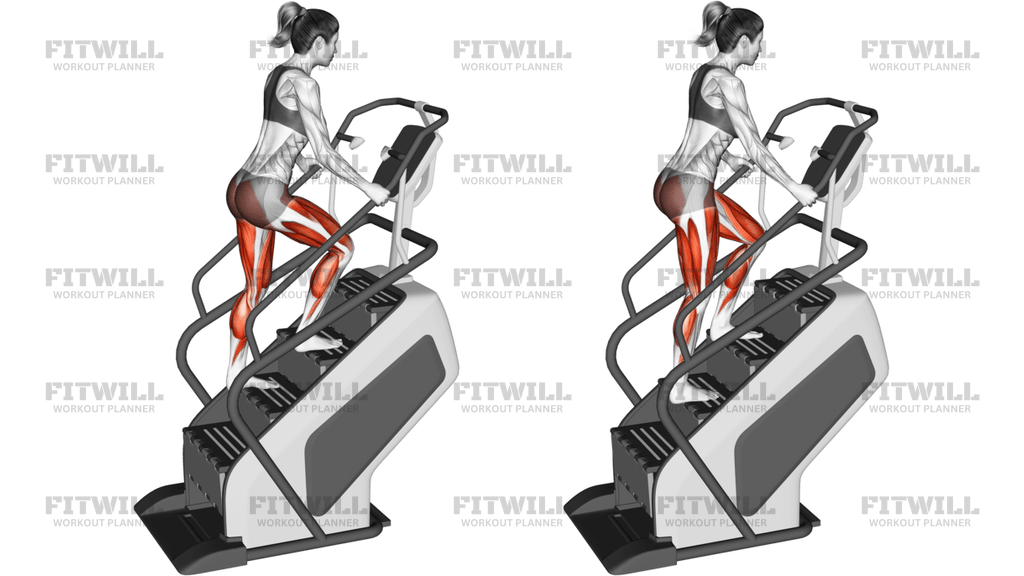
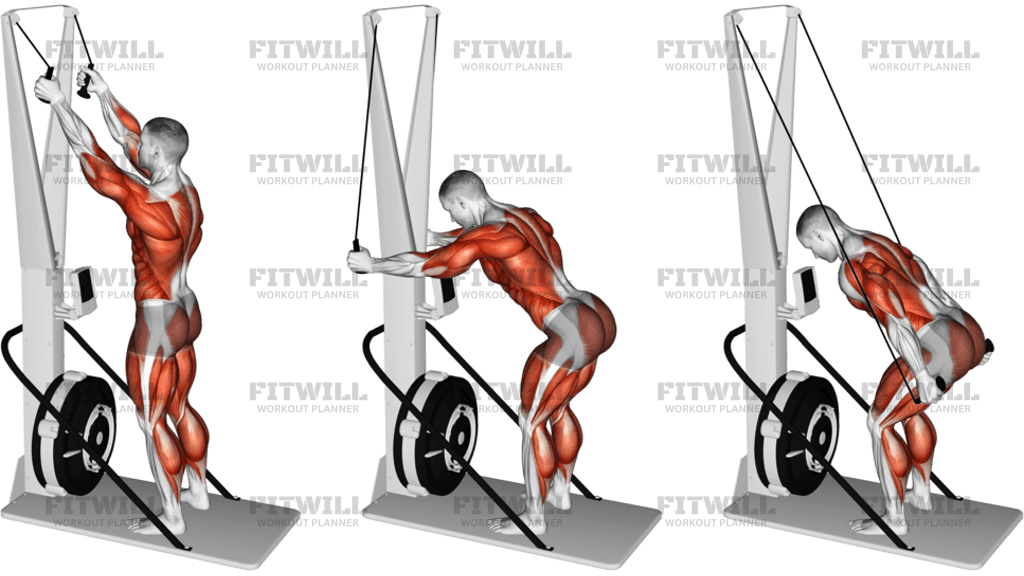
The Ski Ergometer is a standing cardio machine that mimics the double-pole drive of cross-country skiing. Each rep asks you to reach overhead, catch the handles, then pull them down and back with the lats, arms, shoulders, core, and legs working together. The image shows the classic three-part pattern: tall reach at the top, loaded hinge in the middle, and a finish with the hands traveling past the hips.
This movement is useful when you want conditioning without losing the posture and rhythm required for a clean power output. It challenges repeated shoulder flexion, trunk bracing, and coordinated hip hinge, so it is more than just an arm pull. A good rep starts with stacked ribs and pelvis, soft knees, and pressure through the feet so the machine can be driven by the whole body instead of a fast arm yank.
Setup matters because the ski erg rewards repeatable positions. Stand close enough to keep the straps under control, but not so close that the handles crash forward at the top. Reach long overhead without shrugging, then keep the chest and pelvis organized as the handles come down. As the pull accelerates, let the torso lean only as much as you can maintain with control, then finish by loading the lats and triceps while the hips hinge back slightly.
Breathing should match the rhythm of the stroke. Inhale during the reach or recovery, then exhale as you drive the handles down. The return should be deliberate, not passive: let the arms travel up, recover tall, and reset the brace before the next pull. That control keeps the shoulders happier and lets you sustain a stronger pace for longer intervals.
Use Ski Ergometer for warmups, conditioning intervals, finishers, or low-impact aerobic work when you want a pulling-dominant machine that still trains the trunk. Beginners can use it with light resistance and a moderate cadence, while advanced trainees can push pace or interval density. The main quality target is smooth repeatability: strong overhead reach, crisp downward drive, controlled recovery, and no collapse through the lower back or shoulders.
[ Workout Log & Planner ]
Put your next workout in Fitwill
Keep your plan and training log ready when you are.


Instructions
- Stand facing the ski erg with your feet about hip-width apart and your knees softly bent.
- Hold the handles overhead with straight or lightly bent elbows, ribs stacked over your pelvis, and your weight centered through the middle of each foot.
- Set your shoulders down away from your ears and brace your midsection before the first pull.
- Drive the handles down in a smooth arc, leading with your lats as your torso begins a small hinge.
- Keep pulling until your hands pass beside your thighs and your body is in a strong, slightly leaned-forward finish.
- Reverse the path under control, letting the handles rise while you stand tall again and keep the core engaged.
- Breathe in as the arms recover overhead, then exhale through the drive as the handles come down.
- Repeat for the planned time, distance, or stroke count without letting the shoulders shrug or the lower back overextend.
Tips & Tricks
- Keep the first move from the top controlled; if the straps snap taut, you are starting too aggressively.
- Think about pulling the handles past your pockets with the lats, not just bending the elbows.
- Let the torso hinge only a little; turning the rep into a deep squat or big back swing usually steals power from the pull.
- Keep the chin slightly tucked so the neck does not crane forward when the hands go overhead.
- If the shoulders start creeping up toward the ears, shorten the stroke slightly and reset your scapular position.
- Maintain pressure through the whole foot instead of rising onto the toes at the finish.
- Use a cadence you can repeat for the full set; skiing faster with sloppy recovery usually reduces total output.
- On interval work, stop the set if the low back starts to arch harder just to finish each pull.
Frequently Asked Questions
What muscles does the Ski Ergometer work?
It is a full-body pulling cardio exercise that strongly uses the lats, shoulders, triceps, upper back, core, and legs.
Is this mostly an arm exercise?
No. The arms guide the handles, but the main power should come from the lats, trunk, and a small hip hinge.
How should I stand on the machine?
Stand hip-width with soft knees, tall posture, and enough distance to reach overhead without hitting the front of the stroke too hard.
What is the most common mistake on ski erg intervals?
People usually shrug the shoulders and yank the handles with their arms instead of keeping the pull smooth and connected through the trunk.
Can beginners use the Ski Ergometer?
Yes. Start with a light resistance or easy pace and learn the overhead reach, controlled drive, and steady recovery first.
Should my back round during the pull?
No. A slight forward hinge is normal, but the ribs and pelvis should stay organized instead of collapsing through the lower back.
Is this a good warmup before lifting?
Yes, it can work well as a general warmup or conditioning piece because it raises heart rate while rehearsing a strong pulling pattern.
What should the finish position look like?
The handles should end beside the thighs, the torso should be braced, and the shoulders should stay down rather than hiked upward.