Roll Hip Stretch
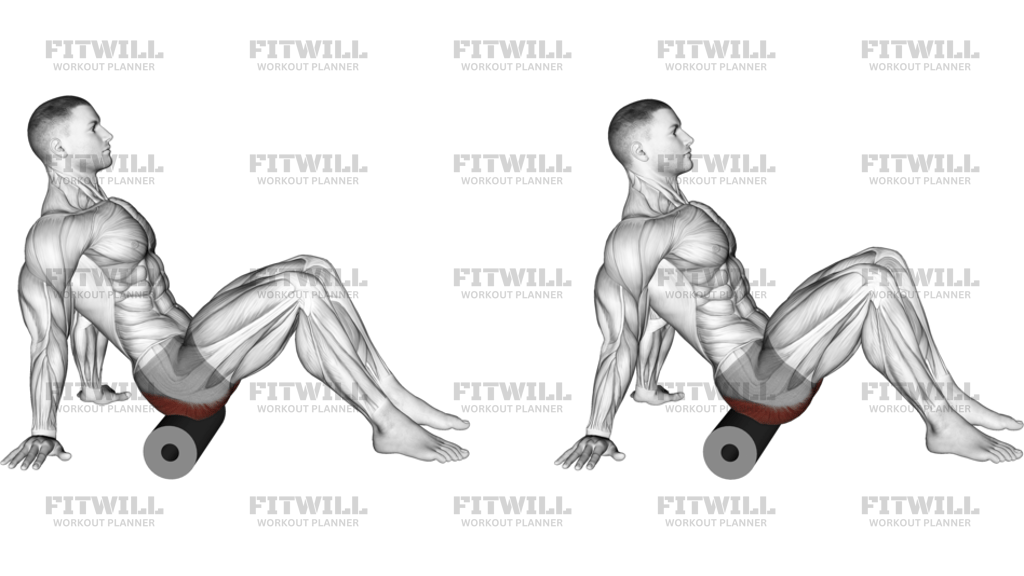
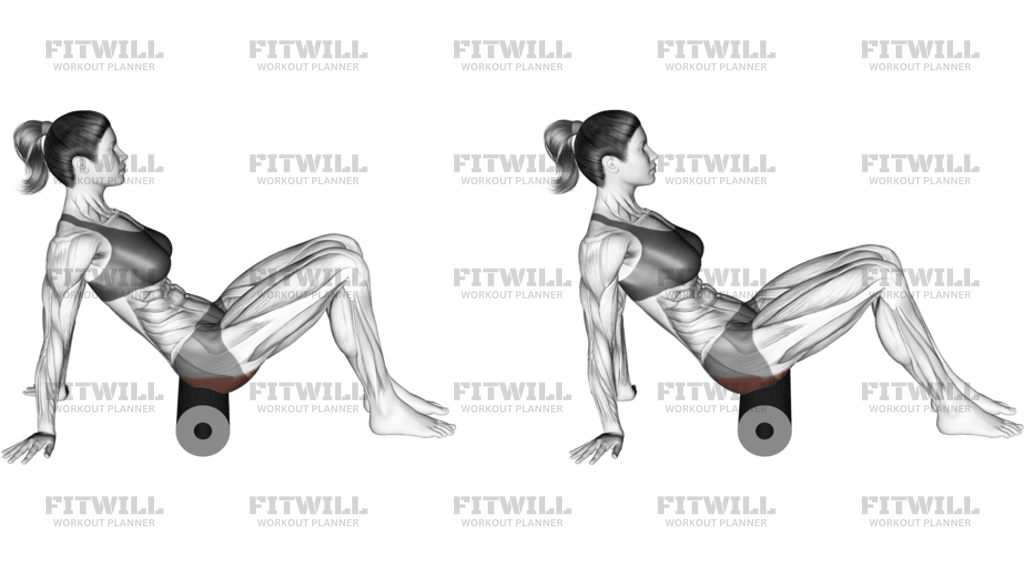
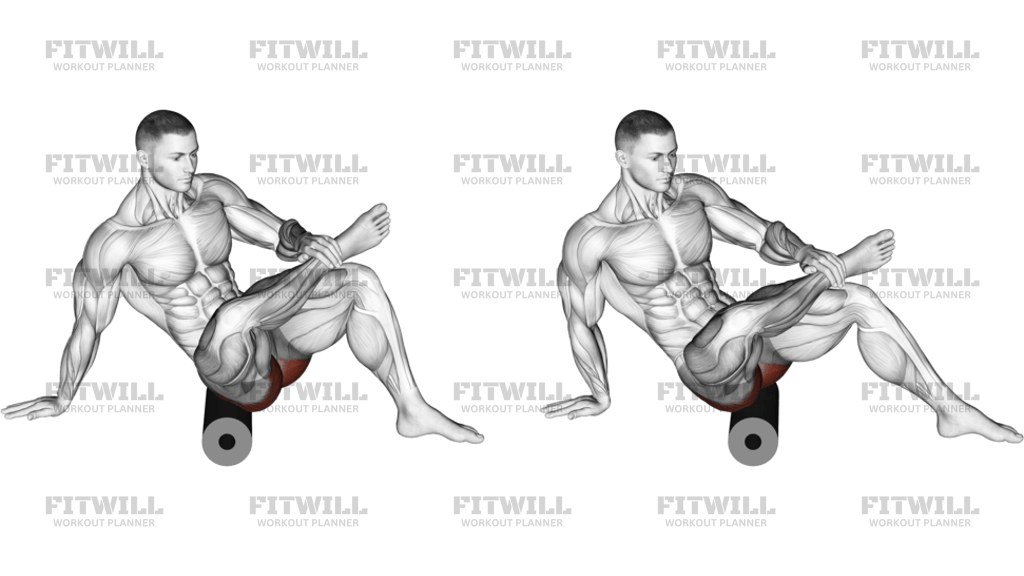
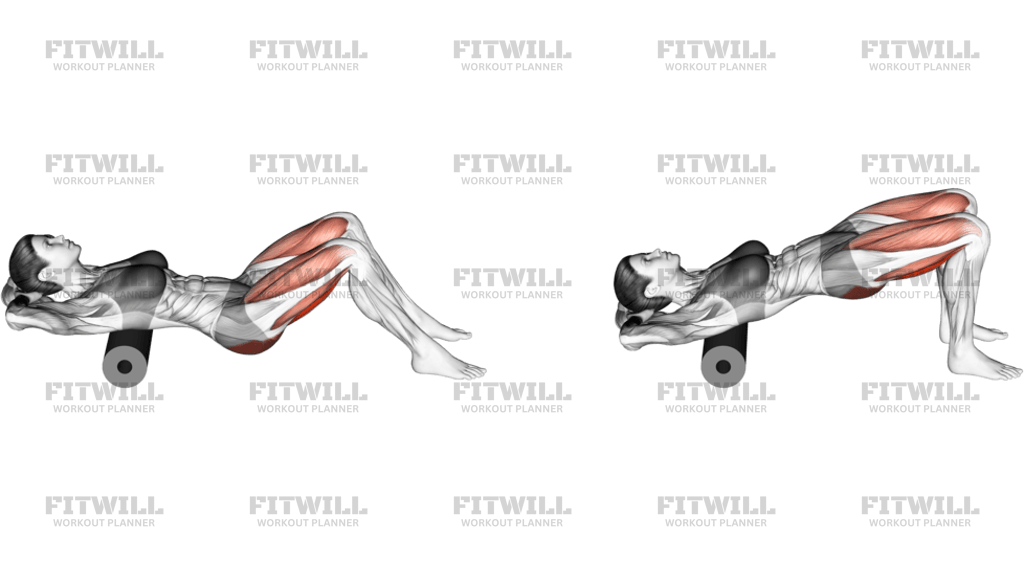
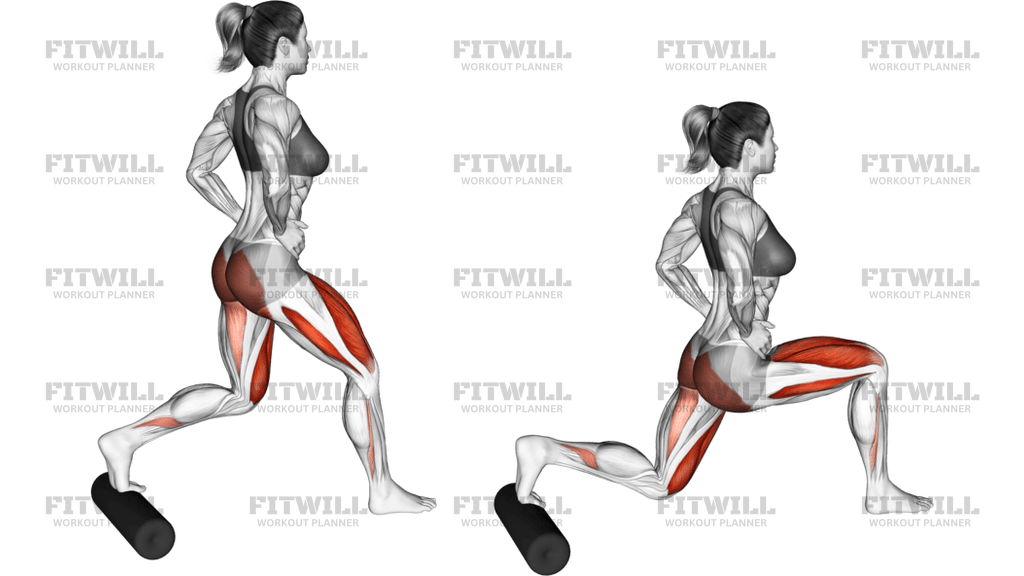
Roll Hip Stretch is a floor-based foam roller mobility drill for opening the hip while you control exactly how much pressure goes into the working side. In the pictured setup, you support yourself on your forearms, keep one leg long behind you, and place the foam roller under the soft tissue of the front hip and upper thigh so you can explore the tight spots without collapsing into your lower back.
The exercise is useful when the hips feel stiff from squats, lunges, running, or long periods of sitting. Depending on where the roller sits and how you shift your body weight, the stretch can be felt across the glutes, upper thigh, and front of the hip. The goal is not to chase the deepest possible stretch; it is to find a position that lets you breathe, settle, and create a repeatable release.
Setup matters here because a small change in pelvis angle changes the whole feel of the drill. Keep your ribs down, your torso supported on the forearms, and your hips square so the pressure stays on the intended side instead of sliding into the lumbar spine. The roller should stay on the muscle tissue around the hip and thigh, not directly on the kneecap or on the bony front of the pelvis.
Perform the movement with slow, deliberate shifts. Glide a few inches at a time, pause on a tender spot, and let the tissue soften with steady breathing before moving again. If the low back starts to arch or the shoulders take over, back off and reset. The cleanest repetitions are the ones that feel controlled from the first breath to the last.
Use Roll Hip Stretch as part of a warm-up, a recovery block, or the end of a lower-body session when the goal is to restore hip motion without adding fatigue. It suits beginners because the load is adjustable simply by changing how much bodyweight you place on the roller. Keep the sensation strong but manageable, and stop if the stretch becomes sharp, pinchy, or unstable.
Fitwill
Log Workouts, Track Progress & Build Strength.
Achieve more with Fitwill: explore over 9600 exercises with images and videos, access built-in and custom workouts, perfect for both gym and home sessions, and see real results.
Start your journey. Download today!




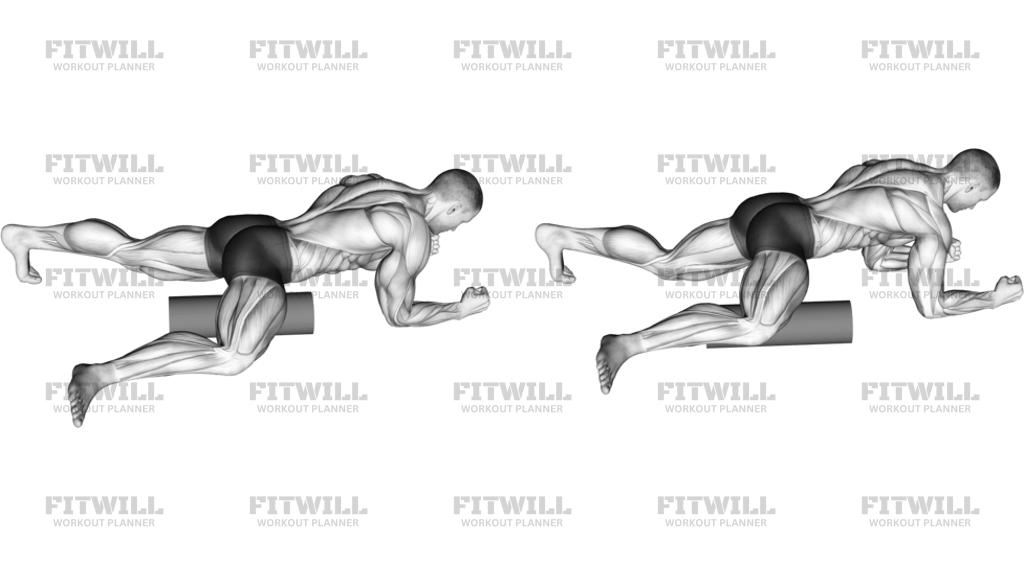
Instructions
- Place a foam roller on the floor and come down onto your forearms with your shoulders stacked over your elbows.
- Set one thigh on the roller just below the hip crease and extend the other leg long behind you for support.
- Keep the loaded-side knee bent in a comfortable position and square both hips toward the floor.
- Brace your midsection lightly so your lower back stays neutral instead of sagging.
- Shift your body weight slowly forward or backward until you feel a strong stretch through the front of the hip and upper thigh.
- Pause on the tight spot for a slow breath or two, letting the pressure settle without bouncing.
- Roll a few inches to a new section of tissue, then return with control if you want to repeat the pass.
- Keep the pressure on the muscle tissue and off the kneecap or the bony front of the pelvis.
- Switch sides and repeat with the same controlled setup.
Tips & Tricks
- Use the forearms to keep the upper body quiet so the hips can do the work.
- A smaller shift is usually better than a bigger one; the roller only needs to move a few inches to find a tight area.
- If your lower back arches, pull the ribs down and reduce the amount of bodyweight on the roller.
- Keep the neck long and look down so you do not crank through the cervical spine.
- If the pressure feels too sharp, move the roller slightly farther down the thigh or take some weight off the working side.
- Breathe out slowly when you settle on a tender spot; that usually reduces guarding faster than holding your breath.
- Do not let the roller drift onto the kneecap or directly into the front of the hip bones.
- Use this as a release drill, not a test of pain tolerance.
Frequently Asked Questions
What does Roll Hip Stretch target most?
It mainly targets the hip and upper-thigh tissues on the loaded side, with the glutes, front hip, and surrounding stabilizers all contributing.
Is the foam roller supposed to sit under the kneecap?
No. Keep it on the soft tissue of the thigh or hip area, not directly on the kneecap or any bony point.
How do I know I have the right amount of pressure?
You should feel a strong stretch or release, but still be able to breathe and keep your ribs and pelvis controlled.
Why are my forearms on the floor?
The forearms help you support part of your bodyweight so you can keep the hips steady and control how much pressure goes into the roller.
Should I feel this more in my glutes or the front of my hip?
Either can happen depending on where the roller sits and how you angle the pelvis. The target should be the tight hip tissue, not the lower back.
Can beginners do this stretch?
Yes. Beginners can start with very light bodyweight on the roller and short pauses before increasing pressure.
What is the most common mistake with this movement?
People usually shift too far, arch the low back, or try to force a deeper stretch instead of staying controlled.
When should I use Roll Hip Stretch in a workout?
It works well in a warm-up, between lower-body exercises, or during cooldown when the goal is to restore hip motion.