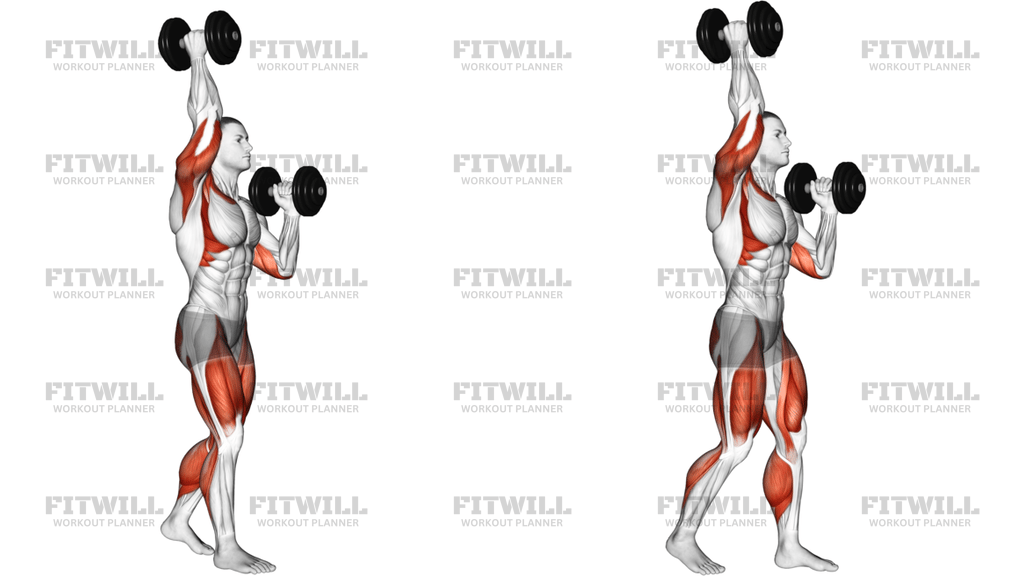
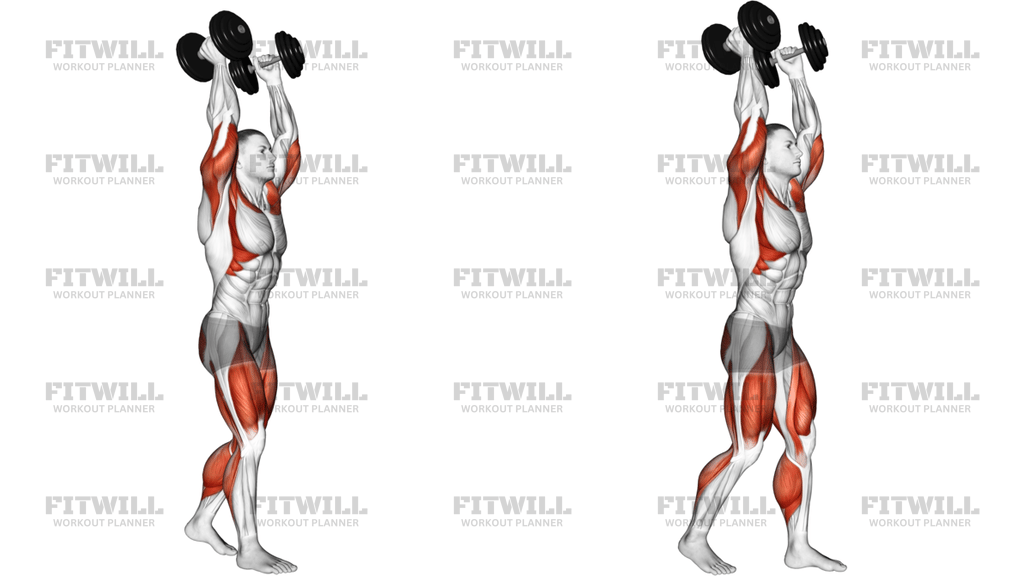
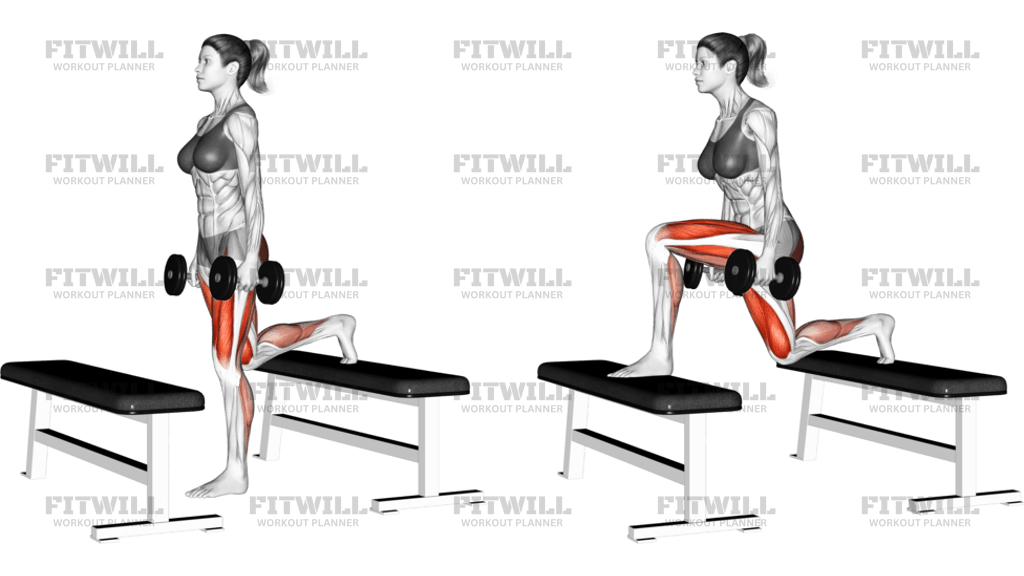
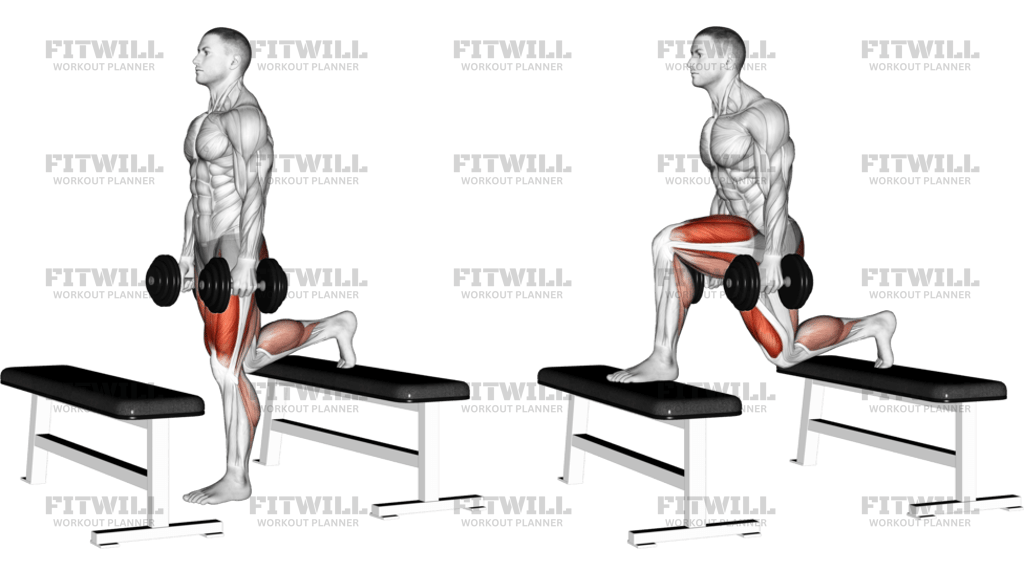
Dumbbell Rear Lunge
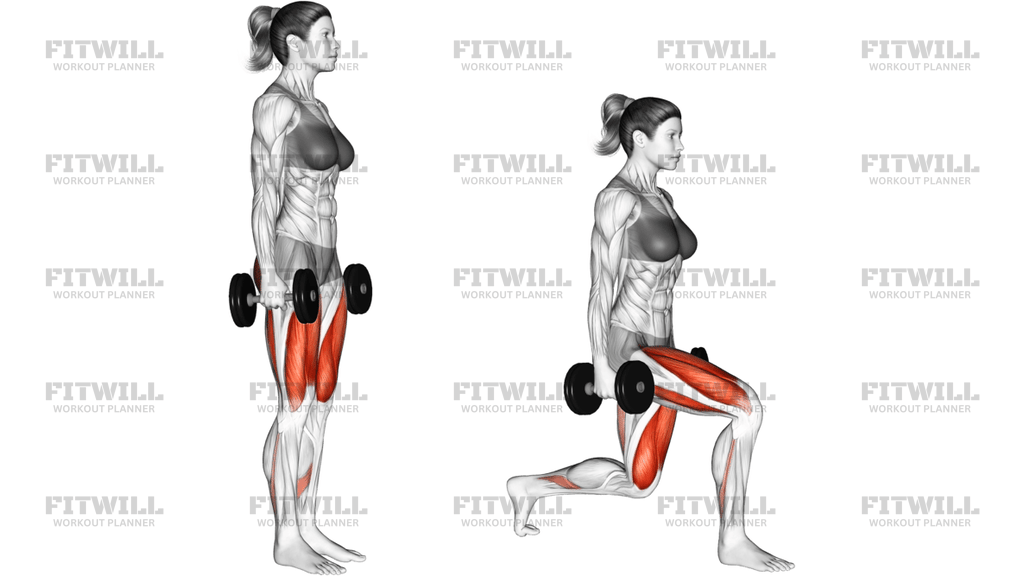
Dumbbell Rear Lunge is a unilateral lower-body strength exercise that loads one leg at a time while the other leg steps back to create a long, controlled split stance. With the dumbbells hanging at your sides, the movement trains the quads, glutes, and adductors while also challenging balance, hip control, and trunk stability. Because the load sits below the shoulders, it is often easier to learn than front-rack or overhead lunge variations, but it still demands careful foot placement and clean knee tracking.
The exercise works best when the front foot stays planted and the torso stays organized over the working leg. A good Dumbbell Rear Lunge lets you lower under control, touch or hover the rear knee near the floor, and then drive back up without bouncing off the back leg. The front knee should track in line with the toes instead of collapsing inward, and the dumbbells should stay quiet at your sides rather than swinging.
Setup matters because the rear step sets the depth and the front shin angle determines how much stress lands on the knee versus the hip. A slightly longer step back usually gives more room to lower smoothly, while a shorter step can make the front knee travel too far forward and turn the rep into a wobble. The front foot should stay flat, with pressure through the heel and midfoot as you descend and stand.
Dumbbell Rear Lunge is useful for general strength work, athletic training, and single-leg development when you want to build legs without a machine. It also exposes left-right differences quickly, which makes it a practical accessory exercise after squats or deadlifts. If you are new to lunges, start with light dumbbells or even bodyweight until you can control the bottom position and return without pushing off the rear foot.
Keep the rep smooth from top to bottom. Lower until the front thigh is near parallel or as deep as your hip mobility allows, keep your chest tall, and press through the front leg to stand back up. If your balance shifts, your front heel lifts, or the rear foot starts doing most of the work, shorten the range and reset. Done well, Dumbbell Rear Lunge builds leg strength, coordination, and confidence in a simple pattern that transfers well to other lower-body lifts.
[ Workout Log & Planner ]
Put your next workout in Fitwill
Keep your plan and training log ready when you are.


Instructions
- Stand tall holding a dumbbell in each hand at your sides, feet about hip-width apart and weight spread evenly across both feet.
- Keep your chest tall, shoulders stacked over your hips, and let the dumbbells hang still beside your thighs.
- Take one leg straight back into a long split stance and keep the front foot flat on the floor.
- Lower your body by bending both knees until the rear knee is close to the floor and the front thigh is near parallel.
- Keep the front knee tracking over the toes while the front heel and midfoot stay planted.
- Pause briefly at the bottom without bouncing off the rear leg or letting the dumbbells swing.
- Drive through the front heel and midfoot to stand back up while bringing the rear leg forward to the starting stance.
- Exhale as you rise, inhale as you lower, and reset your stance before the next rep.
- Alternate legs or finish all reps on one side before switching, depending on your program.
Tips & Tricks
- A longer step back usually makes the lunge smoother and keeps the front knee from shooting too far forward.
- Keep most of your pressure on the front foot; the rear foot is only there for balance and guidance.
- If the dumbbells pull your shoulders forward, use a lighter load and let them hang directly under your shoulders.
- Let the torso lean only slightly from the hips; collapsing forward usually turns the set into a balance drill instead of a leg exercise.
- Lower under control so the rear knee approaches the floor instead of dropping straight down and bouncing.
- A front shin that stays roughly angled and stable is usually easier on the knee than a fast, uncontrolled knee drive.
- If your front heel lifts, shorten the range or adjust the stance before adding more weight.
- Keep the dumbbells quiet at your sides; swinging them reduces tension on the working leg.
Frequently Asked Questions
What muscles does Dumbbell Rear Lunge work?
It mainly works the quads and glutes of the front leg, with help from the adductors, hamstrings, and core to keep the torso steady.
Is Dumbbell Rear Lunge good for beginners?
Yes, if you start with bodyweight or very light dumbbells and learn to keep the front foot flat while stepping back under control.
Should the rear knee touch the floor in Dumbbell Rear Lunge?
It does not have to touch, but it should travel close to the floor with control. Use the deepest range you can control without twisting the hips or bouncing.
Why do my dumbbells swing during Dumbbell Rear Lunge?
The load is probably too heavy or your step back is too quick. Let the dumbbells hang still and slow the descent so the legs do the work.
How far back should I step in Dumbbell Rear Lunge?
Step far enough back that you can lower straight down without the front heel lifting. A longer step usually makes the movement cleaner and easier to balance.
What if my front knee caves inward?
Reduce the load, shorten the set, and think about driving the knee in line with the second or third toe as you stand up.
Can I do Dumbbell Rear Lunge instead of a squat?
It can replace some squat volume, but it is not the same lift. Rear lunges are better for single-leg control, balance, and side-to-side differences.
How do I make Dumbbell Rear Lunge easier on my balance?
Use a shorter range, keep your gaze forward, and step back on a straight line instead of reaching the rear foot wide behind you.