Dumbbell Squat
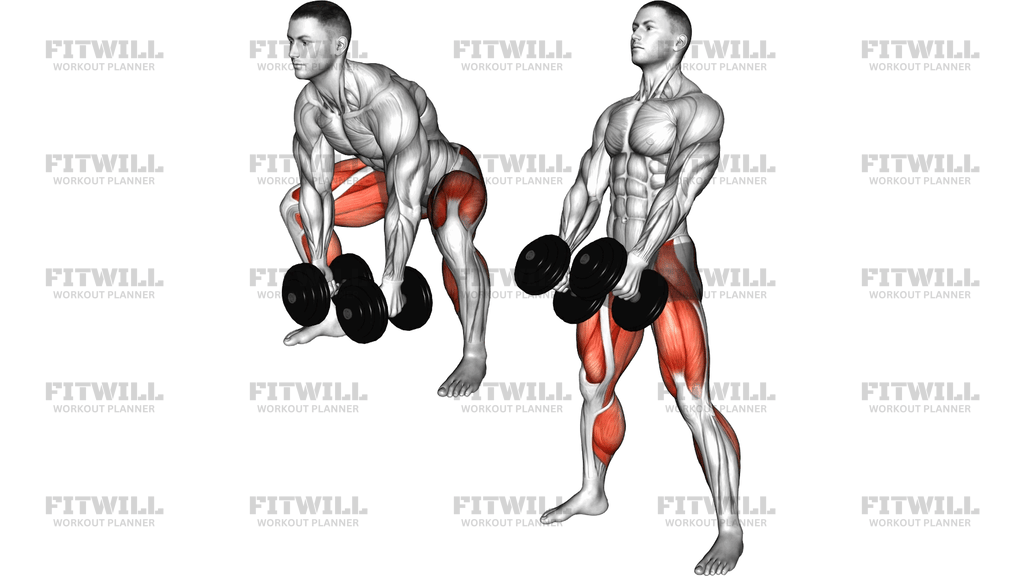
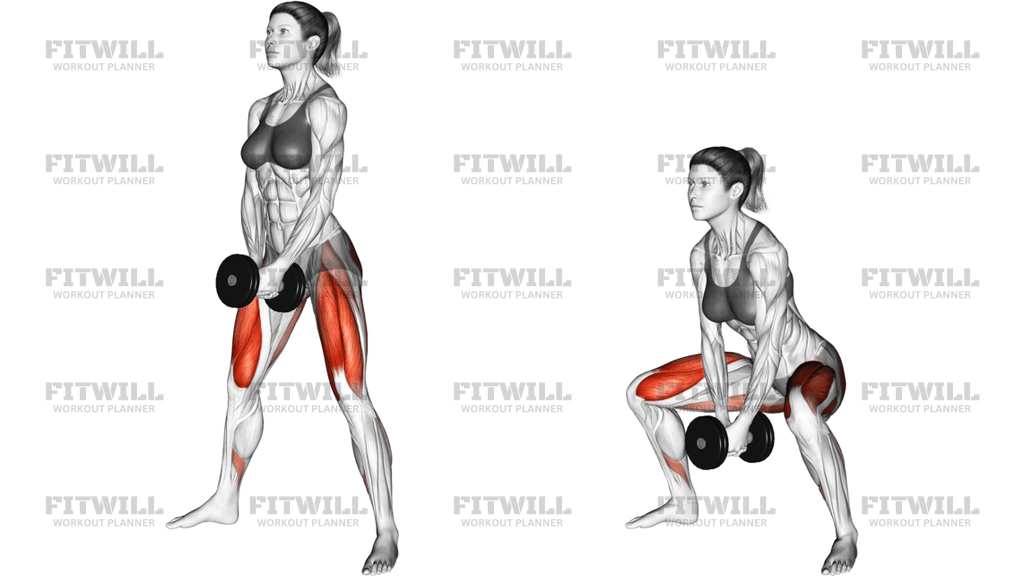
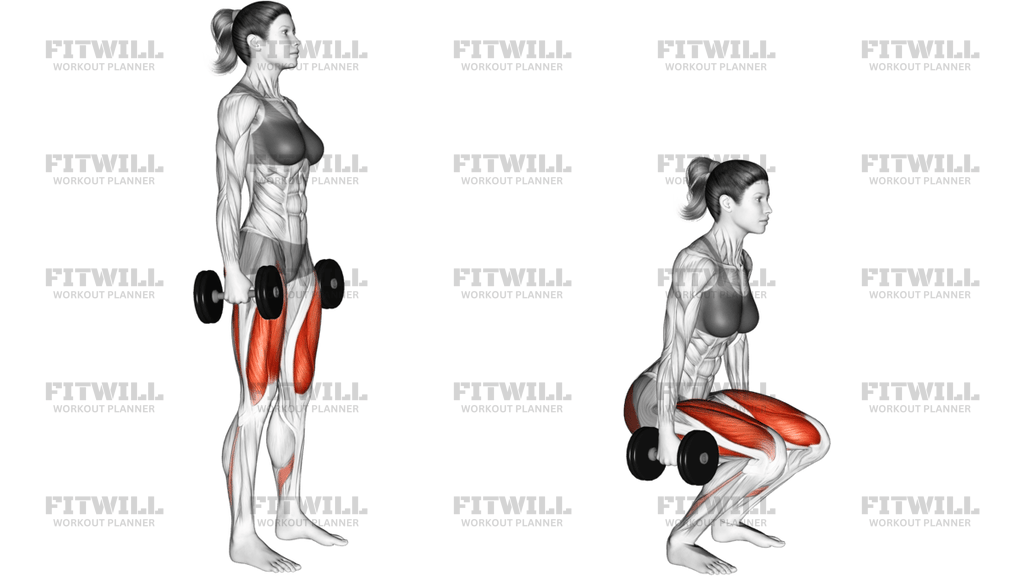
Dumbbell Squat is a straightforward lower-body strength exercise built around a controlled squat while holding a dumbbell in each hand at your sides. The position is simple, but the quality of the rep depends on how well you stay stacked, keep your feet grounded, and let the knees and hips share the load instead of folding the torso forward.
The main training emphasis is on the quads, with the glutes, adductors, and core helping you stay balanced through the descent and drive back up. Holding the dumbbells at your sides also asks the grip, shoulders, and upper back to stay quiet and organized, which makes the movement useful for general strength work, hypertrophy, and squat practice in a home or gym setting.
Setup matters because the dumbbells should hang beside the thighs without pulling you out of position. Stand with a shoulder-width stance, toes slightly turned out, and let the arms hang long with the palms facing in. Before you descend, stack the ribs over the pelvis, keep the chest tall, and brace so the trunk stays steady while the legs do the work.
On each rep, sit the hips back and down between the feet while the knees track in the same direction as the toes. Keep the heels down, let the dumbbells travel straight beside the legs, and lower under control until your depth is limited by mobility rather than by collapsing posture. At the bottom, reverse smoothly and drive the floor away, finishing tall without leaning back or shrugging the weights.
Dumbbell Squat is a practical choice when you want a squat pattern that is easy to learn but still demanding enough to build leg strength. It fits well in warm-ups, accessory blocks, and full-body sessions, especially when you want a load that is easier to balance than a barbell and less restrictive than a machine. If the set turns into bouncing, heel lifting, or torso tipping, reduce the load and shorten the range until every repetition looks the same.
[ Workout Log & Planner ]
Put your next workout in Fitwill
Keep your plan and training log ready when you are.


Instructions
- Stand tall with a dumbbell in each hand, arms straight at your sides, palms facing in, and feet about shoulder-width apart with the toes slightly turned out.
- Plant both feet firmly so the heels, big toes, and little toes stay in contact with the floor before the first rep.
- Set your chest up, stack your ribs over your pelvis, and brace your abdomen as if you are preparing to be tapped in the stomach.
- Begin the squat by sending the hips back and down while bending the knees so they track in line with the toes.
- Keep the dumbbells hanging close to the outside of the thighs as you descend instead of letting them swing forward.
- Lower until your thighs are at least parallel if your mobility allows, or stop where your back can still stay neutral and your heels remain down.
- Pause briefly at the bottom without bouncing, then drive through the midfoot and heels to stand back up.
- Finish each rep tall by squeezing the glutes lightly and keeping the dumbbells quiet at your sides.
- Reset your breath and stance before the next rep, or rack the dumbbells safely when the set is complete.
Tips & Tricks
- If the dumbbells drift in front of your body, lower them straight beside the thighs instead of letting the arms swing.
- Let the knees travel forward enough to match the toe angle; forcing them too far back usually shifts the load into the hips and torso.
- Keep the whole foot glued to the floor, especially the heel and the base of the big toe.
- Choose a depth that lets you keep the ribs stacked and the lower back neutral; depth that starts a tuck is too deep for that set.
- Use a slower descent if you tend to drop into the bottom and bounce out of it.
- Keep the shoulders down so the upper traps do not take over while the dumbbells hang.
- Exhale as you pass the hardest part of the ascent, then fully reset your breath at the top.
- If grip or forearms fail before your legs do, the dumbbells are probably too heavy for the intended rep range.
Frequently Asked Questions
What muscles does Dumbbell Squat work most?
The quads do most of the work, with the glutes, adductors, and core helping you control the descent and stand back up.
Is Dumbbell Squat good for beginners?
Yes. The side-loaded dumbbells make it easier to learn than many barbell squats, as long as the load is light enough to keep the torso steady.
How low should I go in Dumbbell Squat?
Go as low as you can while keeping your heels down, knees tracking over the toes, and your lower back neutral. For many lifters that is around parallel.
Should the dumbbells stay at my sides or in front?
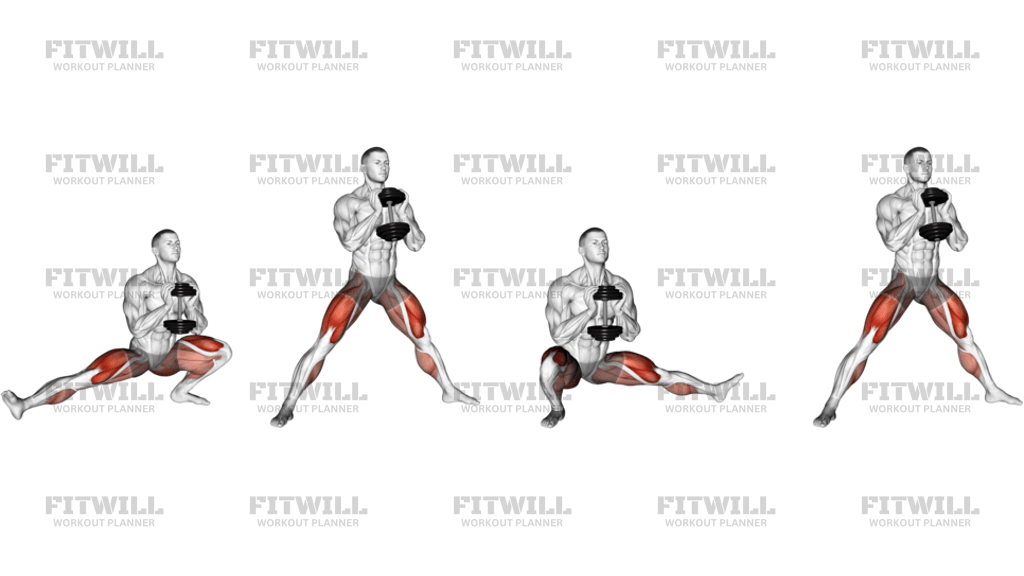
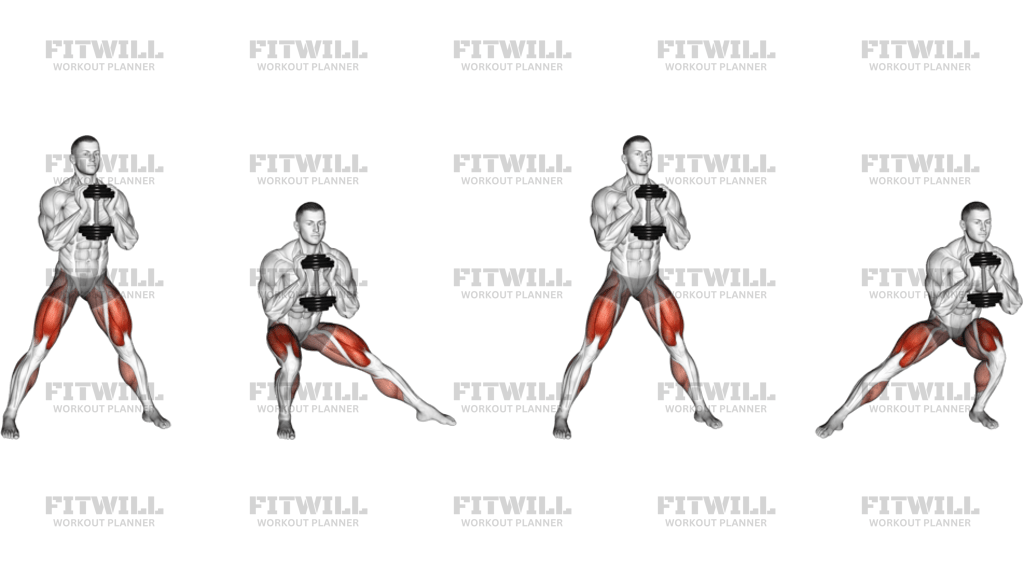
For this version, keep them at your sides with the palms facing in. A goblet hold is a different squat variation with a different balance demand.
Why do my knees cave in on Dumbbell Squat?
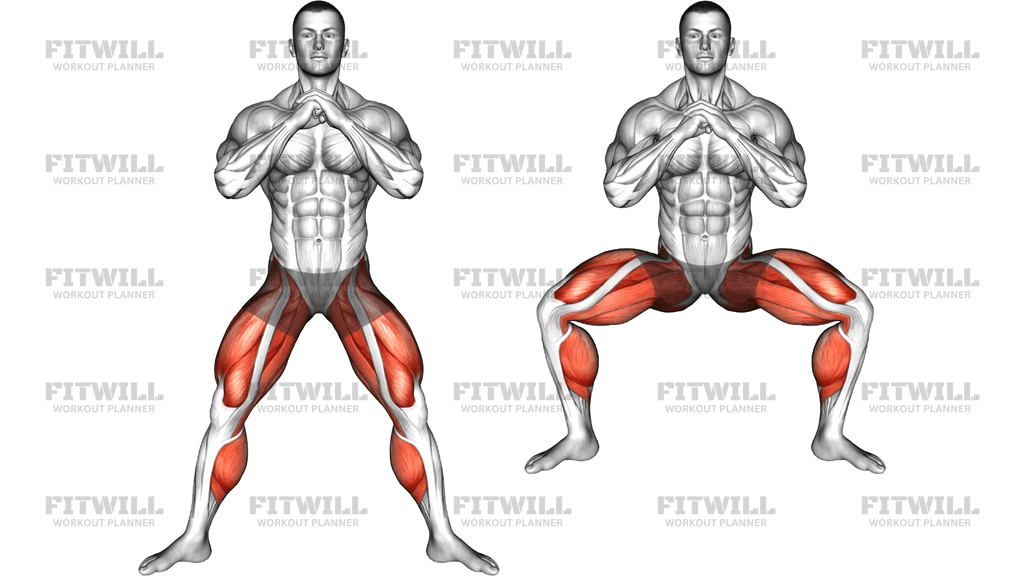
Usually the stance is too narrow, the load is too heavy, or the feet are not fully planted. Turn the toes out slightly, lighten the dumbbells, and drive the knees in line with the second toe.
How heavy should the dumbbells be?
Use a load that lets you keep the dumbbells quiet at your sides and the torso upright for every rep. If the weights pull you forward, they are too heavy.
Can I use Dumbbell Squat for hypertrophy?
Yes. It works well for moderate rep sets when you want steady quad tension and a squat pattern that is easy to repeat with consistent form.
What is the most common mistake in Dumbbell Squat?
Letting the dumbbells swing forward while the chest drops. Keep the arms long, the weights close to the thighs, and the ribs stacked over the pelvis.