Lever Lying Leg Curl
Lever Lying Leg Curl is a prone knee-flexion exercise that trains the hamstrings through a guided machine path. It is useful when you want to isolate the back of the thighs without loading the lower back the way a hinge or deadlift variation does. The machine keeps the path consistent, which makes it easier to focus on tension, tempo, and a clean squeeze at the top.
The setup matters more here than many lifters expect. In Lever Lying Leg Curl, your knees should line up with the machine's pivot so the roller can travel smoothly instead of pulling your hips out of position. The pad should sit snugly against the lower calves just above the ankles, while your hips and torso stay pressed into the bench and your hands hold the front handles for stability.
A good rep begins by keeping the pelvis heavy on the pad and the ribs down before you bend the knees. Curl the heels toward the glutes, then stop when the hamstrings are fully shortened without forcing the hips to lift. The return should be slow and controlled so the hamstrings stay under tension instead of bouncing the weight stack or snapping the knees straight.
Lever Lying Leg Curl is a solid accessory after squats, deadlifts, running, or any session where the hamstrings need direct work. It can also be used in a lower-body warmup with light resistance to wake up the back of the legs before bigger compound lifts. The exercise rewards patience, because the best sets are the ones where the hips stay planted and the roller follows the same path on every rep.
Common mistakes include using too much load, arching the lower back, and letting the hips pop up as the pad gets heavier. If the machine is adjusted correctly and the tempo stays controlled, Lever Lying Leg Curl gives you a clear hamstring contraction with very little noise from momentum. Beginners can learn it quickly when they start light and focus on the machine setup before chasing load.
[ Workout Log & Planner ]
Put your next workout in Fitwill
Keep your plan and training log ready when you are.


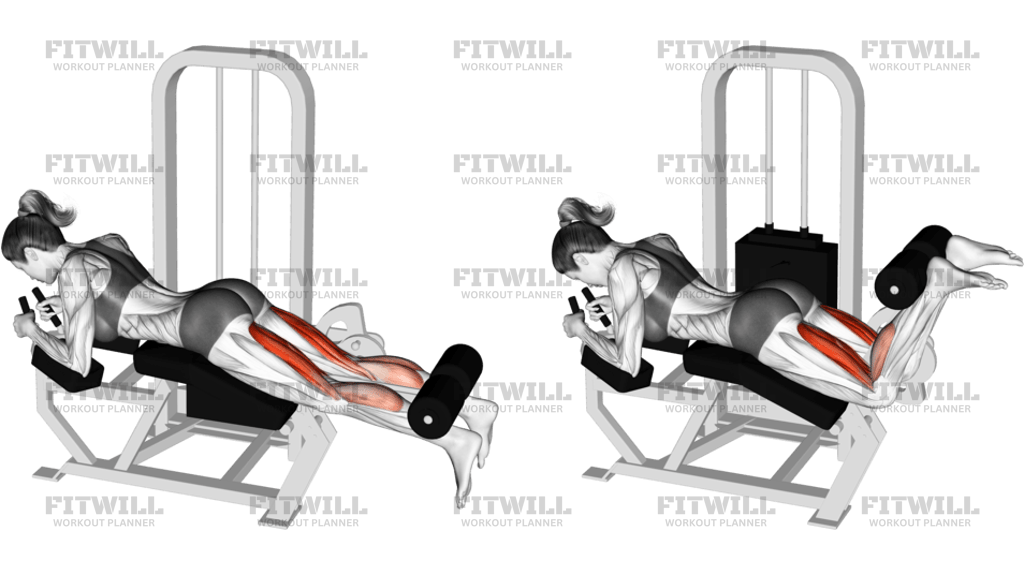
Instructions
- Adjust the lever lying leg curl machine so the roller sits just above your ankles and your knees line up with the machine pivot.
- Lie face down on the bench with your hips pressed into the pad, your torso flat, and your chest supported against the upper pad.
- Reach for the front handles, keep your pelvis heavy on the bench, and set your legs long before the first rep.
- Brace your abs and curl your heels toward your glutes by bending your knees.
- Keep your hips down and your thighs pinned to the pad as the roller travels upward.
- Squeeze the hamstrings at the top for a brief pause without yanking the stack.
- Lower the roller slowly until your knees are almost straight and tension is still under control.
- Exhale as you curl and inhale as you lower, then rack the weight carefully when the set is done.
Tips & Tricks
- If your hips lift as you curl, reduce the load and make sure the roller is not set too low on the lower calves.
- Keep the pelvis glued to the bench; the rep should come from knee flexion, not from arching the lower back.
- A two- to three-second lowering phase usually keeps the hamstrings working better than letting the stack drop.
- Stop just before the knees lock out at the bottom so the weight does not slam the machine and the hamstrings stay loaded.
- Use a foot position that feels natural, but do not actively kick the toes hard into the roller.
- Choose a range that keeps the roller moving smoothly instead of sliding toward the Achilles tendon.
- If one side curls earlier than the other, lighten the load and match the roller path on both reps.
- A brief squeeze at the top is more useful here than trying to curl higher with momentum.
Frequently Asked Questions
What muscles does Lever Lying Leg Curl work most?
Lever Lying Leg Curl primarily works the hamstrings, with the calves and glutes helping to stabilize the movement.
Where should the roller sit on Lever Lying Leg Curl?
The roller should rest just above the ankles on the lower calves, not directly on the Achilles tendon. That keeps the machine path comfortable and gives you room to curl smoothly.
Why do my hips lift on Lever Lying Leg Curl?
Hips usually lift when the load is too heavy or the bench setup is off. Lower the weight, keep your pelvis pressed into the pad, and make sure your knees line up with the pivot.
Should I point my toes on Lever Lying Leg Curl?
A relaxed or slightly pointed foot position is fine, but do not aggressively kick the toes or try to turn the movement into a calf exercise. The main action should still come from bending the knees.
Is Lever Lying Leg Curl beginner-friendly?
Yes. It is usually easier to learn than free-weight hamstring work because the machine guides the path, but beginners should still start light and focus on keeping the hips down.
How far should I lower the weight on Lever Lying Leg Curl?
Lower it until your knees are almost straight and the hamstrings stay under tension. If the stack bottoms out or your lower back starts to arch, shorten the range.
What is a good substitute for Lever Lying Leg Curl?
A seated leg curl is the closest substitute if your gym has one. You can also use a stability-ball leg curl or slider curl if you need a bodyweight option.
How should Lever Lying Leg Curl fit into a workout?
It usually works well after compound lower-body lifts or as a hamstring-focused accessory block. Light sets can also be used earlier in the session as a warmup.