Dumbbell Contralateral Forward Lunge
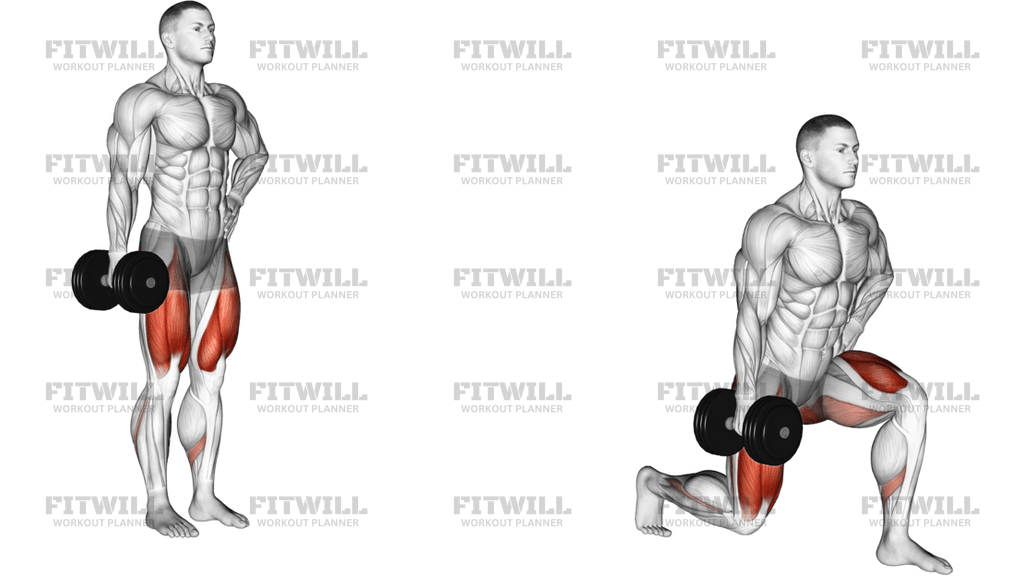
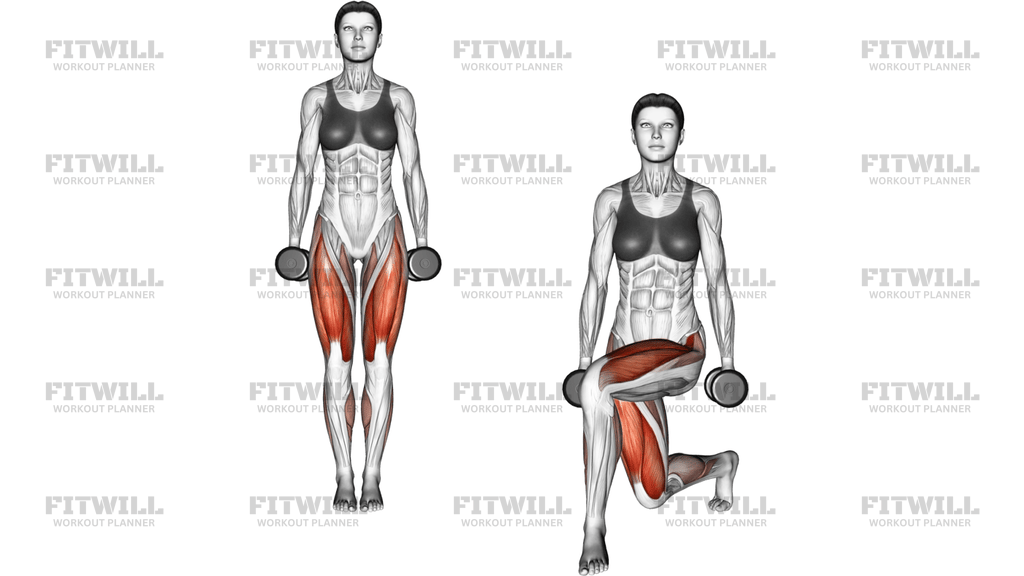
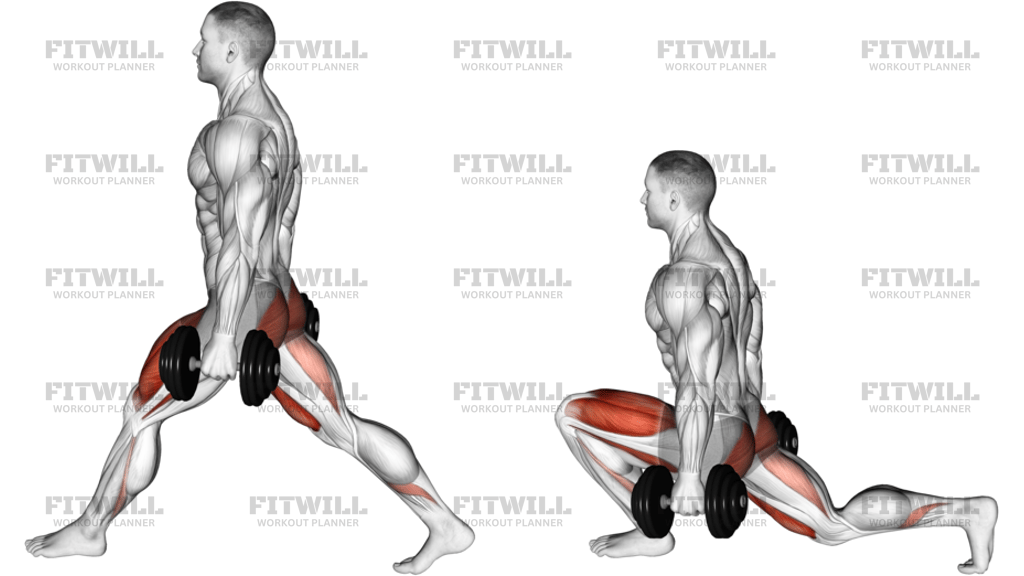
Dumbbell Contralateral Forward Lunge is a split-stance lower-body exercise that challenges the working leg, the hips, and the trunk at the same time. Holding the dumbbell on the opposite side of the front leg adds a small anti-tilt demand, so the torso has to stay organized while the legs do the work. That makes it useful when you want more than a simple leg burner: it trains balance, control, and lower-body strength together.
The main emphasis is on the glutes and thighs, with the hamstrings, core, and lower back helping you stay steady as you step and descend. In technical terms, the load asks the Gluteus maximus to extend the hip while the supporting side of the trunk resists leaning. The exercise is especially useful when you want to clean up single-leg mechanics without moving to a fully unstable drill.
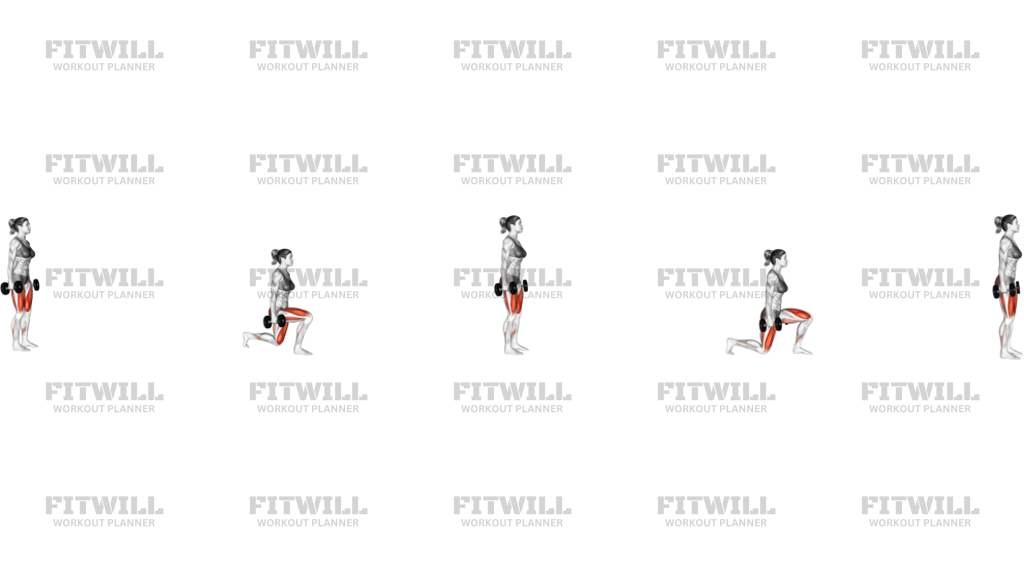
The setup matters more here than it does in many bilateral lifts. Start with your feet hip-width apart, hold one dumbbell in the hand opposite the leg that will step forward, and keep the other arm relaxed by your side. Before each rep, make sure your torso is tall, your ribs are stacked over your pelvis, and your front foot has room to land far enough ahead that the knee can bend without the heel popping up.
As you lunge, place the front foot down under control and lower your back knee toward the floor without collapsing into the front hip. Keep the front knee tracking over the middle toes and let the back leg bend long enough to give you a stable depth, then drive through the front heel and midfoot to return to standing. The contralateral load will try to pull you sideways, so the best reps feel smooth and quiet rather than rushed or bouncy.
Use Dumbbell Contralateral Forward Lunge when you want a strong accessory lift for leg day, a unilateral strength block, or a movement that exposes side-to-side control differences. It can be a good option for athletes and general lifters alike because it rewards clean foot placement, steady posture, and deliberate breathing. Choose a load that lets you finish every rep with the pelvis level and the dumbbell staying still instead of swinging across your body.
[ Workout Log & Planner ]
Put your next workout in Fitwill
Keep your plan and training log ready when you are.


Instructions
- Stand tall with a dumbbell in the hand opposite the leg you will step with, and keep the other arm relaxed by your side.
- Set your feet about hip-width apart, brace your midsection, and keep your chest stacked over your hips before you move.
- Step forward far enough that your front heel stays down and your back knee has room to travel toward the floor.
- Lower straight down by bending both knees, keeping the front knee tracking over the middle toes instead of caving inward.
- Keep the dumbbell quiet at your side and resist leaning toward or away from the loaded hand as you descend.
- Lightly tap or hover the back knee near the floor, then pause long enough to reset your balance and posture.
- Drive through the front heel and midfoot to stand back up, finishing with the hips and knees extended without over-arching the lower back.
- Reset your stance before the next rep or switch legs only after you have completed the planned set on one side.
Tips & Tricks
- Keep the dumbbell in the opposite hand from the front leg so the torso has to resist side-bending instead of just balancing a suitcase load.
- Take a slightly longer step if your front knee shoots too far forward or your heel lifts during the descent.
- Let the back knee travel down, not forward, so the front hip can absorb the load without the stride turning into a short squat.
- If your torso twists toward the dumbbell, reduce the load and keep both shoulder heads square to the floor.
- A quiet foot landing is a good sign; if the step sounds heavy, slow the reach and place the front foot more deliberately.
- Press through the front heel and big toe together so the glute and thigh share the work instead of dumping everything into the toes.
- Stop one or two inches above a wobbling bottom position if you lose knee tracking or the pelvis tips hard to one side.
- Keep your wrist neutral and the dumbbell hanging straight down; swinging the weight forward usually means the rep is becoming rushed.
Frequently Asked Questions
Why is Dumbbell Contralateral Forward Lunge performed with the weight in the opposite hand?
The offset load forces your trunk and hips to resist lateral tilt, so the front leg has to stabilize the body while the dumbbell tries to pull you off line.
What muscles work hardest in Dumbbell Contralateral Forward Lunge?
The glutes and thighs do most of the work, while the hamstrings, core, and lower back help keep the torso steady and the stride controlled.
How far should I step forward on this lunge?
Step far enough that your front heel stays planted and your back knee can lower comfortably toward the floor without your torso collapsing forward.
Should my front knee go past my toes in Dumbbell Contralateral Forward Lunge?
A small amount is fine, but the knee should track over the middle toes and not cave inward or shoot aggressively forward while the heel lifts.
Can beginners do Dumbbell Contralateral Forward Lunge?
Yes, but start with a light dumbbell or bodyweight first so you can learn the step length, balance, and knee tracking before adding load.
What is the most common mistake with Dumbbell Contralateral Forward Lunge?
Most people take a step that is too short, then lose balance and dump pressure into the front knee instead of driving through the whole front foot.
How do I keep from leaning toward the dumbbell?
Keep your ribs stacked over your pelvis, hold the dumbbell still, and lower straight down rather than reaching the weight across your body.
Is Dumbbell Contralateral Forward Lunge better than a regular forward lunge?
It is not automatically better, but it adds more anti-rotation and anti-tilt demand, which makes it useful when you want extra trunk control and single-leg stability.