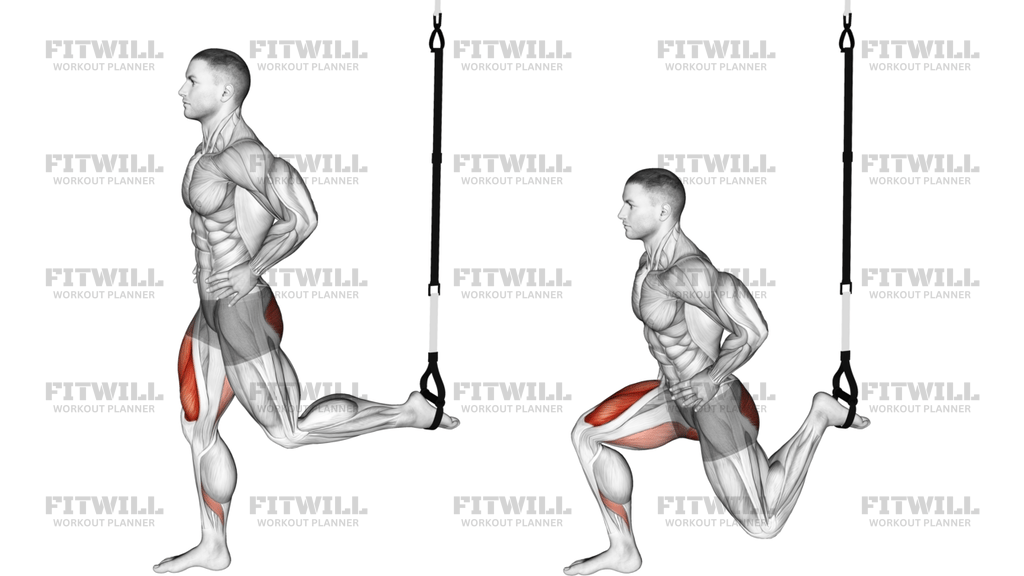
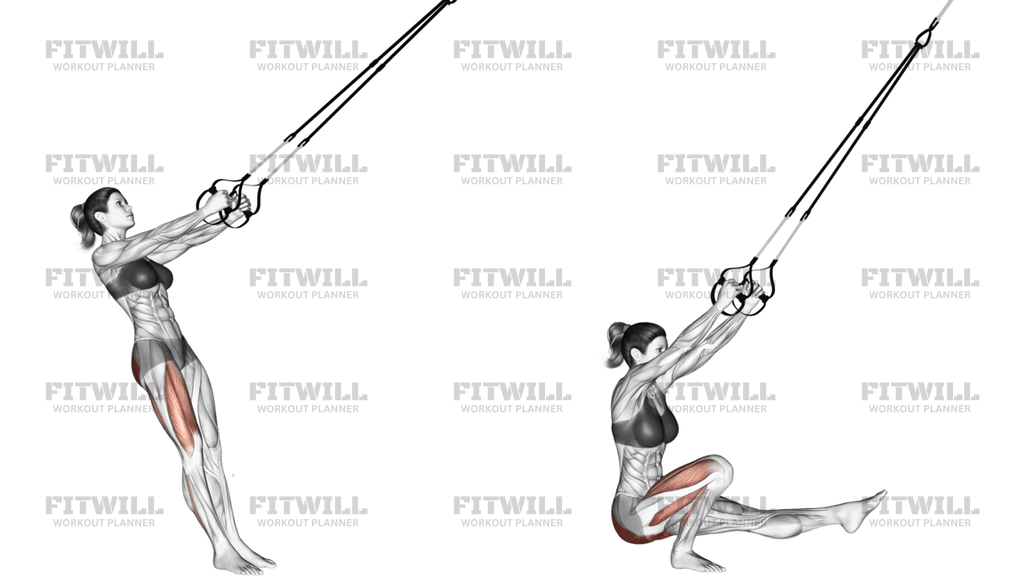
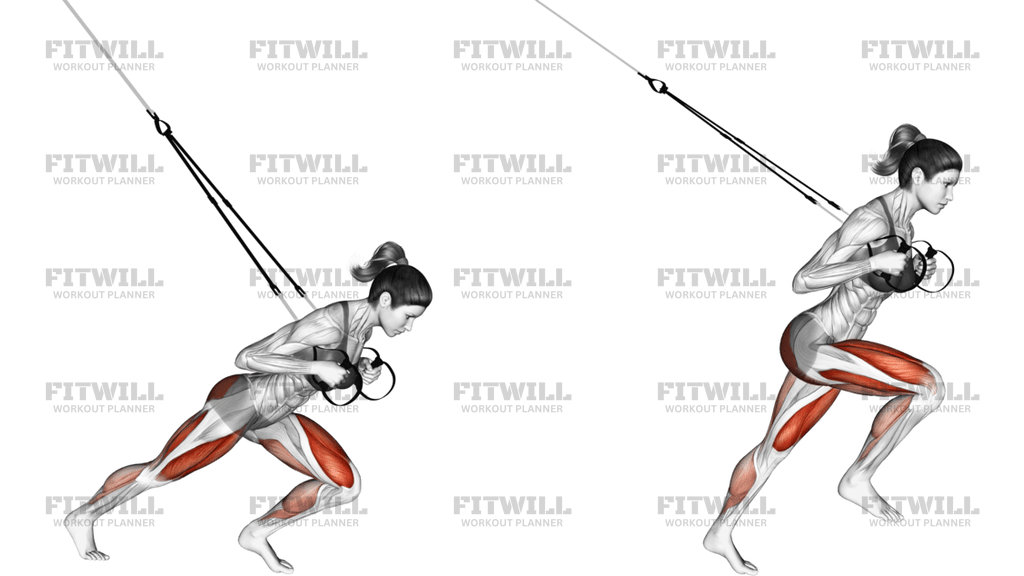
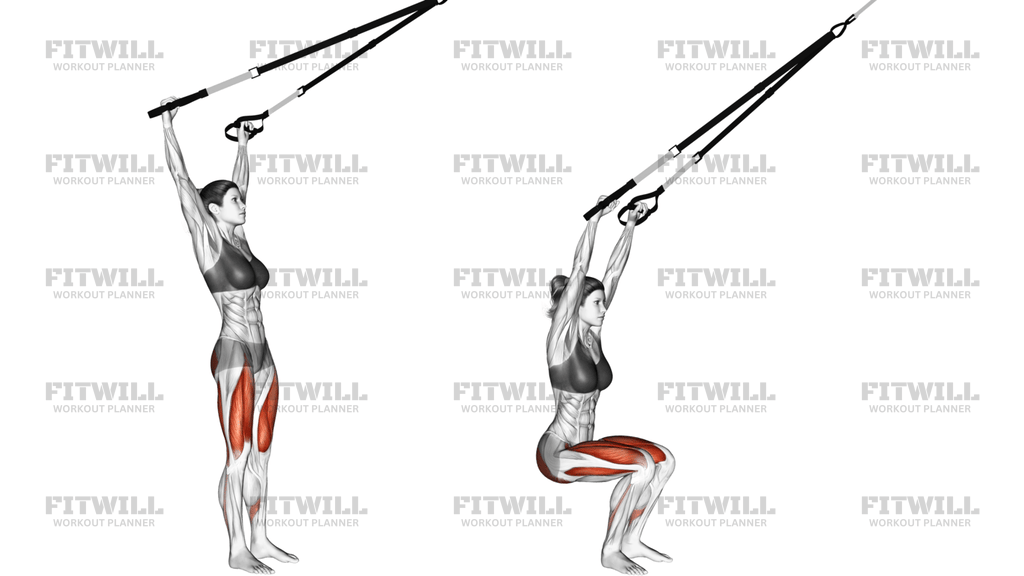
Suspension Single Leg Squat Figure
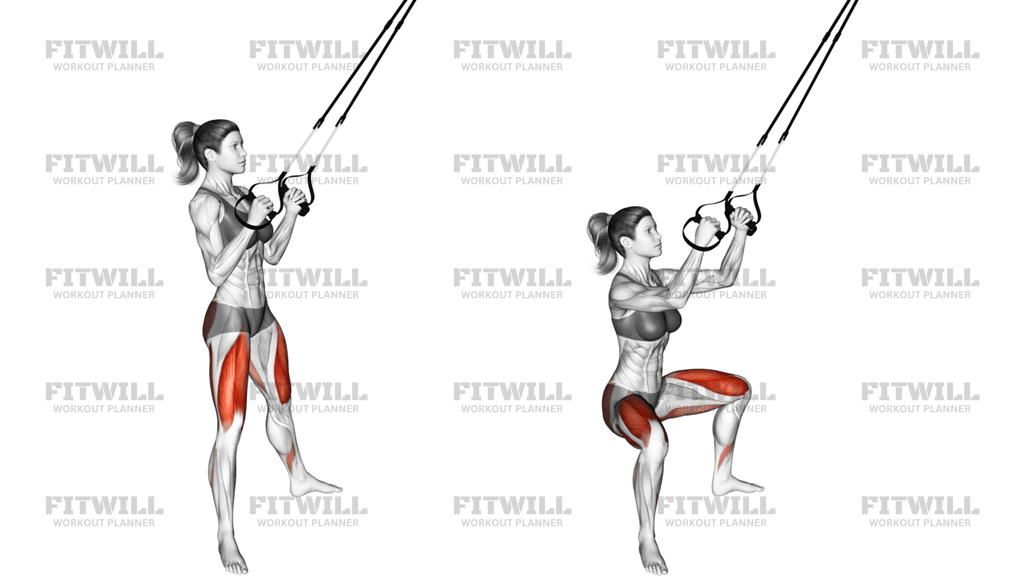
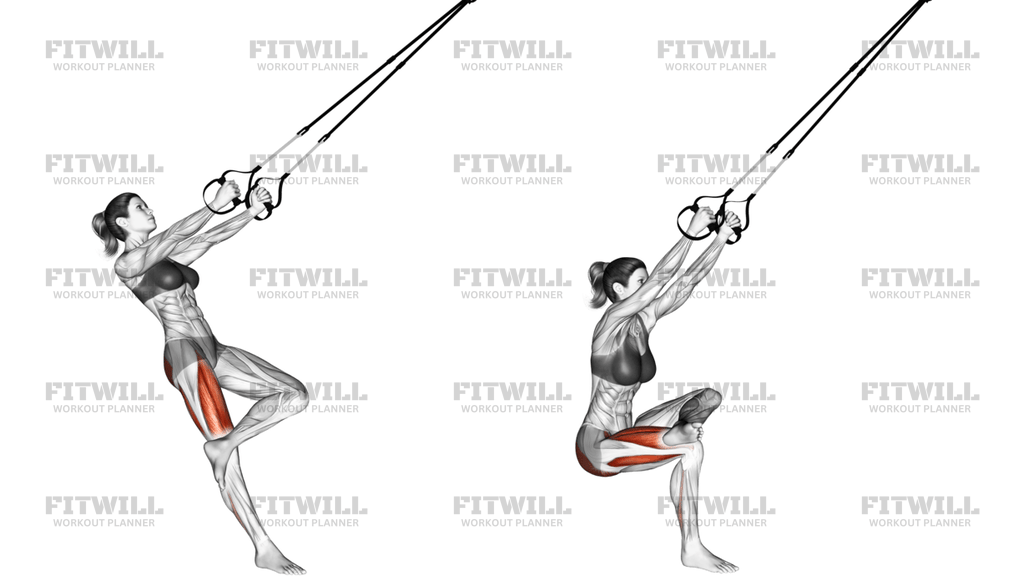
Suspension Single Leg Squat (figure) is a suspension-assisted single-leg squat with the free ankle crossed over the working leg in a figure-4 position. The straps give you just enough support to stay balanced while the standing leg, hip, and trunk do the real work. It is a practical lower-body strength drill when you want unilateral loading without having to balance a full bodyweight pistol squat on your own.
The exercise emphasizes the glutes and thighs, with the standing-leg quads and hamstrings helping control the descent and drive back up. The crossed-leg position also asks the hip abductors and deep stabilizers to keep the pelvis level, while the core resists twisting and excessive forward collapse. In anatomy terms, the main work centers on the Gluteus maximus, with help from the Quadriceps, Hamstrings, Rectus abdominis, and Erector spinae.
The setup matters because the straps should support balance, not pull you through the rep. Stand under the anchor, hold one handle in each hand, and keep the working foot planted while the other ankle stays crossed over the opposite thigh. That figure-4 shape keeps the free leg out of the way and makes the squat feel more like a controlled single-leg sit-back than a lunge. If the handles are too loose, you will drift; if they are too tight, the movement stops being a squat.
Each rep should begin with a stable brace, a tall chest, and pressure through the heel and midfoot of the standing leg. Sit the hips back and down, let the knee bend and track over the toes, and lower only as far as you can keep the pelvis square and the torso organized. On the way up, drive the floor away through the standing foot and finish by squeezing the glute instead of yanking on the straps. Exhale as you rise, then reset your balance before the next rep.
This variation is useful for accessory lower-body work, warmups, unilateral strength phases, and progression toward deeper single-leg squats. It is also a good option when you want balance assistance while still training hip control and knee tracking. Keep the range pain-free, especially in the ankle, knee, and hip of the standing leg, and stop the set as soon as the pelvis starts to rotate or the working knee caves inward.
[ Workout Log & Planner ]
Put your next workout in Fitwill
Keep your plan and training log ready when you are.


Instructions
- Anchor the suspension straps overhead, stand facing the anchor, and hold one handle in each hand with your arms extended and the straps taut.
- Plant one foot under your hips and cross the opposite ankle over the standing thigh just above the knee to create the figure-4 position.
- Lean back slightly until the straps support your balance, keeping your standing foot flat and your weight centered over the heel and midfoot.
- Brace your ribs down and keep your chest tall before you start the squat.
- Sit the hips back and down as the standing knee bends and tracks over the toes.
- Lower only as far as you can keep the pelvis level and the crossed leg relaxed without twisting open.
- Drive through the standing heel and midfoot to rise, finishing by squeezing the working glute.
- Use the handles for balance, not momentum, and reset your stance before the next repetition.
Tips & Tricks
- Keep enough tension in the straps to stay steady, but not so much that you can pull yourself up with the arms.
- Cross the ankle over the opposite thigh, not onto the kneecap, so the free leg stays out of the squat path.
- Let the standing knee travel in line with the toes instead of drifting inward as you lower.
- Keep the pelvis square to the anchor; if one hip opens, shorten the range.
- Use a slow descent so the working leg controls the load instead of dropping into the bottom position.
- Press through the heel and midfoot of the standing foot to keep the glute engaged.
- Hold the handles lightly and keep the elbows long so the upper body does not dominate the rep.
- Stop the set when the torso starts collapsing forward or the balance leg begins to swing for help.
Frequently Asked Questions
What muscle does Suspension Single Leg Squat (figure) target most?
The main target is the standing-side glutes, with the quads and hamstrings helping through the squat.
Can beginners perform this exercise?
Yes. Beginners usually need more strap support and a shorter range of motion at first.
Why is the free ankle crossed over the opposite thigh?
That figure-4 position clears the trailing leg, adds hip stability demand, and makes the squat more single-leg dominant.
How much should I rely on the suspension handles?
Only enough to stay balanced. If the straps are doing the work, reduce the pull and let the standing leg take more of the load.
How deep should I squat in this variation?
Go only as low as you can keep the standing knee tracking well and the pelvis level. Depth is secondary to control.
What is the most common form mistake?
Twisting the torso open or letting the standing knee cave inward when the bottom position gets hard.
What can I use this exercise for?
It works well as accessory leg training, balance practice, or a progression toward deeper single-leg squats.
What should I feel in the standing leg?
You should feel the glute and thigh of the planted leg doing most of the work, with the core keeping you from tipping or rotating.