Barbell Upright Row
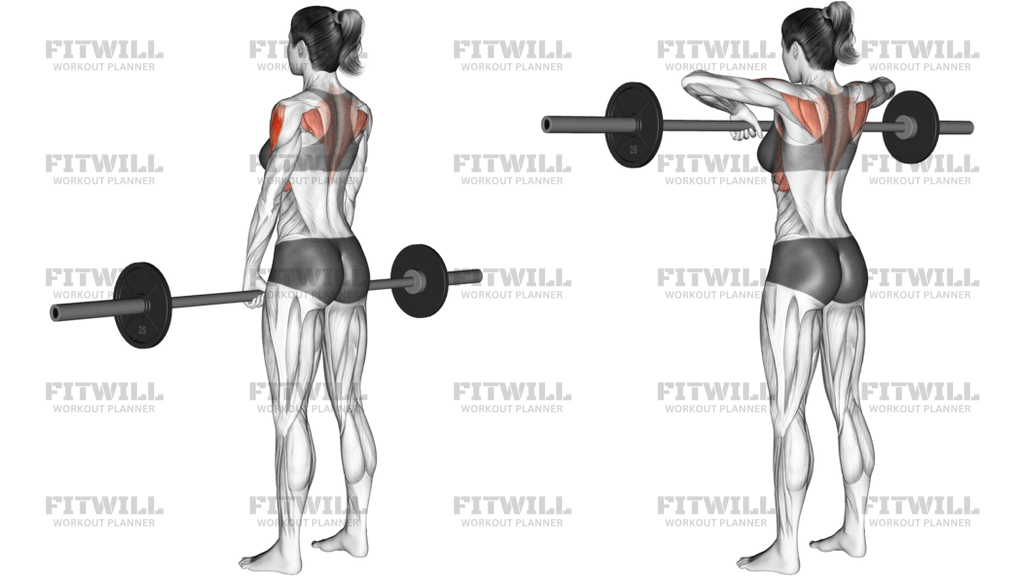
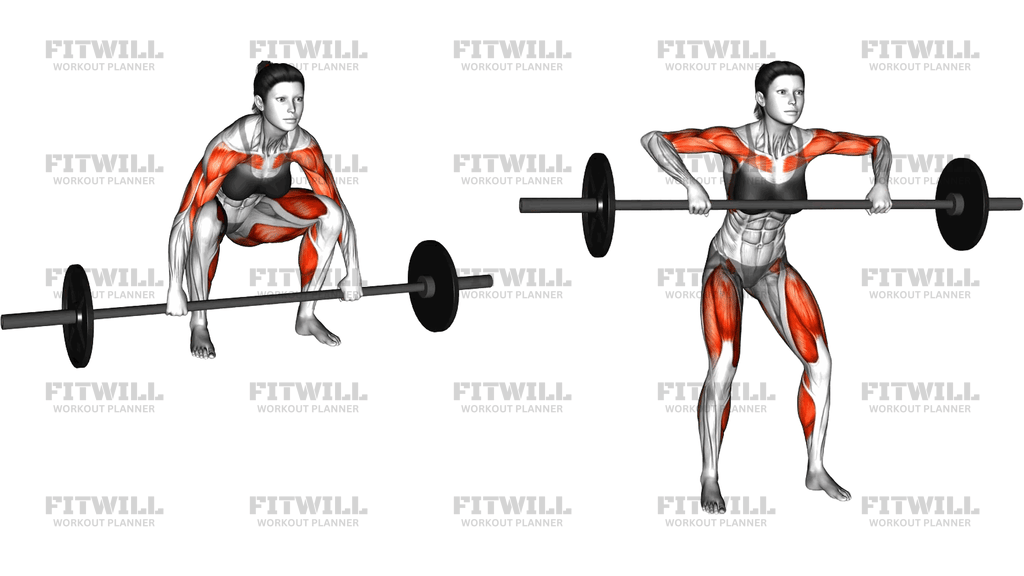
Barbell Upright Row is a standing pulling exercise that moves a loaded bar from the front of the thighs to the upper chest by leading with the elbows. It is used to train the shoulders and upper back in a short, vertical pull pattern while the arms, forearms, and trunk work to keep the bar path clean. The movement looks simple, but the setup matters because the grip width, torso position, and bar path determine whether the rep feels smooth or awkward.
This exercise mainly emphasizes the side delts and upper traps, with the front delts, biceps, forearms, and mid-back helping control the lift. Because the bar travels close to the body and the elbows rise higher than the hands, the shoulders have to stay organized through the top half of the range. That makes Barbell Upright Row useful as an accessory movement for shoulder and upper-back development, especially when you want a controlled pull rather than a full-body heave.
A good rep starts with the bar resting against the thighs, an overhand grip slightly wider than shoulder width, and the chest stacked over the pelvis. Stand tall with soft knees, brace lightly, and keep the wrists straight before the first pull. From there, drive the elbows up and out so the bar slides up the front of the torso instead of drifting away from it.
The top position should feel strong but not forced. For most lifters, the bar only needs to come to the lower chest or upper sternum before the shoulders start to feel crowded; there is no prize for pulling it higher if the shoulders lose space. Lower the bar along the same path under control, keep the neck relaxed, and let the shoulders reset before the next repetition.
Barbell Upright Row fits best as accessory work after your main presses or pulls, where moderate loads and clean repetitions matter more than absolute weight. It can be scaled for beginners with a light barbell and a conservative range of motion, or made more demanding with slower tempo and tighter pauses. If the motion feels pinchy in the shoulder, shorten the range or use a wider grip and stop the set before form changes.
[ Workout Log & Planner ]
Put your next workout in Fitwill
Keep your plan and training log ready when you are.


Instructions
- Stand tall with the barbell resting against the front of your thighs, feet about hip-width apart.
- Use an overhand grip a little wider than shoulder width so your wrists stay straight and the bar can travel close to your body.
- Stack your chest over your pelvis, soften your knees, and keep your shoulders down before the first rep.
- Brace lightly, then begin the pull by lifting your elbows up and out rather than curling the bar with your hands.
- Keep the bar brushing up the front of your torso as it rises so it does not swing away from you.
- Pull until the bar reaches your lower chest or upper sternum, or stop sooner if your shoulders start to feel crowded.
- Pause for a brief squeeze at the top with your neck long and your wrists still below or level with your elbows.
- Lower the bar slowly along the same path until it returns to the thighs and the shoulders are fully reset.
- Inhale on the way down, exhale as you pull, and finish the set by bringing the bar back to a controlled stop.
Tips & Tricks
- A grip slightly wider than shoulder width usually gives the shoulders more space and keeps the bar path cleaner.
- If the bar drifts forward, lighten the load and think about dragging it straight up the shirt front.
- Lead with the elbows; if the hands start curling the bar up, the rep usually turns into a biceps pull.
- Do not chase chin height if your shoulders pinch. For many lifters, lower chest or upper sternum is the useful top range.
- Keep the ribs down and the torso still. Leaning back to finish the rep usually means the bar is too heavy.
- A brief pause at the top helps the upper traps and delts work without turning the movement into a shrug-and-jump.
- Use a controlled lowering phase so the shoulders stay set for the next rep instead of collapsing at the bottom.
- If your wrists ache, reduce the grip width change and keep the knuckles stacked over the forearms instead of cocking the hands back.
- A barbell upright row is usually better in moderate rep ranges than as a max-strength lift.
- If the shoulder joint feels pinched, shorten the range immediately rather than trying to force a higher pull.
Frequently Asked Questions
What muscles does Barbell Upright Row work?
It mainly trains the side delts and upper traps, with help from the front delts, biceps, forearms, and upper back as you pull the bar up.
How high should I pull the bar in Barbell Upright Row?
For most people, the bar only needs to reach the lower chest or upper sternum. If the shoulders feel pinched before that point, stop the rep there.
What grip width should I use for Barbell Upright Row?
Start slightly wider than shoulder width. That usually keeps the elbows moving cleanly and gives the shoulders more room at the top.
Why do my wrists hurt during Barbell Upright Row?
The wrists usually ache when the grip is too narrow or the hands bend back to chase extra height. Keep the wrists straight and let the elbows lead the pull.
Can beginners do Barbell Upright Row?
Yes, as long as they use a light barbell and stop well before the shoulders feel crowded. Beginners should learn the elbow-led path before adding load.
What is the most common mistake in Barbell Upright Row?
The biggest mistake is yanking the bar away from the body and turning the rep into a swing. Keep the bar close to your torso from the thighs to the top.
Should I feel Barbell Upright Row in my traps or shoulders?
You should feel both, but the side delts should do most of the lifting while the traps help finish the top half of the pull.
What can I use instead of Barbell Upright Row?
A cable upright row or a dumbbell high pull can be easier on the wrists or shoulders because the resistance path is a little more forgiving.