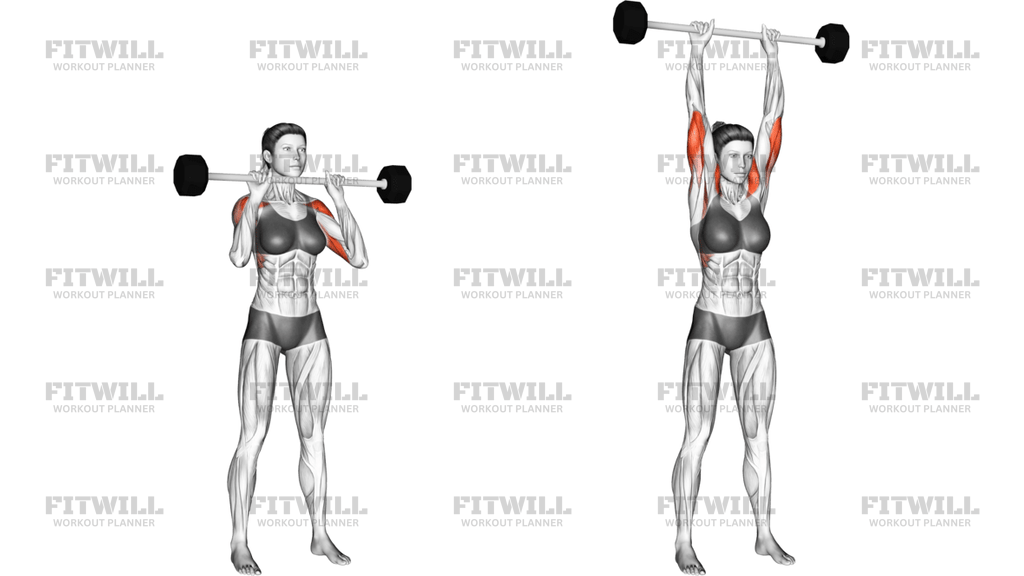
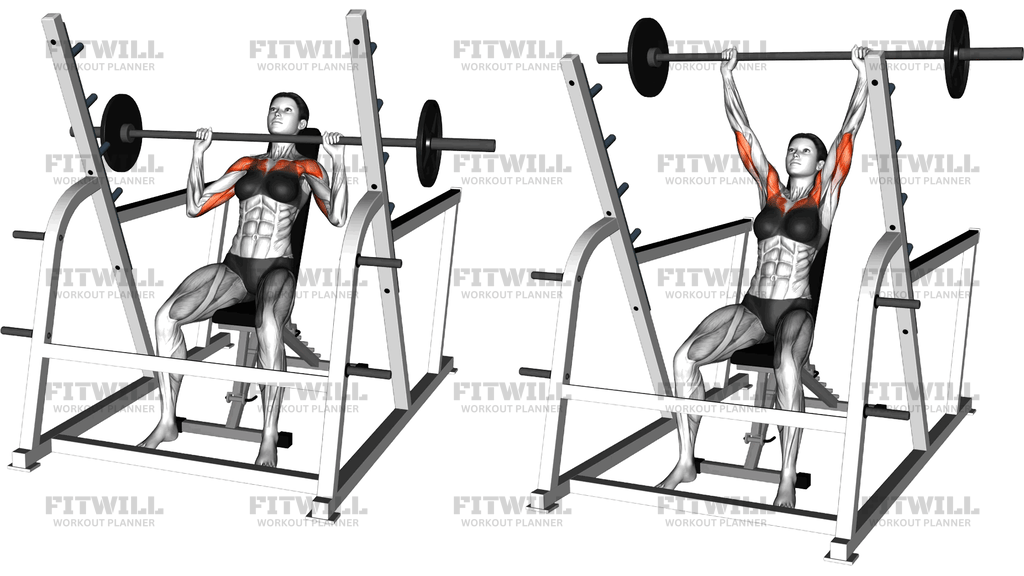
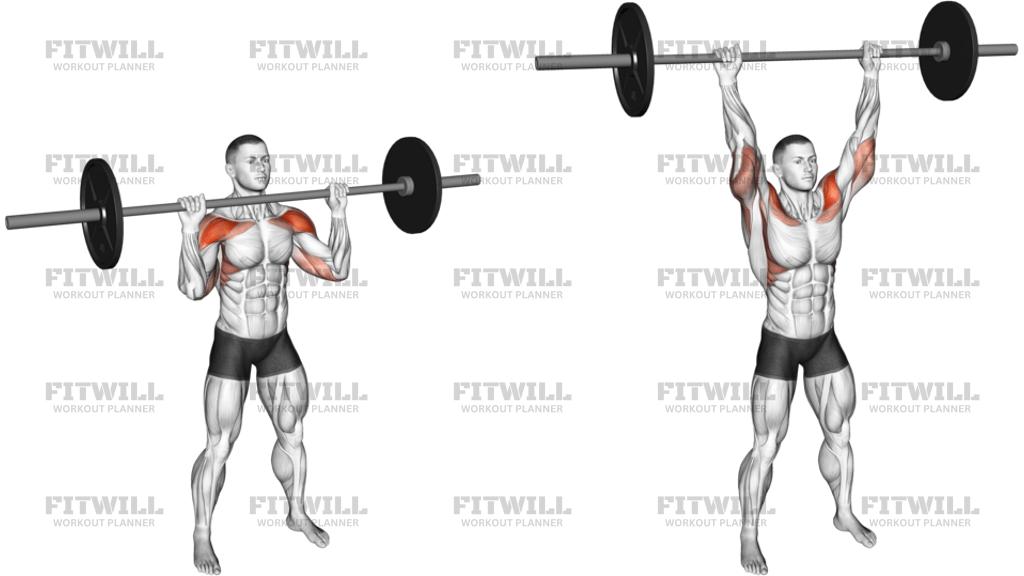
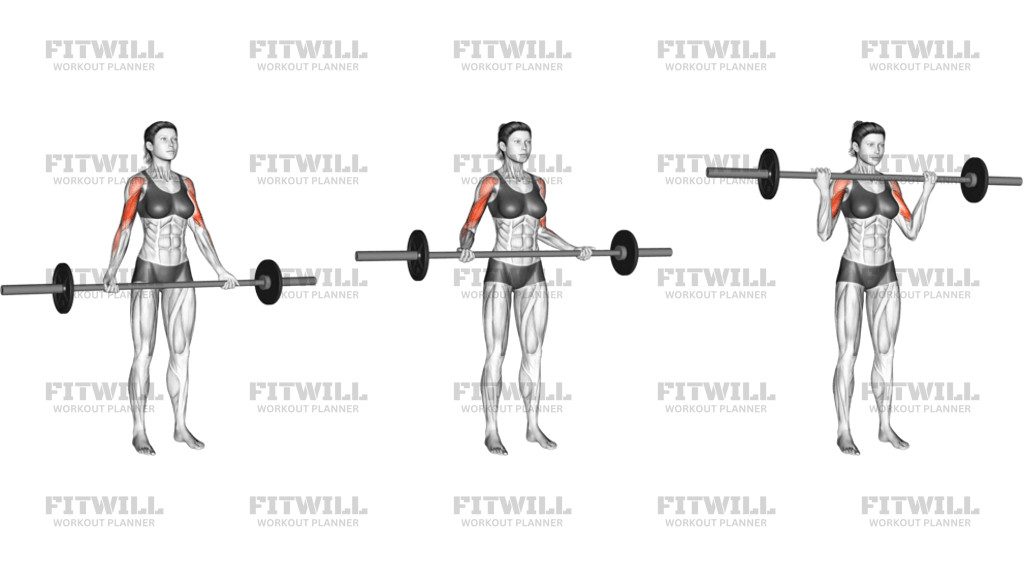
Barbell Behind The Back Push Press
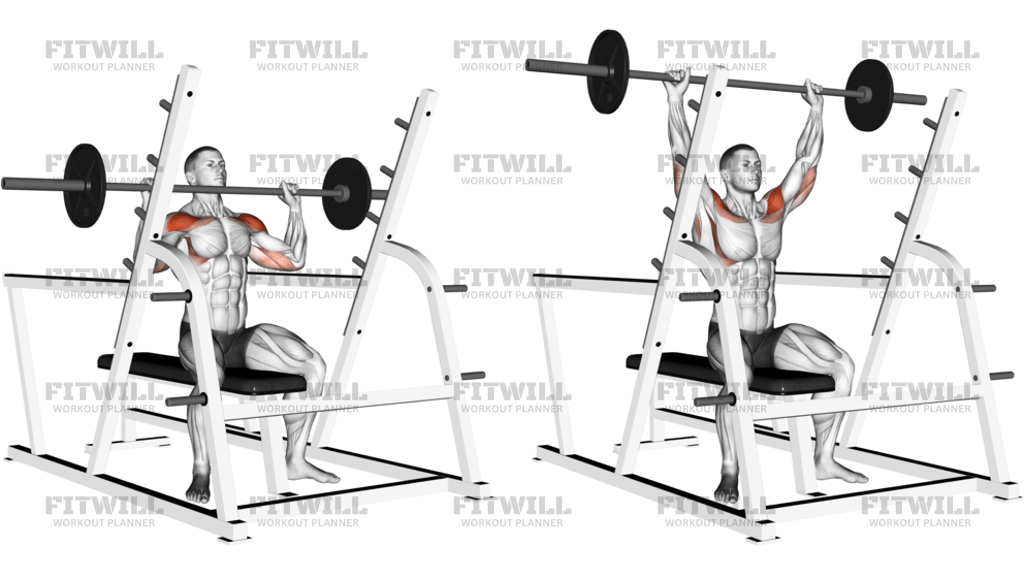
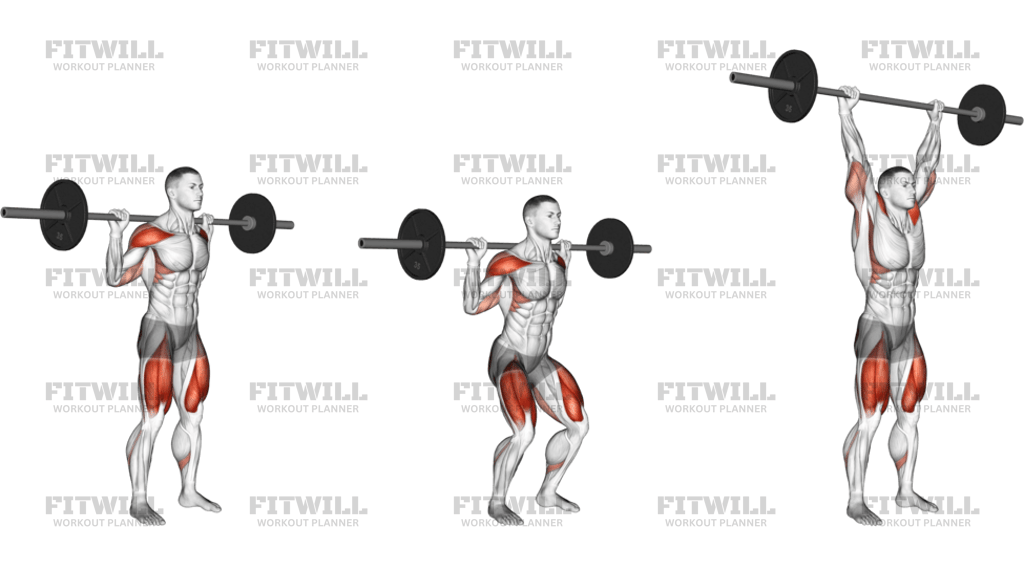
Barbell Behind The Back Push Press is a standing overhead power movement that trains the shoulders, upper back, and arms while asking the legs to contribute to the drive. The bar is held across the upper traps behind the head, so the exercise rewards clean positioning before the rep even starts. When the rack, dip, and press line up well, the set feels smooth and strong instead of awkward and forced.
The main work comes from the delts, with the triceps finishing the press and the traps and upper back helping stabilize the bar. Because the bar starts behind the neck, shoulder position matters more than it does in a front-rack push press. A good setup keeps the ribs stacked, the neck long, and the bar balanced over the midfoot so the press can travel straight up instead of drifting forward.
Barbell Behind The Back Push Press is usually performed with a short dip and a sharp leg drive. The knees and hips bend just enough to preload the body, then the legs extend to help launch the bar overhead. The arms finish the rep after the lower body has done its part, and the bar should end directly over the shoulders, hips, and ankles rather than out in front of the body.
This variation is useful for lifters who want to build overhead strength, coordination, and a stronger lockout while keeping the torso upright. It is also a good option for training the transition from leg drive to arm finish, which carries over to other barbell pressing work. Because the behind-the-neck rack can be demanding on the shoulders, the load should stay honest and the setup should never feel jammed or pinchy.
The safest repetitions are the ones that look identical from one rep to the next. Keep the dip shallow, press the bar in a vertical path, and lower it back to the traps under control before the next rep. If shoulder mobility is limited or the position creates discomfort, this is not the place to force range; reduce the load, shorten the set, or use a different pressing variation that lets you keep the same training goal without fighting the rack position.
[ Workout Log & Planner ]
Put your next workout in Fitwill
Keep your plan and training log ready when you are.


Instructions
- Stand with the bar resting across your upper traps behind your head, hands just outside shoulder width, wrists straight, and elbows slightly down.
- Set your feet about hip width, spread your weight through the whole foot, and keep your chest tall with your neck long.
- Brace your abs and squeeze your glutes before the first rep so your ribs stay stacked over your pelvis.
- Take a quick dip by bending the knees and hips a few inches while keeping your torso nearly vertical.
- Drive forcefully through the floor and extend your hips, knees, and ankles to send the bar upward.
- Finish the press by straightening your arms until the bar is locked out overhead with the bar path over your midfoot.
- Lower the bar back to the upper traps under control, letting the elbows track down and slightly back as it settles.
- Reset your stance and breathing between reps, then re-rack the bar carefully after the last repetition.
Tips & Tricks
- Keep the dip shallow and vertical; if your hips drift back, the bar usually travels forward instead of up.
- Treat the leg drive as the engine and the arms as the finish, not the other way around.
- Use a lighter load than you would for a front-rack push press, because the behind-the-neck position narrows the margin for error.
- Do not let your ribs flare hard at lockout; the bar should finish stacked over the shoulder line, not leaning behind you.
- If the bar brushes the back of your head, reset the rack position on the traps and tuck the chin slightly during the drive.
- Keep the wrists stacked over the elbows at the start so the bar does not feel forced into the shoulders.
- Lower the bar under control instead of bouncing it off the traps between reps.
- Stop the set if the front of the shoulder feels pinched or the lockout turns into a shrugging compensation.
Frequently Asked Questions
What muscles does Barbell Behind The Back Push Press work most?
The main emphasis is on the delts, with the triceps finishing the press and the traps and upper back helping stabilize the bar.
Is Barbell Behind The Back Push Press the same as a behind-the-neck push press?
This version uses the bar racked across the upper traps behind the head, which is why the setup looks like a behind-the-neck press. Keep the bar balanced and the torso upright so the name of the exercise does not turn into a sloppy rack position.
How deep should the dip be in Barbell Behind The Back Push Press?
The dip should be short and quick, usually just a few inches. If the knees and hips bend too much, the bar tends to drift and the press turns into a squat-like drive.
Why does the bar feel unstable behind my neck?
Most often the bar is sitting too high on the neck or the elbows are flared out of position. Set it across the upper traps, keep the wrists stacked, and let the elbows angle slightly down and back.
Should Barbell Behind The Back Push Press be done with a lot of weight?
Not usually. This is a position-specific overhead variation, so lighter to moderate loads are more useful than chasing max weight and losing the clean bar path.
Can beginners use Barbell Behind The Back Push Press?
Yes, but only if shoulder mobility and rack position feel comfortable. Start light and keep the dip and press crisp; if the position feels cramped, a front-rack push press is a better entry point.
What is the biggest form mistake with this exercise?
Leaning back and turning the rep into a standing incline press. Keep the torso tall, drive straight up, and finish with the bar over the midfoot.
What can I substitute if the behind-the-neck position bothers my shoulders?
Use a front-rack push press, dumbbell push press, or landmine press. Those options keep the same leg-drive pattern without forcing the behind-the-neck shoulder angle.