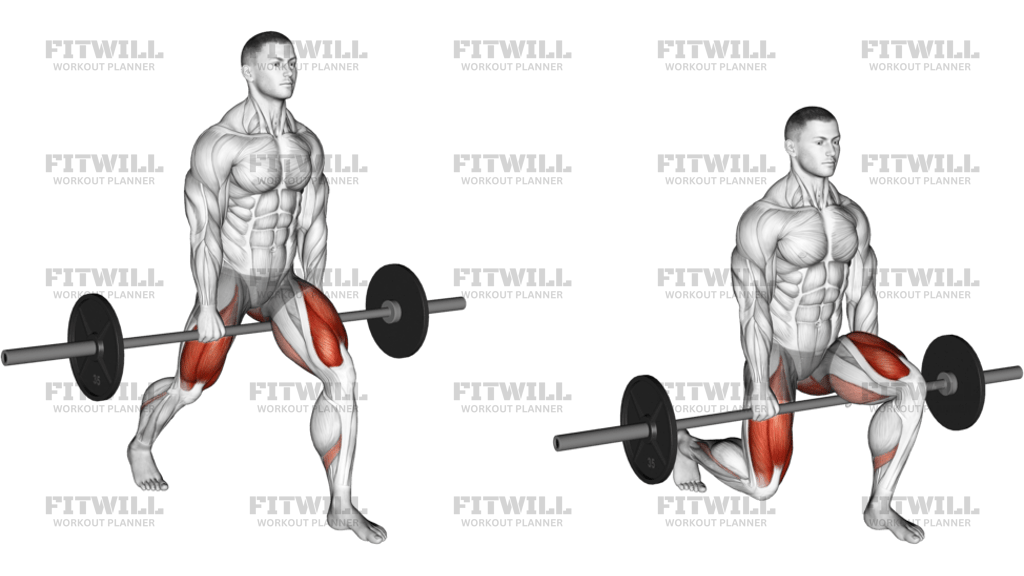
Barbell Elevated Split Squat
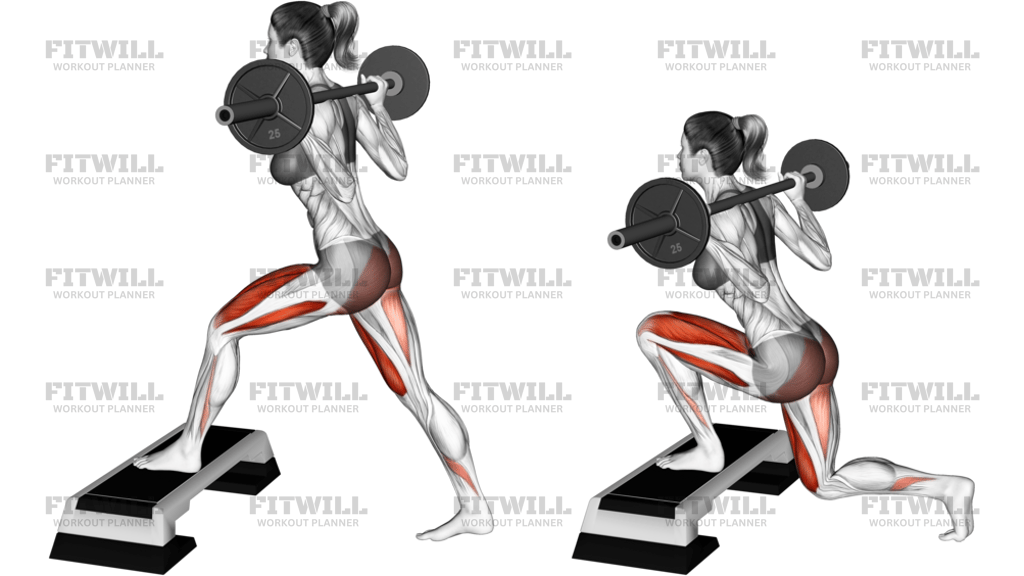
Barbell Elevated Split Squat is a rear-foot-elevated single-leg squat with the barbell resting across the upper back. It loads the front leg heavily while the back foot on the bench gives balance and lets you work through a long, controlled range of motion. The movement is often used to build quad and glute strength, improve unilateral stability, and expose side-to-side imbalances that are easy to hide in bilateral leg work.
The setup matters because a small change in front-foot distance, bench height, or torso angle changes where the work lands. In the image, the rear foot is relaxed on the bench, the front foot stays flat on the floor, and the torso stays tall enough to keep the bar over midfoot. That position lets the front knee bend deeply without the heel peeling up or the pelvis twisting away from the working leg.
This exercise is more demanding than a standard split squat because the barbell increases the load and the rear-foot support reduces how much you can “save” a bad rep. The front leg should control the descent, absorb the bottom position, and drive the body back up with the whole foot. The back leg is only there to balance the body; if you push off it hard, you usually lose tension where it matters and make the rep less useful.
Use a depth that you can own on every rep. A clean rep looks like a controlled drop, a brief and stable bottom position, and a smooth drive up without bouncing off the back knee or letting the front knee cave inward. Breathing should stay organized so the rib cage does not flare as the load rises. If the barbell makes your shoulders, upper back, or balance the limiting factor before the front leg is working, reduce the load and tighten the setup before adding weight.
This is a strong accessory choice for lower-body strength blocks, athletic training, and hypertrophy work when you want one leg to do most of the work while the other side helps only lightly. It can be scaled from bodyweight to heavy barbell loading, but the best results come from consistent foot placement, square hips, and a controlled tempo that keeps tension on the front thigh and glute instead of turning the movement into a balance scramble.
Fitwill
Log Workouts, Track Progress & Build Strength.
Achieve more with Fitwill: explore over 9600 exercises with images and videos, access built-in and custom workouts, perfect for both gym and home sessions, and see real results.
Start your journey. Download today!




Instructions
- Set a sturdy bench behind you and place the barbell across your upper back, then stand one long step in front of it with your front foot flat on the floor.
- Rest the top of your rear foot on the bench with the laces down and keep the rear leg relaxed, not pushing into the support.
- Plant the front foot so you can lower straight down without losing the heel, and keep your stance wide enough for balance but not so wide that the hips twist open.
- Take a breath, brace your trunk, and keep your ribs stacked over your pelvis before you start each rep.
- Lower under control by bending the front knee and hip together while the rear knee travels down toward the floor.
- Keep the front heel down and the front knee tracking in line with the toes as you descend.
- Go as deep as you can while keeping the pelvis square and the bar stable over the midfoot.
- Drive up through the front heel and midfoot until the front leg is straight, then reset your breath before the next rep.
- Finish each rep cleanly, and step out of the setup only after the barbell is racked safely.
Tips & Tricks
- Use the bench only as a balance point. If you are pushing hard off the rear foot, the front leg is not doing enough work.
- A slightly longer front-foot stance usually helps the front heel stay planted and gives the knee room to travel without collapsing inward.
- Keep the bar pinned to the upper back with the shoulder blades tight so the load does not wobble when you reach the bottom.
- A small forward torso lean is fine and often helps the front glute and quad share the load more evenly.
- If the front knee dives inward, shorten the set, lower the load, and think about driving the knee in line with the second toe.
- Do not bounce out of the bottom position. Pause long enough to show control before you drive back up.
- The rear foot should stay relaxed on the bench; curling the toes or pushing off the top of the foot usually steals tension from the front leg.
- Choose a bench height that lets you keep the pelvis square. If the rear hip feels jammed, the bench is probably too high for your setup.
- Use a controlled lowering phase so the front thigh and glute stay under load instead of letting gravity drop you into the bottom.
- Stop the set when the bar starts drifting, the front heel starts lifting, or your torso twists to finish the rep.
Frequently Asked Questions
What muscles work hardest in the Barbell Elevated Split Squat?
The front leg does most of the work, especially the quads and glute, with the adductors, hamstrings, and core helping stabilize the pelvis and trunk.
Is this the same as a Bulgarian split squat?
Yes. A rear-foot-elevated split squat is commonly called a Bulgarian split squat, and the barbell makes the same pattern much more demanding.
How should the front foot be placed on the floor?
Place it far enough forward that you can reach depth with the heel down and the knee tracking over the toes, but not so far that you lose balance or turn the rep into a long lunge.
Should my rear leg be doing much work on the bench?
No. The rear foot is mainly there for balance and positioning, not for driving you out of the bottom.
How deep should I go on the bench split squat?
Go as low as you can while keeping the front heel planted, the pelvis square, and the bar stable. If your hips twist or the front foot lifts, the depth is too aggressive for that setup.
Can beginners use a barbell for this exercise?
Beginners can, but only after they can control the bodyweight version with a stable bench setup. Dumbbells or bodyweight are often a better first step.
What is the most common mistake with the barbell on the back?
Letting the load wobble or drifting the torso forward to save balance. Keep the upper back tight and the bar stacked over the midfoot.
Why does this exercise feel so different from a regular split squat?
The rear foot elevation increases the range of motion and makes balance, hip position, and front-leg control much more important than in a standard split squat.
How do I make the exercise more glute-focused?
Use a slightly longer stance, keep the front foot planted, and let the torso lean forward a little while the pelvis stays square.