Power Clean
The power clean is a barbell explosive lift that moves the bar from the floor to the front-rack position in one coordinated sequence. It trains the legs, hips, back, shoulders, and grip to work together, but the main purpose is not simply to pull hard. The rep has to stay organized from the first setup over the bar all the way to the catch so the bar rises close to the body and the receive happens under control.
This exercise starts with a deadlift-style setup: feet about hip width, shins close to the bar, chest over the bar, back flat, and the bar over the midfoot. From there, the pull is built from the floor, then through the knees, then into a violent hip and ankle extension that creates the speed needed to turn the bar over. The image shows a power-style receive, so the catch is taken above a full squat, with the elbows driving forward quickly into the front rack.
Because the bar is moving fast, the quality of the setup matters more than in many other lifts. If the shoulders drift forward, the bar gets away from the body, or the catch is taken with low elbows, the lift becomes noisy and inefficient. Good reps feel like a sequence: push the floor away, keep the bar close, finish tall, then meet the bar with the elbows and torso ready to absorb it.
Use the power clean when you want to develop explosive triple extension, athletic power, and the ability to transmit force from the floor into an upright receive. It fits well in strength and power sessions, especially when the goal is to move moderate loads with speed and precision rather than grind a heavy max. The front rack and upright torso also make the exercise a useful check on rack mobility, timing, and total-body coordination.
Safety depends on staying crisp and predictable. If the bar drifts forward, the pull turns into an arm yank, or the receive feels unstable, lower the load and shorten the set. The best power cleans are not forced higher with the arms; they are created by a clean first pull, a powerful second pull, and a fast, confident turnover into a solid front-rack position.
[ Workout Log & Planner ]
Put your next workout in Fitwill
Keep your plan and training log ready when you are.


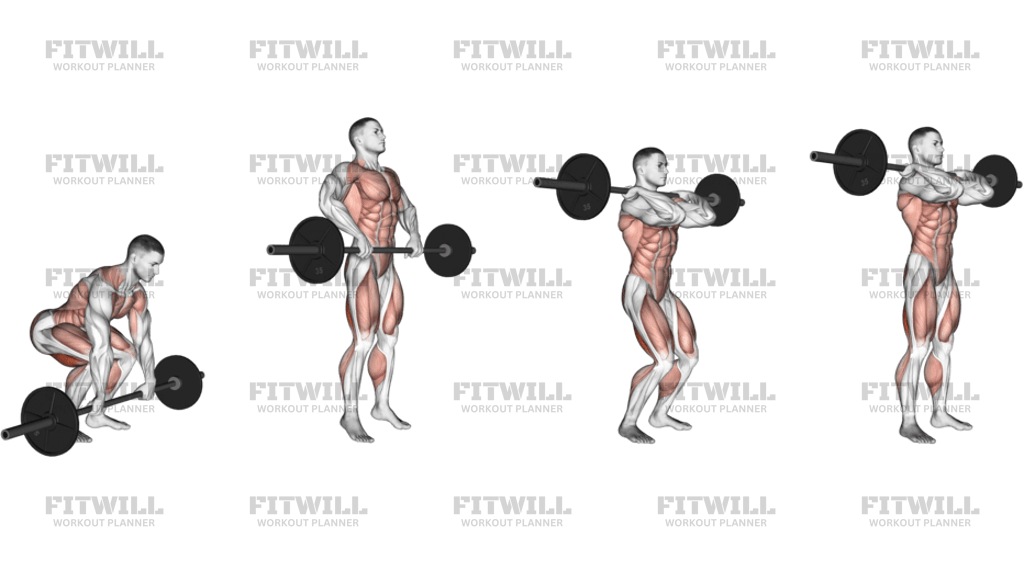
Instructions
- Stand with your midfoot under the bar, feet about hip width apart, and grip the bar just outside your legs.
- Hinge at the hips, bend your knees, and lower until your shins touch the bar while keeping your back flat and chest over the bar.
- Set your shoulders slightly in front of the bar, brace your midsection, and keep your weight balanced through the whole foot.
- Lift the bar from the floor with your legs first, keeping it close to your shins and thighs as it passes the knees.
- As the bar reaches mid-thigh, extend the hips, knees, and ankles powerfully to finish tall and drive the bar upward.
- Shrug and pull yourself under the bar without curling it with the arms.
- Catch the bar on the front of your shoulders with the elbows high and the torso upright in a quarter squat.
- Stand to full extension to finish the rep, then lower the bar with control back to the floor or reset for the next rep.
- Breathe in and brace before the pull, then exhale after you stand up in the catch or once the bar is safely lowered.
Tips & Tricks
- Keep the bar brushing close to the thighs; if it swings away from you, the catch gets harder and slower.
- Think about pushing the floor away on the first pull instead of yanking the bar off the ground.
- Let the hips and legs create the speed; bending the arms early usually turns the lift into a curl.
- Finish tall before you pull under so the turnover happens after the extension, not before it.
- Drive the elbows forward fast in the catch or the bar will sit on the hands instead of the shoulders.
- Use a load that lets you stay sharp; power cleans are technical and lose value when they become slow grinds.
- If your rack position is tight, open the hands slightly and point the elbows through the front rack instead of letting the chest collapse.
- Reset every rep from the floor if the bar path or starting position changes.
Frequently Asked Questions
What muscles does the power clean work?
It heavily involves the quads, glutes, hamstrings, back, traps, shoulders, and forearms, with the front rack demanding strong upper-back support.
Is the power clean a squat clean?
No. A power clean is caught above a full squat, usually in a quarter squat with the bar already on the front of the shoulders.
Where should the bar start?
Set it over the midfoot with your shins close, hips back, chest over the bar, and shoulders slightly in front of it before the pull begins.
Why do my elbows need to come forward so fast?
Fast elbows help you catch the bar on the shoulders instead of on the hands, which makes the front rack safer and more stable.
Can beginners learn the power clean?
Yes, but they should start light and learn the deadlift setup, the close bar path, and the front-rack receive before adding speed.
What is the most common mistake in the pull?
Early arm pull is a big one. The lift should be driven by the legs and hips first, not by curling the bar upward.
Do I need to catch the bar in a deep squat?
No. The image shows a power receive, so the goal is to catch it above parallel and stand it up.
What should I do if the front rack feels uncomfortable?
Use a lighter load, open the grip slightly, and practice a quicker elbow turnover; if the rack still feels limited, use a clean pull or hang power clean instead.