Cable Front Raise
Cable Front Raise is a standing shoulder isolation exercise that uses a low cable and straight attachment to train shoulder flexion under steady resistance. It is most commonly used to build the front of the shoulders with help from the upper chest, serratus, and trunk stabilizers, while the cable keeps tension on the lift and the lowering phase.
The setup matters because the cable line should pull from in front of your thighs without yanking you out of position. Stand tall facing the machine, grip the bar with both hands, and keep a slight bend in the elbows so the movement comes from the shoulders rather than a locked elbow swing. A stacked ribcage, quiet torso, and grounded feet make the raise feel smooth instead of jerky.
The main action is a controlled front raise to about shoulder height. The arms travel forward in an arc, the shoulders stay down instead of shrugging, and the hands finish just in front of or level with the shoulders. Lower the bar slowly back to the start so the delts stay under tension through the whole rep. If the weight starts to pull your torso backward, the load is too heavy or your stance is too narrow.
This exercise fits well in accessory work, shoulder-focused sessions, or upper-body warmups when you want a strict, repeatable raise without using momentum. Because the cable provides constant resistance, it is useful for teaching better control than a dumbbell front raise when the goal is tension and form quality rather than heavy loading.
Use a light to moderate load, keep the neck relaxed, and avoid turning the lift into a hip drive or a shrug. The best repetitions look smooth from start to finish, with the bar path staying clean and the torso staying still. Stop the set when you can no longer lower the bar under control or when the shoulders begin to roll forward to finish the rep.
Fitwill
Log Workouts, Track Progress & Build Strength.
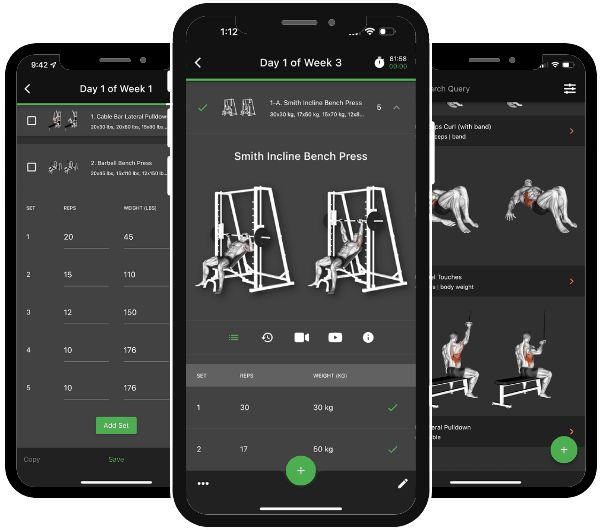
Achieve more with Fitwill: explore over 5000 exercises with images and videos, access built-in and custom workouts, perfect for both gym and home sessions, and see real results.
Start your journey. Download today!


Instructions
- Set the cable pulley to the lowest position and attach a straight bar or similar handle.
- Stand facing the machine with your feet about hip-width apart and hold the bar with both hands in front of your thighs.
- Keep a small bend in your elbows, chest tall, ribs stacked over your pelvis, and shoulders relaxed away from your ears.
- Brace your midsection before you start the first rep so your torso stays still.
- Lift the bar in a smooth arc until your hands reach roughly shoulder height.
- Stop briefly at the top without leaning back, shrugging, or swinging the weight.
- Lower the bar slowly back to your thighs while keeping tension in the cable.
- Inhale on the way down and exhale as you raise the bar again.
- Reset your stance if you lose balance or if the cable starts pulling you forward.
Tips & Tricks
- Keep the bar path slightly in front of your body; raising it too far out to the side turns the rep into a different shoulder pattern.
- A soft elbow bend should stay nearly the same the whole set so the biceps do not take over the lift.
- If your shoulders shrug before the bar reaches shoulder height, reduce the load and keep the collarbones broad.
- Let the cable give you tension at the bottom, but do not let it yank your arms behind your thighs.
- Use enough distance from the stack that the weight stays loaded at the start, but not so much that you are leaning forward.
- Raise only as high as you can without arching your low back or tipping your torso backward.
- A slower lowering phase makes this movement more effective than chasing heavy plates or fast reps.
- If one side of the bar rises faster than the other, re-center your grip before the next rep.
Frequently Asked Questions
What does the Cable Front Raise train most?
It mainly trains the front of the shoulders, with the upper chest and trunk helping to stabilize the lift.
Can beginners perform this exercise?
Yes. Beginners usually do best with a light cable setting and a strict range that stops at shoulder height.
Where should my hands finish at the top?
Your hands should finish around shoulder height, slightly in front of the body, without forcing a higher swing.
Should I lock my elbows during the raise?
No. Keep a small bend in the elbows so the shoulders move the bar instead of turning it into a straight-arm swing.
Why use a cable instead of dumbbells?
The cable keeps tension on the shoulders through more of the rep, especially near the bottom where dumbbells can feel easier.
What does a bad rep usually look like?
Common signs are leaning back, shrugging up, or using momentum to get the bar past the sticking point.
Can I take the bar higher than shoulder level?
You can, but most lifters get better shoulder control by stopping at shoulder height and avoiding extra upper-trap involvement.
How many reps work best?
Moderate-to-higher reps are usually a better fit than heavy low-rep work because this movement rewards control more than load.