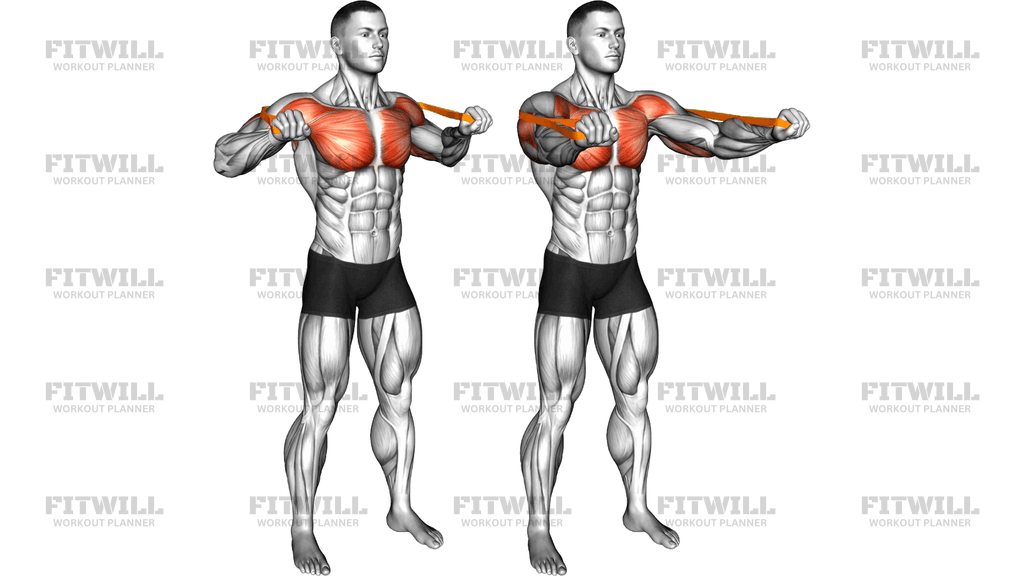
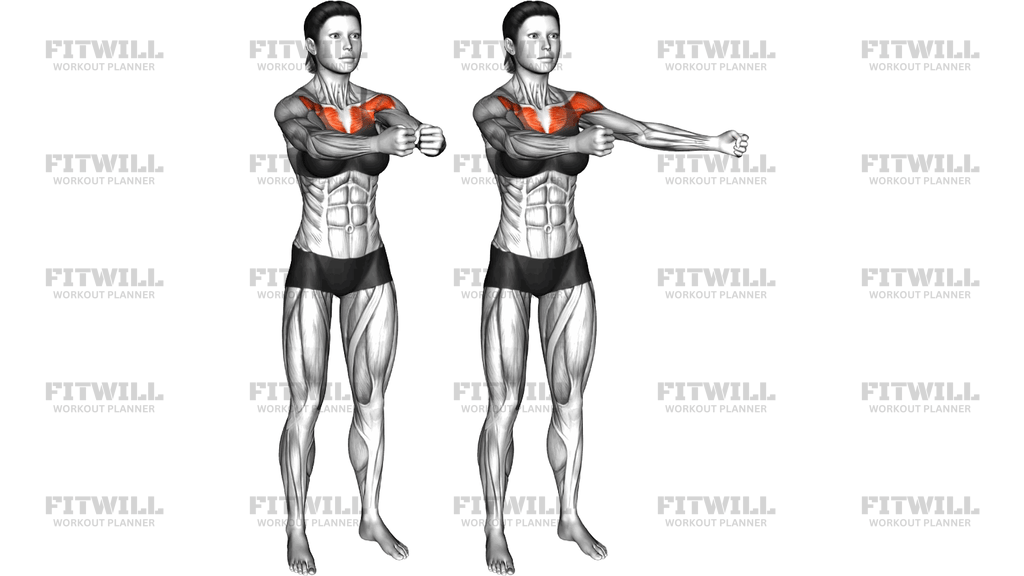
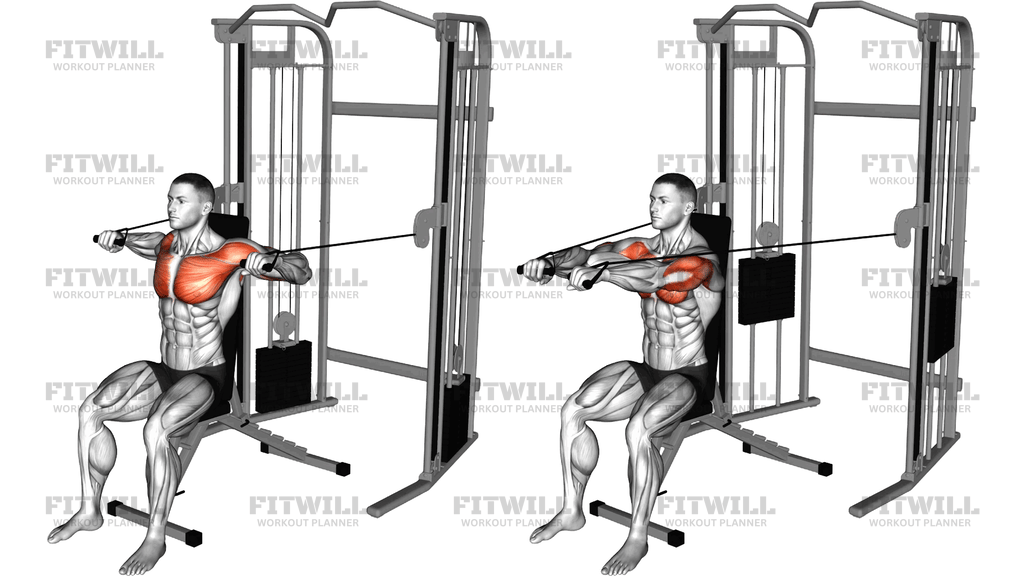
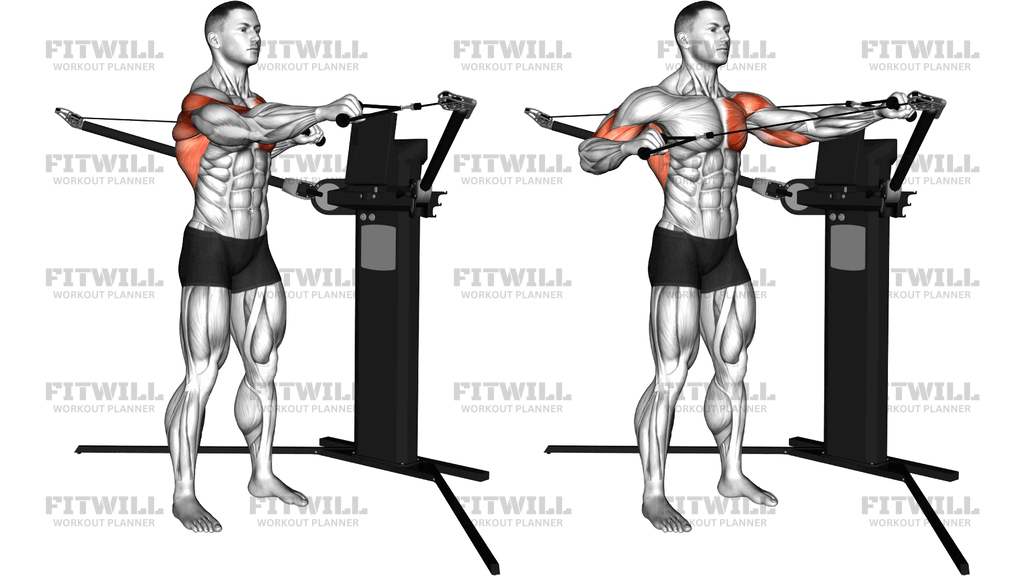
Cable Kneeling High To Low Fly
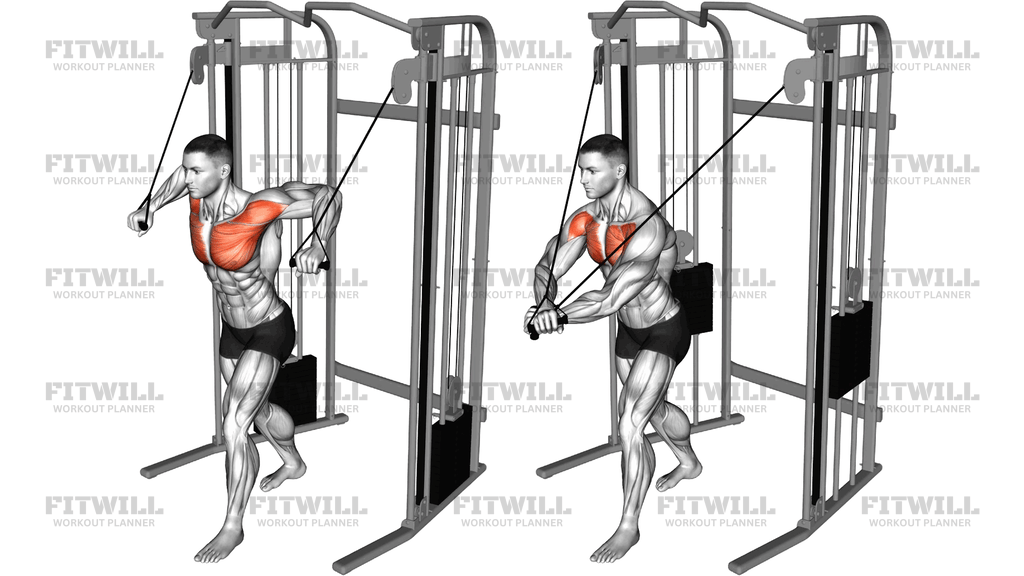
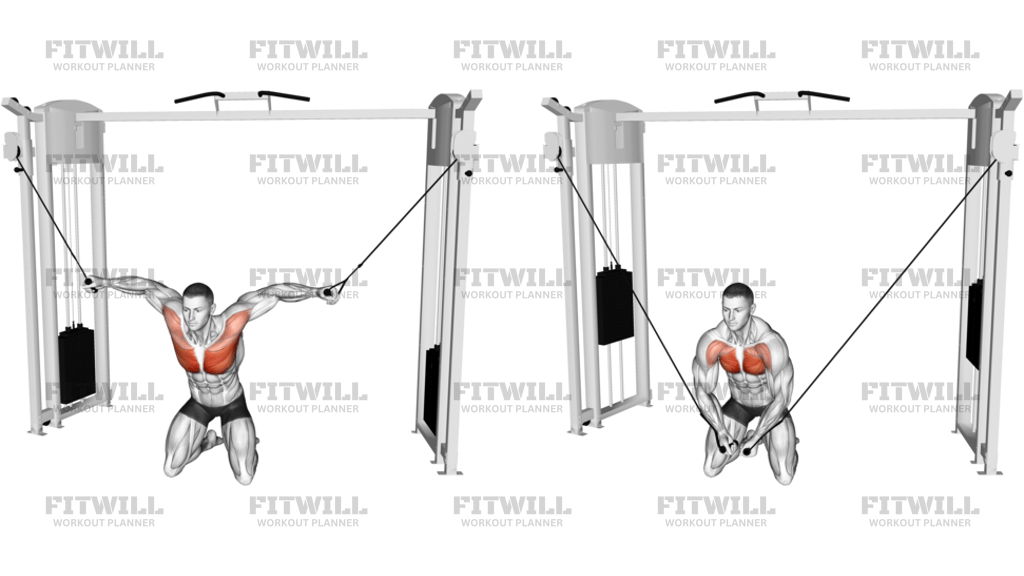
Cable Kneeling High To Low Fly is a chest isolation movement performed from a kneeling position with the cable handles set above shoulder height. The high anchor changes the line of pull so each rep travels downward and inward, which makes the exercise especially useful for training the pecs through horizontal adduction while keeping constant tension on the cables.
The kneeling setup matters because it removes a lot of lower-body cheating and makes torso control part of the lift. With both knees down and the ribs stacked over the pelvis, you have to own the position before you can move the handles. That makes this a strong option when you want the chest to work hard without turning the set into a standing press or a momentum-driven swing.
At the top of the rep, the arms open wide with a soft bend in the elbows and the shoulders kept down rather than shrugged. The handles then sweep in an arc toward the lower chest or upper abdomen. The goal is not to bring the hands together by bending the elbows more; the goal is to keep the arm angle steady and let the pecs close the arms against cable tension.
This exercise usually fits best in accessory chest work, hypertrophy blocks, or as a low-fatigue finisher after pressing. The anterior deltoids, triceps, and core help stabilize the position, but they should not take over the movement. A clean set feels smooth, controlled, and repeatable, with the chest staying loaded on the way down and the torso staying quiet from start to finish.
Use a light to moderate load that lets you keep the kneeling position, control the descent, and pause briefly in the fully shortened position. If the shoulders roll forward, the low back arches, or the handles stop following the same path each rep, the set is too heavy. Done well, this fly gives you a direct chest stimulus with a very clear line of resistance and an easy-to-manage range of motion.
[ Workout Log & Planner ]
Put your next workout in Fitwill
Keep your plan and training log ready when you are.


Instructions
- Set the cable pulleys high, attach a handle to each side, and kneel on the floor between the stacks with both knees under your hips.
- Grip the handles, step or scoot forward until there is tension on the cables, and position your hands high and wide with a slight bend in both elbows.
- Stack your ribs over your pelvis, squeeze your glutes lightly, and keep your chest tall without arching your lower back.
- Start the rep by drawing the handles down and in on a smooth arc, as if you are hugging a large barrel from above.
- Keep the elbows in the same soft bend throughout the rep instead of turning the movement into a press.
- Bring the handles together in front of your lower chest or upper abdomen and squeeze your pecs for a brief pause.
- Stop the finish before your shoulders roll forward or your hands drift below the line you can control cleanly.
- Return the handles to the start slowly, letting the chest open under tension while the torso stays still.
- Breathe out as you pull down and in, then inhale as you control the handles back to the open position.
Tips & Tricks
- Think of the motion as a downward hug, not a front raise, so the handles travel down and inward instead of straight in.
- Keep your shoulders packed down; if they creep toward your ears, the front delts will take over quickly.
- A small forward lean is fine, but do not let your hips drift back or your ribs flare to fake more range.
- The elbows should keep almost the same angle from start to finish; more elbow bend turns the fly into a press.
- Use the kneeling position to remove leg drive, so any extra movement shows up immediately in the torso and shoulders.
- Pause when the handles meet to force a chest squeeze instead of bouncing through the bottom of the rep.
- Lower the weight if the cables pull you off-center or one handle starts moving faster than the other.
- Stop the descent when your shoulders feel stretched but still centered; going deeper should not force the front of the shoulder forward.
- Keep your neck long and neutral so the head does not jut forward as fatigue builds.
- If your lower back is arching, reset the ribs over the pelvis before the next rep rather than trying to muscle through it.
Frequently Asked Questions
What does Cable Kneeling High To Low Fly work most?
It mainly trains the chest, especially the lower and mid portions of the pectorals, with the front delts, triceps, and core helping stabilize the position.
Why do I kneel for this fly instead of standing?
Kneeling reduces leg drive and makes it easier to keep the ribs and pelvis stacked, so the chest does more of the work and the torso stays controlled.
Where should the handles finish on each rep?
Finish with the handles in front of the lower chest or upper abdomen, not up by the face and not so low that the shoulders roll forward.
Should my elbows stay bent the whole time?
Yes. Keep a soft, fixed bend in the elbows so the movement comes from the shoulders and chest rather than turning into a triceps-dominant press.
What is the most common mistake with this cable fly?
The biggest error is shrugging the shoulders or arching the low back to force more range. That usually means the load is too heavy.
Can beginners use this exercise safely?
Yes. Start with a light load, a short pause at the finish, and a controlled return so you can learn the path before adding resistance.
How heavy should the cable stack be?
Choose a weight that lets you keep both handles even, maintain the kneeling position, and finish every rep without twisting or bouncing.
What should I feel if my form is right?
You should feel a strong squeeze across the chest and a controlled stretch as the arms open, with minimal strain in the neck or lower back.
Where does this fit in a chest workout?
It works well after pressing exercises, or later in the session as an accessory or finisher when you want direct chest tension without a lot of joint stress.