Dumbbell Hammer Curl
Dumbbell Hammer Curl is a standing arm-strength exercise performed with a neutral grip, meaning the palms face inward as you curl the dumbbells. It is a simple movement on paper, but the setup matters: if the shoulders drift forward, the elbows travel, or the torso swings, the work shifts away from the upper arm and into momentum. Done well, it builds strong, controlled elbow flexion while training the biceps, brachialis, and brachioradialis together.
This variation is especially useful when you want to strengthen the upper arms without forcing the wrist into a fully supinated position. The neutral grip usually feels more natural on the wrists and forearms, and it often lets lifters load the curl a little more conservatively while still getting a strong stimulus in the arms. It also helps teach clean shoulder position, because the upper arm should stay mostly still while the forearm moves.
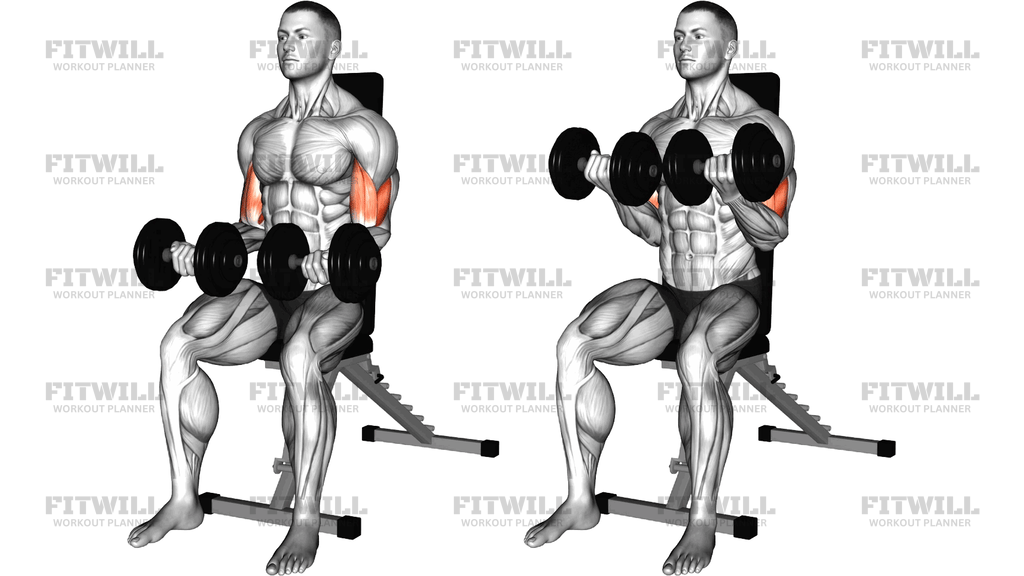
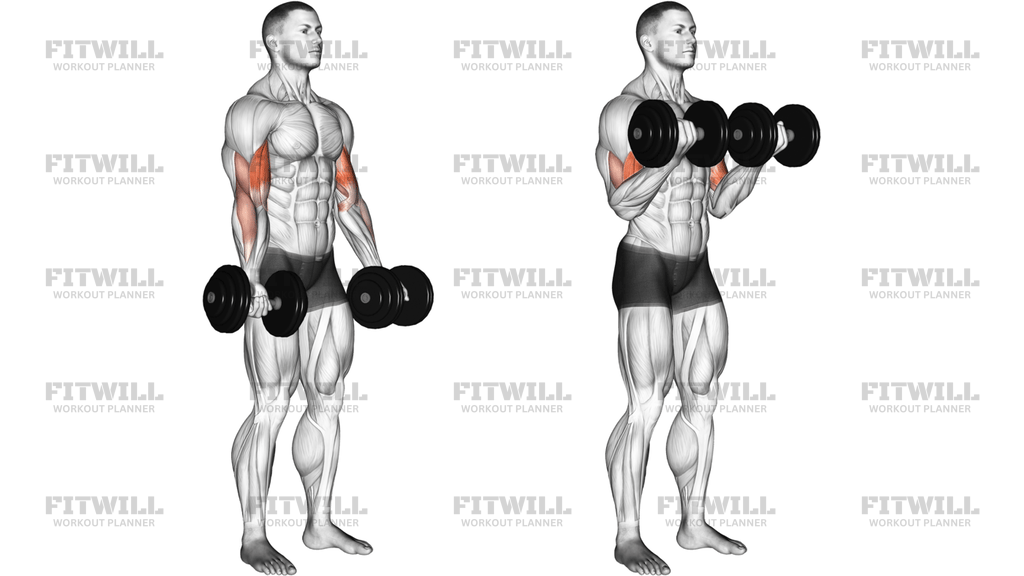
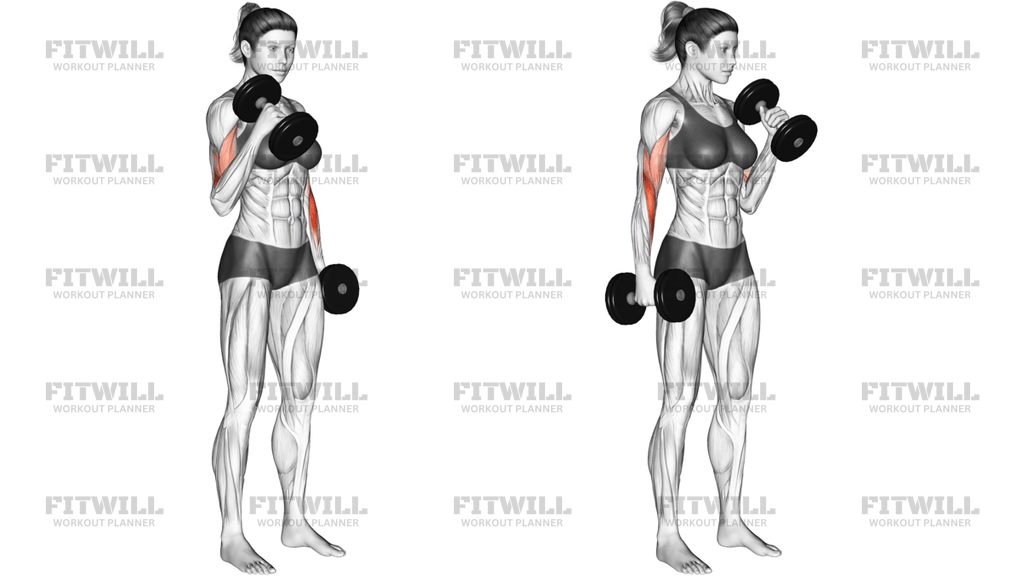
The image shows a tall standing stance with the dumbbells hanging by the sides and one arm curling up toward the shoulder. That is the rhythm to follow: set the shoulders down, keep the elbows close to the ribs, and curl the handle in a smooth arc until the dumbbell approaches the front of the shoulder. The return should be just as controlled, with the forearm lowering under tension instead of dropping quickly.
Because the exercise is easy to cheat, it is most effective when the load is modest and the rep quality is high. It fits well in arm-focused strength work, accessory blocks after presses or rows, or as a straightforward isolation movement when you want extra elbow-flexor volume without complicated setup. Beginners can usually learn it quickly, provided they keep the torso quiet and use a weight they can lower without losing position.
Treat each rep as a repeatable pattern rather than a swing. Keep the neck relaxed, stand tall, and let the elbow do the bending while the upper arm stays anchored. If the curl starts turning into a hip drive or shoulder shrug, the load is too heavy or the set is too tired. Use full, pain-free range and stop the set when you can no longer keep the dumbbells moving on the same clean path.
[ Workout Log & Planner ]
Put your next workout in Fitwill
Keep your plan and training log ready when you are.


Instructions
- Stand tall with a dumbbell in each hand, feet about hip-width apart, and palms facing your thighs.
- Keep your elbows close to your sides and let the dumbbells hang fully at arm's length without locking the shoulders forward.
- Set your chest tall, ribs stacked over the pelvis, and brace lightly so your torso stays still.
- Curl one or both dumbbells upward by bending the elbows while keeping the palms in a neutral grip.
- Bring the dumbbell toward the front of the shoulder without letting the elbow drift far in front of the torso.
- Squeeze the upper arm briefly at the top, then lower the weight under control until the arm is straight again.
- Keep the wrists neutral and avoid turning the palms up as the dumbbell rises.
- Exhale as you curl and inhale as you lower, maintaining the same rhythm on every rep.
- Reset each rep from a still standing position instead of using a hip swing to start the next curl.
Tips & Tricks
- If your shoulders roll forward, slightly retract and depress them before the first rep so the upper arms stay anchored.
- A neutral grip should stay neutral; if the dumbbells start rotating during the lift, the weight is probably too heavy.
- Keep the elbows near your ribs, but do not pin them so hard that the shoulders tense up and shrug.
- Lower the dumbbells slowly enough that you can feel the brachialis and forearm working on the way down.
- Use a weight that lets you reach the top without leaning back or kicking the hips forward.
- Do not let the wrists break backward; keep the knuckles stacked over the forearms through the whole curl.
- A small pause at the top reduces cheating and makes each rep more honest, especially with lighter dumbbells.
- If one side finishes sooner than the other, alternate arms and match the weaker side's range instead of rushing both.
Frequently Asked Questions
What muscle does Dumbbell Hammer Curl target most?
The biceps still work hard, but the brachialis and brachioradialis are especially involved because of the neutral grip.
Can beginners perform this exercise?
Yes. It is a good beginner curl as long as the dumbbells are light enough to keep the torso still and the wrists neutral.
Should the palms face in the whole time?
Yes. Keep the palms facing each other from the bottom to the top so the movement stays a true hammer curl.
How far should the dumbbell travel on the curl?
The dumbbell should travel in a smooth arc from the thigh area to near the front of the shoulder, without the elbow drifting far forward.
Why use a hammer grip instead of a regular curl grip?
The neutral grip is usually easier on the wrists and shifts more work to the brachialis and forearm muscles.
Is it okay if one arm curls while the other stays down?
Yes. Alternating reps is fine, as long as each side stays strict and the non-working arm remains quiet at the side.
What is the most common form mistake with the dumbbells?
Swinging the torso or letting the elbows drift forward usually means the load is too heavy or the set is too fatigued.
Can I use this after rows or pull-ups?
Yes. It works well as accessory arm work after back training because the elbow flexors are already warm.
How should I breathe during hammer curls?
Exhale on the curl up, inhale on the lowering phase, and keep the torso quiet instead of bracing so hard that the shoulders shrug.