Lever Hip Extension Version 2
Lever Hip Extension Version 2 is a machine-based hip extension pattern where the torso stays supported while one leg drives a lever through the hip. The setup shown here places the chest, forearms, and trunk against the pad so the glutes can do the work without the body swinging or twisting. It is a useful single-leg accessory for building glute strength, hip control, and clean extension mechanics.
The version 2 setup is especially useful when you want a guided path and more consistent loading than a free-standing kickback. The working leg starts with the hip flexed and the knee bent, then moves through hip extension as the heel drives back and slightly up. A good rep finishes with the glute squeezed hard, but without arching the low back or opening the pelvis to one side.
Setup matters because the machine can only isolate the hips if the torso is locked in place. Keep the chest and forearms anchored, square the hips to the pad, and place the working leg so the lever line feels smooth from the first inch of movement. If the pad sits too high or too low, the machine will push you into compensations, and the load will shift away from the glute and into the lower back or hamstrings.
This is best used as accessory work, a glute-focused strength exercise, or a controlled unilateral movement in a lower-body session. Use a load that lets you pause at the top, lower under control, and keep every repetition identical. If you feel the movement mostly in the low back, the machine is set too far out of position, the range is too large, or the load is too heavy. The goal is steady hip extension with a quiet torso and a clear squeeze at lockout.
Fitwill
Log Workouts, Track Progress & Build Strength.
Achieve more with Fitwill: explore over 9600 exercises with images and videos, access built-in and custom workouts, perfect for both gym and home sessions, and see real results.
Start your journey. Download today!




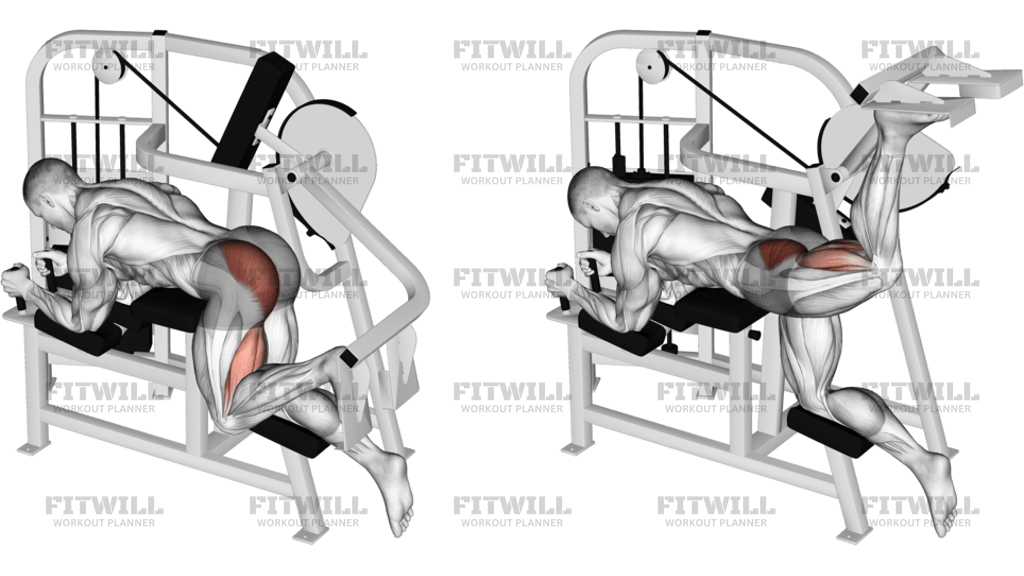
Instructions
- Set your chest and forearms against the front pad, then position the working leg on the lever so the hip starts flexed and the knee is bent comfortably.
- Keep the non-working leg planted and your hips square to the machine before you take the first rep.
- Grip the front handles, brace your midsection, and keep your ribs down so your lower back stays quiet.
- Drive the working heel back and slightly up by extending the hip, not by arching through the spine.
- Keep the knee angle controlled as you press so the lever path stays smooth and the pad does not slide.
- Squeeze the glute hard at the top for a brief pause without rotating the pelvis open.
- Lower the leg slowly until the hip returns to the stretched start position and the weight stack or lever comes back under control.
- Reset your brace before each rep and repeat for the planned number of repetitions.
Tips & Tricks
- Keep your hips level on the pad; if one side starts to roll open, the glute on the working side is losing its line of pull.
- Press the lever through the heel or midfoot rather than letting the knee lead the rep.
- Stop the rep when the pelvis starts to tip or your low back wants to extend to get more range.
- Use a load that lets you pause at the top without bouncing the lever off the end of the movement.
- Exhale as you drive the hip back, then inhale as the leg returns under control.
- Keep your neck relaxed and look down or slightly forward instead of craning to check the machine.
- If the pad is pressing into the knee joint or the top of the foot feels jammed, adjust the setup before adding load.
- A slower lowering phase will usually make the glute work harder than simply adding more plates.
Frequently Asked Questions
What muscles does Lever Hip Extension Version 2 train most?
It primarily targets the gluteus maximus, with the hamstrings and core helping stabilize the pelvis and torso.
Where should I feel the movement during the rep?
You should feel the strongest work in the back of the working hip and glute, not in the lower back.
Should the working knee stay bent the whole time?
Yes, a bent-knee position is typical here and helps keep the load focused on hip extension instead of turning the rep into a long-leg swing.
How do I keep from arching my lower back?
Keep your ribs down, brace your midsection, and stop the rep as soon as the hip finishes extending instead of chasing extra range.
Is this a beginner-friendly exercise?
Yes, if the machine is set up well and the load is light enough for slow, controlled reps without twisting or bouncing.
What is the biggest setup mistake on this machine?
The biggest mistake is placing the torso too loose on the pad, which lets the pelvis rotate and turns the rep into a back-dominant movement.
How heavy should I go on Lever Hip Extension Version 2?
Use a load that lets you pause at the top and control the lowering phase without jerking the lever or losing hip position.
Can I use this as a glute finisher?
Yes. It works well as higher-rep accessory work after squats, hinges, or lunges as long as the machine setup stays strict.