Resistance Band Clam
Resistance Band Clam is a side-lying hip exercise that trains the glutes, outer hip, and deep hip rotators with a short, controlled opening motion. The band sits above the knees and adds resistance as you separate the top knee from the bottom knee while keeping the feet together. It is a simple-looking drill, but the value comes from how still you can keep the pelvis while the hip works through the opening phase.
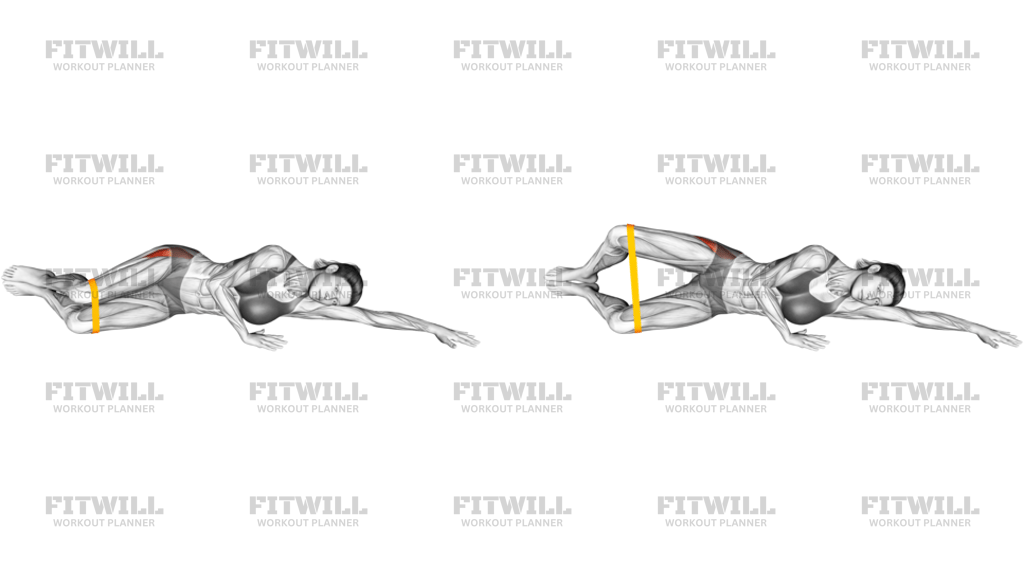
The main training goal is not to swing the leg wide. It is to create tension in the side of the hip without rolling backward, twisting the torso, or letting the lower back do the work. That makes the clam especially useful for warming up before lower-body lifting, improving hip stability for running or cutting, and teaching the body to control femur position under load. The image shows the classic setup: lying on one side, knees bent, feet stacked, torso long, and the top leg opening away from the bottom leg.
Setup matters because the clamshell is easy to cheat if the pelvis is loose. Lie on your side with your shoulders, hips, and heels in one line, then bend the knees so the feet stay in contact. Keep the band just above the knees, lightly brace the midsection, and hold the feet together as you rotate the top knee open. The lower body should feel anchored to the floor while the upper hip does the work. If the trunk shifts or the hips roll, the range is too big or the band is too heavy.
During each rep, open the knee only as far as you can without losing the stacked position. Pause briefly where the glute is most active, then lower the knee back with control and keep tension on the band the entire time. Breathe steadily instead of holding your breath through the whole set. Clean reps should feel like the hip is doing small, precise work, not like the whole body is turning into the motion.
This exercise fits well as a warm-up, accessory, rehab-style drill, or finishing set when you want better hip control rather than maximal loading. It is often used to prepare the glute medius and deep rotators before squats, lunges, deadlifts, or running work. The safest and most productive version is the one that stays quiet through the trunk, controlled through the return, and strong enough to challenge the outer hip without forcing momentum.
[ Workout Log & Planner ]
Put your next workout in Fitwill
Keep your plan and training log ready when you are.


Instructions
- Lie on your side with the resistance band just above your knees, knees bent, feet stacked together, and your shoulders, hips, and heels in one line.
- Support your head with the lower arm and keep the top hand lightly on the floor or hip so your torso stays quiet.
- Stack the hips, gently brace your midsection, and keep the feet pressed together before you start the rep.
- Rotate the top knee upward and slightly back, opening it away from the bottom knee without letting the pelvis roll.
- Lift only until the outer hip feels fully engaged and the trunk still feels stable.
- Pause for a moment at the top while keeping the feet together and the band under tension.
- Lower the knee back to the start slowly, resisting the band on the way down.
- Reset the hips if you feel yourself rocking backward or twisting through the low back.
- Continue for the planned reps, then switch sides and repeat.
Tips & Tricks
- Keep the feet touching each other for every rep; the movement should come from the top knee, not from separating the ankles.
- If your pelvis rolls open, reduce the band tension or shorten the range until the hips stay stacked.
- A small, clean opening is better than forcing a wide rep that turns into trunk rotation.
- Place the band above the knees, not on the shins, so the resistance matches the hip motion shown in the setup.
- Use a slow return to keep tension on the glute medius instead of dropping the knee back down.
- Keep the lower ribs and waist heavy against the floor so the side-lying position stays anchored.
- Exhale as the knee opens and inhale as it returns if that helps you avoid bracing too hard or losing rhythm.
- Choose a band that makes the last few reps challenging without causing the top hip to hike or the torso to rock.
Frequently Asked Questions
What does the Resistance Band Clam mainly train?
It mainly trains the glutes and outer hip, especially the muscles that help control hip stability and knee alignment.
Where should the band sit for this clam exercise?
Place the band just above the knees so the resistance matches the opening motion shown in the side-lying position.
How far should I open the top knee?
Open only as far as you can keep the feet together and the pelvis stacked; the rep should come from the hip, not from rolling the body back.
Should my feet separate during the rep?
No. Keep the feet pressed together and let the top knee open like a hinge.
Is the Resistance Band Clam good for beginners?
Yes. It is a good beginner drill when the band is light and the motion stays small and controlled.
What should I do if I feel my low back taking over?
Reduce the range, keep the ribs and hips stacked, and lower the band tension so the outer hip can do the work.
When is this exercise most useful?
It works well in warm-ups, accessory blocks, rehab-style sessions, or as a glute activation drill before squats, lunges, or runs.
What is the most common mistake with clamshells?
The biggest mistake is rotating the whole trunk backward to fake a bigger rep instead of keeping the pelvis still.