Hip External Rotator Stretch
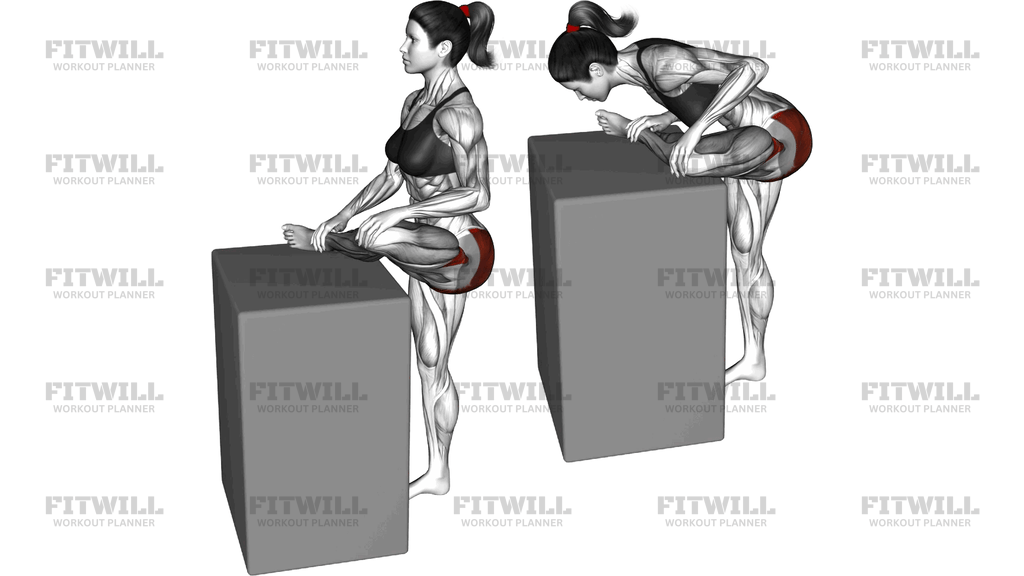
Hip External Rotator Stretch is a standing, box-supported figure-four stretch for the outer hip and glute complex. The crossed-leg position targets the deep external rotators around the hip, while the hands-on-box support lets you hinge forward without turning it into a balance drill. The movement is mainly about creating a clean line of tension through the back of the hip, not about forcing the knee lower or collapsing the spine.
The setup matters because the crossed ankle, standing knee, and torso angle all change where the stretch lands. With the ankle placed across the opposite thigh, the flexed standing leg, and the chest supported on the box, you can keep the pelvis level and let the hip open gradually. That makes this version useful for people who want a controlled alternative to a floor figure-four or pigeon-style stretch.
Perform the stretch by hinging back from the hips, keeping the spine long, and lowering only until you feel a clear stretch in the outer glute or deep hip of the crossed-leg side. The support box should let you stay relaxed through the shoulders and neck while you breathe into the end range. If the stretch moves into the knee or lower back, shorten the range or raise the support.
Use this exercise after lower-body training, running, long sitting, or anytime the hips feel tight and externally rotated positions are limited. It is a mobility drill, not a forceful push for depth, so the best reps are calm, controlled holds with even breathing and a safe exit back to standing. Beginners can use it by keeping the torso more upright and reducing how far they hinge toward the box.
[ Workout Log & Planner ]
Put your next workout in Fitwill
Keep your plan and training log ready when you are.


Instructions
- Stand facing a sturdy box or bench and place your hands on the top for support.
- Cross one ankle over the opposite thigh just above the knee, then flex the crossed foot.
- Keep a soft bend in the standing knee and hinge your hips back instead of rounding your back.
- Let the chest move toward the box until you feel a stretch in the outer glute and hip of the crossed-leg side.
- Keep the crossed knee gently opening outward rather than collapsing toward the midline.
- Hold the position with your spine long, shoulders relaxed, and both feet rooted.
- Breathe slowly into the stretch and avoid bouncing or forcing the range.
- Ease back to standing with control, uncross the legs, and repeat on the other side.
Tips & Tricks
- Keep the crossed foot flexed so the ankle is protected and the stretch stays in the hip.
- Think about sending the hips back as you hinge, not dropping the chest and rounding the lumbar spine.
- If the stretch lands in the knee, lift your torso and reduce how far the leg is crossed.
- Use the box to unload your balance so you can relax the outer hip instead of gripping through the standing leg.
- A small bend in the standing knee usually feels better than locking the leg straight.
- Keep the pelvis square to the box; twisting the torso changes the stretch and can make it uneven.
- Exhale slowly on each hold to help the deep hip muscles let go.
- Raise the support height if you cannot keep a long spine in the bottom position.
Frequently Asked Questions
What does the supported figure-four position stretch most?
It mainly stretches the gluteal area, including the deep external rotators around the hip.
Why are my hands on the box during this stretch?
The box gives you balance and support so you can hinge forward without turning the movement into a wobble drill.
Where should the crossed ankle sit?
Place it across the opposite thigh just above the knee, not directly on the kneecap.
Should I push the crossed knee down harder for a bigger stretch?
No. Let the hip open gradually and keep the knee comfortable; forcing the knee usually just shifts stress into the joint.
Can beginners use this stretch?
Yes. Beginners usually do best with a higher hand support, a smaller hinge, and shorter holds.
What should I feel if the setup is correct?
A clear stretch in the outer glute or deep hip on the crossed-leg side, not sharp pain in the knee or low back.
How is this different from pigeon pose?
This is a standing version with box support, so it is easier to enter, easier to exit, and usually less intense on the floor.
When is the best time to do it?
It fits well after lower-body lifting, after runs, or any time your hips feel stiff from sitting.