Dumbbell Standing Bent Arm Lateral Raise
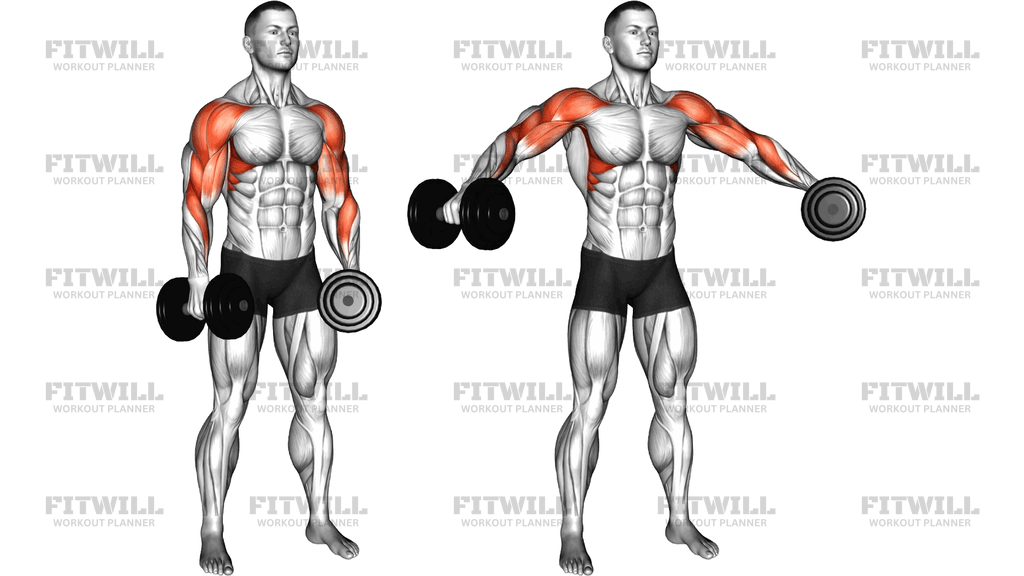
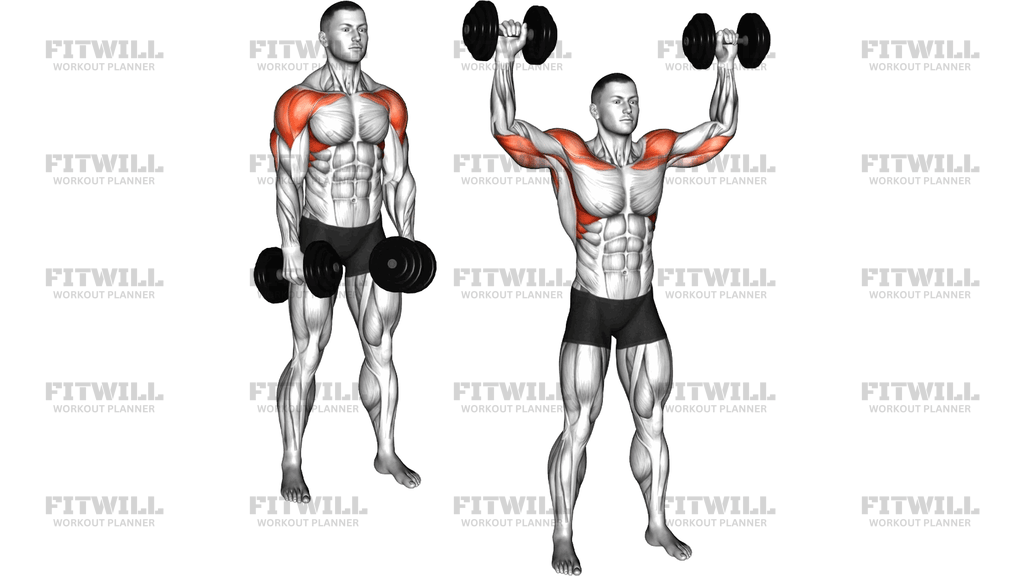
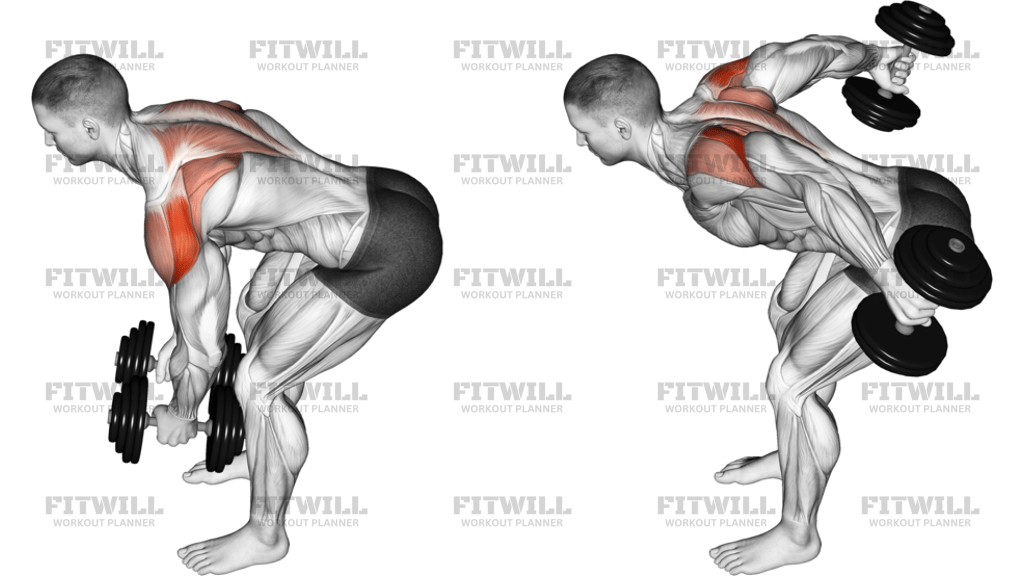
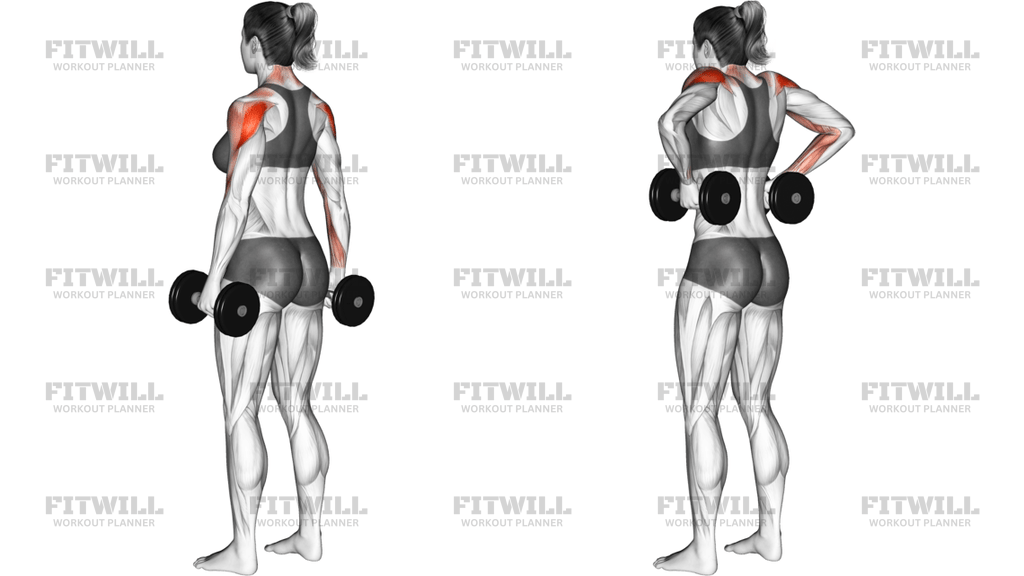
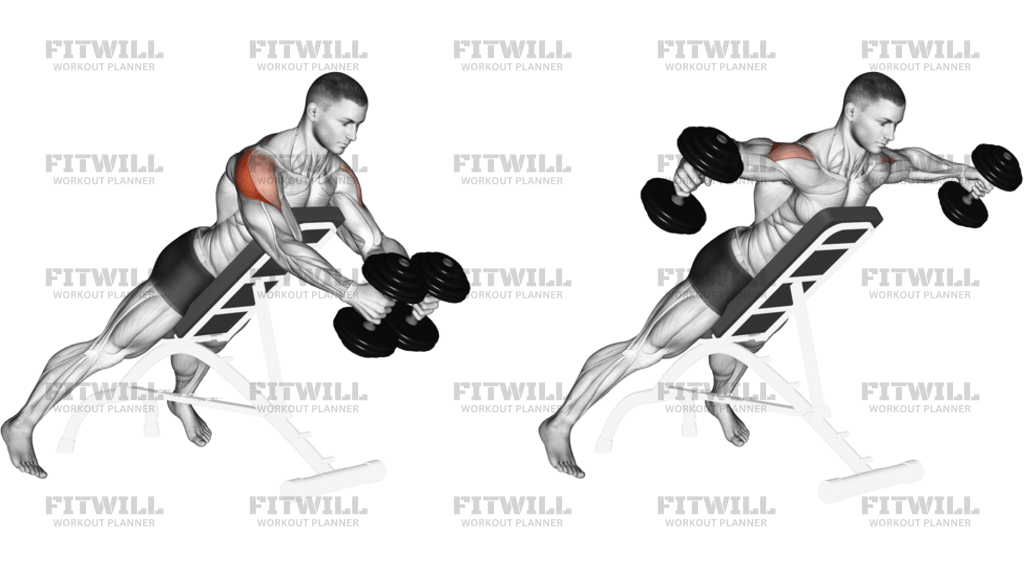
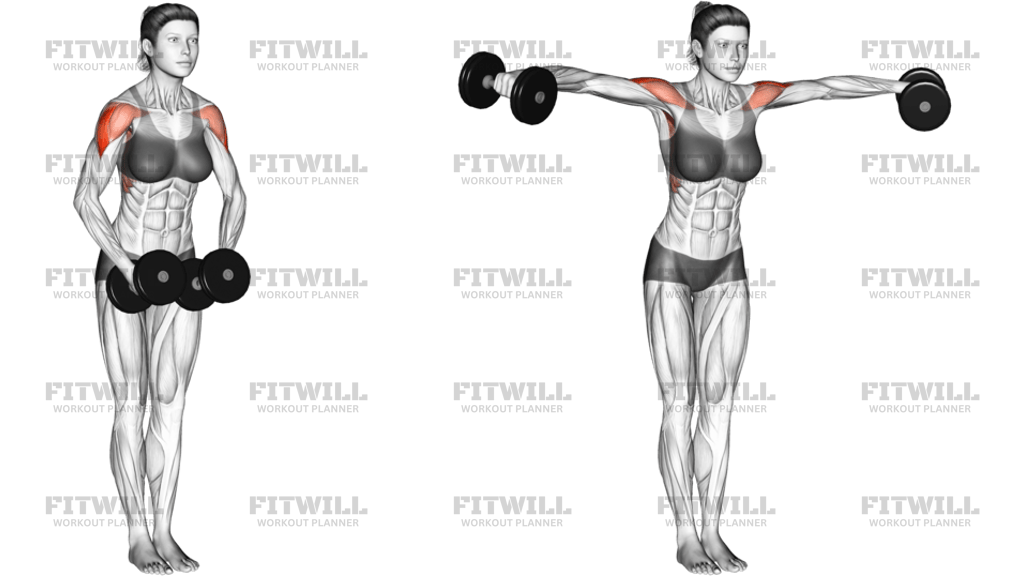
Dumbbell Standing Bent Arm Lateral Raise is a standing shoulder isolation exercise that loads the side delts while asking the upper traps, rotator cuff, and upper back to steady the shoulder girdle. The image shows a slight elbow bend throughout the rep, with the dumbbells moving out and up from the sides of the thighs until the arms are roughly level with the shoulders. That shape matters: it keeps the raise focused on the delts instead of turning it into a shrug, a swing, or a front-dominant lift.
This exercise is useful when you want direct work for shoulder width, overhead stability, and clean scapular control without needing a bench or machine. The working muscles are the Deltoids, especially the lateral fibers, with Trapezius and Rhomboids helping keep the shoulder blades organized and Triceps brachii helping hold the elbow angle steady. Because the arms act like long levers, a small change in torso position, elbow bend, or wrist angle can change the feel of the rep quickly, so the setup has to be deliberate.
Start by standing tall with the dumbbells hanging in front of the thighs, feet grounded, ribs stacked over the pelvis, and a soft bend in the elbows that stays nearly the same for the whole set. From there, raise the arms in a controlled arc slightly in front of the body rather than straight out to the side, until the elbows and dumbbells reach about shoulder height. The top of the rep should feel like a strong lateral delt contraction, not a hard shrug or a pinch in the front of the shoulder.
On the way down, lower the dumbbells slowly and keep tension on the shoulders instead of letting the weights drop. Smooth breathing helps: exhale as the arms rise, inhale as they return. If the torso starts rocking, the neck tightens, or the shoulders are climbing toward the ears, the load is too heavy or the range is too ambitious. For most lifters, this works best as accessory shoulder volume in moderate-to-higher rep ranges where control and burn matter more than maximal load.
Use this movement when you want a strict dumbbell option for shoulder hypertrophy, warm-up activation, or a finishing set that targets the side delts without major joint stress. The exercise rewards patience: a lighter pair of dumbbells, a fixed elbow angle, and a slower lowering phase usually produce a much better stimulus than trying to force the heaviest possible raise.
Fitwill
Log Workouts, Track Progress & Build Strength.
Achieve more with Fitwill: explore over 9600 exercises with images and videos, access built-in and custom workouts, perfect for both gym and home sessions, and see real results.
Start your journey. Download today!




Instructions
- Stand upright with your feet about hip-width apart and hold a dumbbell in each hand in front of your thighs, palms facing in and elbows slightly bent.
- Set your ribs over your pelvis, soften your knees, and keep your shoulders down before the first rep.
- Brace your midsection so your torso stays still when the dumbbells leave the thighs.
- Raise both arms out in a controlled arc slightly in front of your body, leading the motion with your elbows.
- Keep the bend in your elbows nearly fixed as the dumbbells travel upward to shoulder height.
- Pause briefly at the top without shrugging or leaning back.
- Lower the dumbbells slowly along the same path until they return to the start position.
- Exhale as you lift, inhale as you lower, and repeat for the planned reps.
Tips & Tricks
- Keep the dumbbells a little in front of your torso instead of directly out beside you; that shoulder plane is usually friendlier than a perfectly square raise.
- Think about driving the elbows wide and up rather than lifting the hands; that cue keeps the side delts doing the work.
- Stop the set as soon as your shoulders start creeping toward your ears, because that usually means the upper traps have taken over.
- Use a load that lets you hold the same elbow bend on every rep; if the angle is changing, the weight is too heavy.
- A short pause near shoulder height helps remove momentum and makes the lateral delts work harder.
- Lower the weights for two to three seconds so the eccentric phase stays on the shoulders instead of bouncing off the bottom.
- Keep your wrists neutral and stacked under the dumbbells; bending the wrists back turns the rep sloppy and stressful.
- If one side rises faster than the other, lighten the load and mirror the same path on both arms before adding weight.
Frequently Asked Questions
What muscles does Dumbbell Standing Bent Arm Lateral Raise work most?
It mainly targets the lateral delts, with the upper traps, rotator cuff, and upper back helping stabilize the shoulders.
How bent should my elbows be during the raise?
Keep a small, fixed bend in the elbows from start to finish. The angle should stay almost unchanged so the shoulders do the lifting instead of the triceps or momentum.
How high should the dumbbells come up?
For most people, shoulder height is enough. Going much higher usually shifts tension into the traps and can make the top of the rep feel pinchy.
Should I raise the dumbbells straight out to the sides?
A slightly forward arc is usually better than a perfectly straight side raise. It matches the shoulder plane more naturally and often feels smoother on the joints.
Is this exercise okay for beginners?
Yes, as long as the weights are light enough to keep the torso still and the elbows fixed. Beginners usually learn it faster with strict form and shorter sets.
Why do I feel this in my neck or upper traps?
That usually means the weights are too heavy or you are shrugging at the top. Drop the load, keep the shoulders down, and stop the lift when the upper arms reach shoulder level.
Can I do this one arm at a time?
Yes. Single-arm reps can help if one shoulder takes over or if you want to keep the torso from leaning to one side.
What weight should I use?
Choose a pair that lets you keep the same elbow bend, avoid swinging, and lower the dumbbells under control for every rep. For this exercise, strict form matters more than load.