Dumbbell Reverse-Grip Row
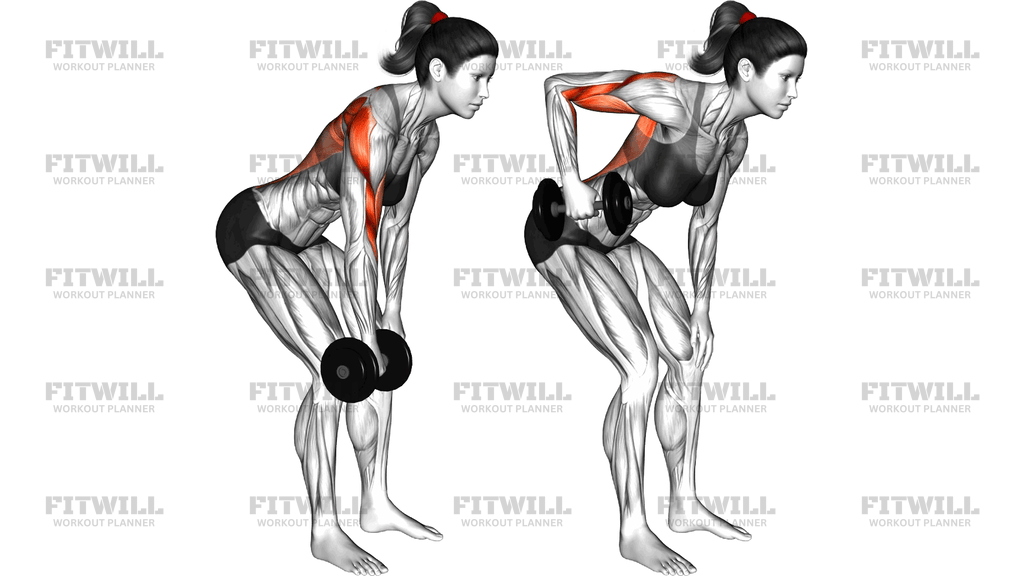
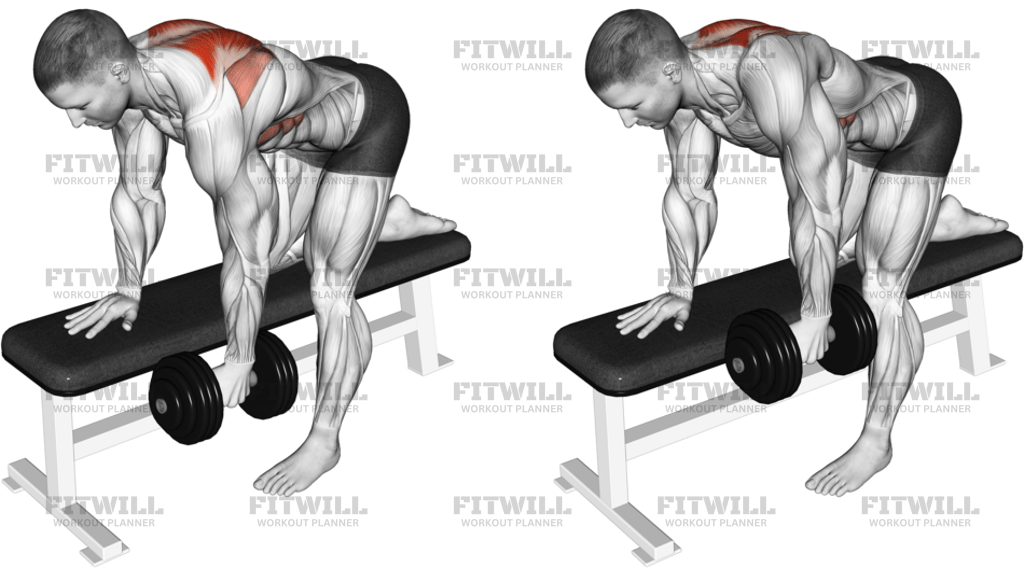
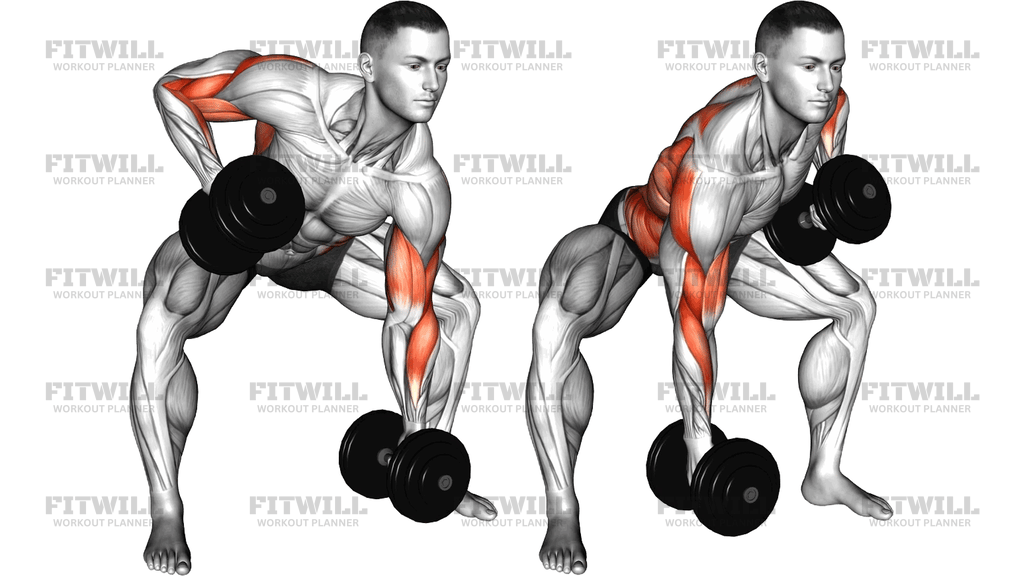
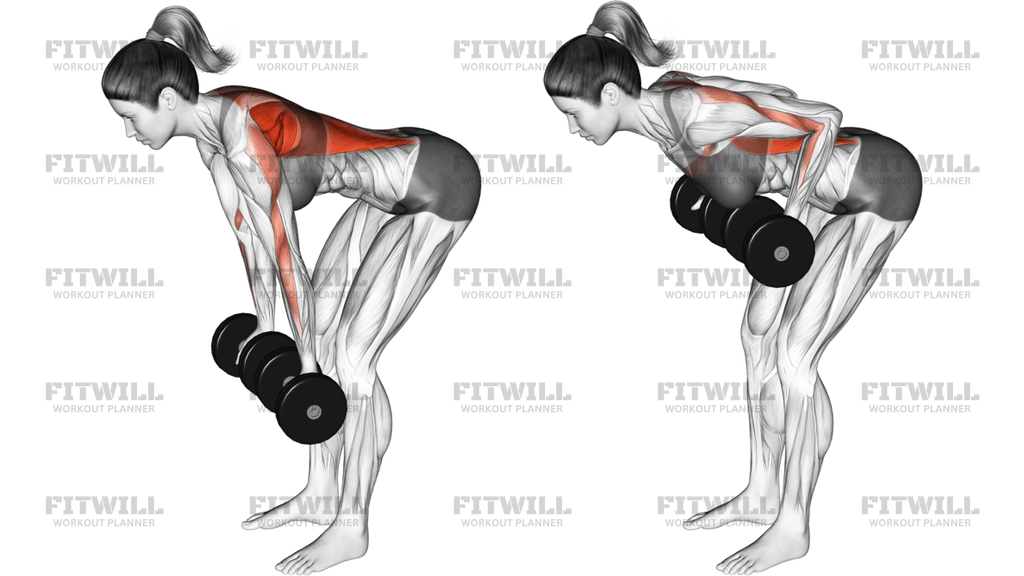
Dumbbell Reverse-Grip Row is a bent-over pulling exercise that uses a supinated, palm-up grip to train the upper back while also challenging the lats, biceps, and rear shoulder girdle. The image shows a hip-hinged position with the torso angled forward, the dumbbells hanging below the shoulders, and the elbows driving back close to the body. That setup matters because it lets you row with a clear path from the bottom hang to the lower ribs or upper waist instead of turning the movement into a shrug or a half-standing swing.
The reverse grip changes the feel of the row. Compared with a standard overhand dumbbell row, the underhand position usually makes it easier to keep the elbows tucked and to pull the weights toward the hip line, which can shift more work into the lats and lower fibers of the mid-back while still lighting up the traps and rhomboids. The prime target here is the trapezius region, with the rhomboids, latissimus dorsi, and biceps brachii helping stabilize and finish each rep. Because the lift starts from a dead-hang style bottom position, the exercise rewards good hinge mechanics and a steady trunk more than brute force.
Set the feet about hip-width apart, hinge until the torso is close to parallel or at a strong athletic incline, and keep the spine long without rounding the lower back. Let the dumbbells hang under the shoulders with the palms facing forward or up, depending on how the photo and your wrists feel, then brace before the first pull. The knees should stay softly bent, the neck neutral, and the shoulders set without collapsing toward the ears. If the torso keeps drifting upward each rep, the set is too heavy or the hinge is not stable enough.
On the pull, drive the elbows back and slightly out from the bottom, then finish by squeezing the shoulder blades together without over-arching the low back. The top of the rep should feel like the dumbbells are reaching the sides of the lower ribs, not the chest. Lower the weights under control until the arms are long again and the shoulders are still organized. Use a steady exhale on the pull and a controlled inhale on the way down so the torso stays braced and the hips do not pop upward.
This is a good accessory row for back-focused strength work, posture training, or hypertrophy sessions where you want strict tension and a clear pulling line. It can also work well as a lighter hinge pattern if you are practicing body position before moving to heavier barbell or machine rows. Keep the load honest, keep the rep path clean, and treat each repetition like a deliberate pull from the floor rather than a whole-body heave.
Fitwill
Log Workouts, Track Progress & Build Strength.
Achieve more with Fitwill: explore over 9600 exercises with images and videos, access built-in and custom workouts, perfect for both gym and home sessions, and see real results.
Start your journey. Download today!




Instructions
- Stand with your feet about hip-width apart and hinge forward until your torso is near parallel to the floor.
- Hold a dumbbell in each hand with a reverse, palm-up grip and let the arms hang straight below the shoulders.
- Keep a soft bend in the knees, a long neutral spine, and your chest proud without lifting the torso.
- Brace your midsection, then start the pull by driving the elbows back close to your sides.
- Row the dumbbells toward the lower ribs or upper waist while keeping the shoulders away from your ears.
- Squeeze the shoulder blades together briefly at the top without leaning back or jerking the weights up.
- Lower the dumbbells in a controlled arc until the arms are fully long again and the shoulders stay packed.
- Keep breathing steady and repeat for the planned reps before standing back up with control.
Tips & Tricks
- If your palms start drifting toward neutral, reset the grip before the next rep; the reverse-grip position is part of the exercise, not an accident.
- Keep the dumbbells traveling toward the hip line, not straight up toward the chest, so the pull stays lat- and upper-back-driven.
- Let the torso angle stay fixed for the whole set; rising into a higher stance turns this into a cheat row.
- Stop the set when your lower back begins to take over or when the weights start swinging under your shoulders.
- A lighter load with a clean pause at the top is more useful here than chasing a heavy heave with sloppy elbow drift.
- Think about pulling the elbows behind the body rather than curling the dumbbells with the hands.
- Keep the neck long and eyes slightly down so you do not crank the head upward to finish the rep.
- Use a controlled lowering phase so the shoulders stay set and the dumbbells do not drop out of position.
- If the wrists feel strained, shorten the range slightly and keep the forearms aligned under the dumbbells.
Frequently Asked Questions
What does the reverse grip change in this row?
The palm-up grip usually keeps the elbows tucked and helps you pull more toward the lower ribs or hip line, which shifts the feel toward the lats and mid-back.
How far should I hinge forward?
Hinge until your torso is close to parallel or at a strong forward angle you can hold without rounding your back or standing up during the row.
Where should the dumbbells travel?
Pull them toward the lower ribs or upper waist, not up toward the neck or out in a wide arc.
Should my elbows stay close to my sides?
Yes. Keeping the elbows tucked helps preserve the reverse-grip row path and reduces unwanted shrugging.
Is this a lower-back exercise too?
The lower back works isometrically to hold the hinge, but the row itself should be driven by the upper back, traps, and lats.
Can beginners use this movement safely?
Yes, as long as they keep the dumbbells light enough to hold the hinge, row without jerking, and control the lowering phase.
What is the most common mistake here?
Standing up with each rep or turning the pull into a torso swing is the biggest problem because it shifts tension off the back.
Do I need to pause at the top?
A brief squeeze at the top is useful, but only if you can keep the torso fixed and avoid yanking the weights higher.