Dumbbell Concentration Curl
Dumbbell Concentration Curl is a seated single-arm biceps exercise that uses the inner thigh as a brace so the upper arm stays quiet and the elbow path stays strict. The position removes a lot of body English, which makes it useful when you want to isolate elbow flexion, clean up curl mechanics, or add focused arm work after bigger pulling exercises. The working arm starts long near the floor and finishes with the dumbbell near the shoulder, giving the biceps a direct resistance curve through a very controlled range.
The image shows the classic setup: sit on a bench, spread the feet for balance, hinge slightly forward, and pin the same-side upper arm against the inner thigh. That thigh contact matters because it stabilizes the shoulder and keeps the upper arm from drifting forward as the dumbbell rises. When the elbow stays fixed, the biceps brachii does most of the work, with the brachialis and brachioradialis helping through the lower and middle portions of the curl.
This exercise rewards patience more than load. The start position should feel long but not loose, with the wrist stacked over the dumbbell handle and the shoulder relaxed rather than shrugged. From there, curl the weight toward the front of the shoulder without swinging the torso or rolling the elbow off the thigh. A short squeeze at the top helps you finish the rep cleanly, but the return phase is just as important: lower the dumbbell slowly until the arm is nearly straight and the biceps are still in control.
Concentration curls are commonly used for hypertrophy, arm definition work, and technique practice when a lifter wants to feel the biceps do the job without help from the back or hips. They are also useful as a lighter accessory movement after chin-ups, rows, or heavier curl variations. Because the movement is single-arm and supported, beginners can learn it safely with light dumbbells, while advanced lifters can use tempo and strict pauses to increase tension without needing much load.
The main safety points are simple: keep the wrist neutral, avoid letting the shoulder drift forward at the bottom, and stop short of any elbow or biceps tendon pain. If the torso starts rocking or the dumbbell has to be yanked up, the set is too heavy. Use a weight you can lower smoothly, keep the elbow anchored to the thigh, and let every rep look almost identical from start to finish.
[ Workout Log & Planner ]
Put your next workout in Fitwill
Keep your plan and training log ready when you are.


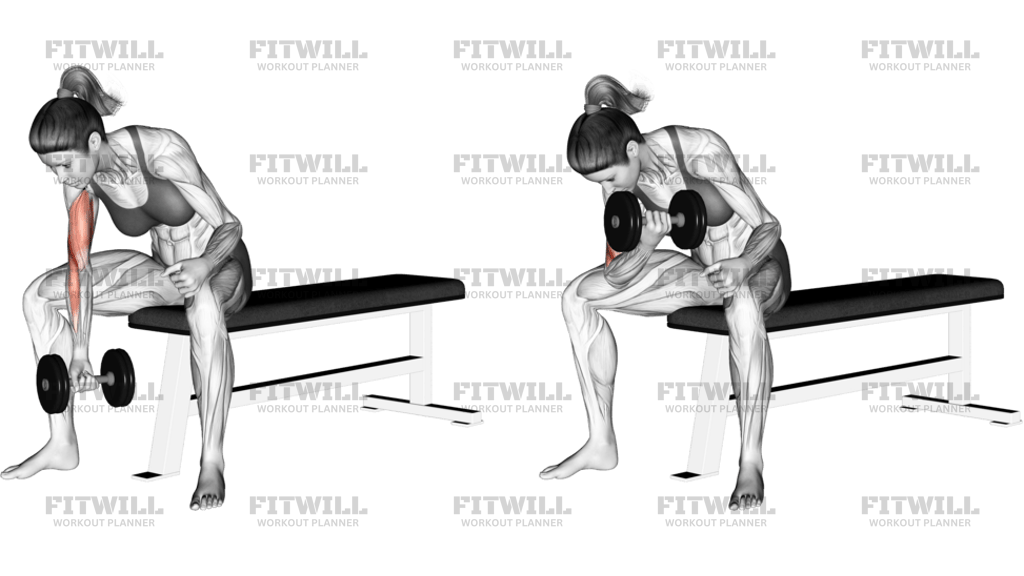
Instructions
- Sit on a flat bench and plant both feet wide enough to stay balanced.
- Hold one dumbbell in one hand and lean forward slightly so the upper arm can rest against the inside of the same-side thigh.
- Let the arm hang straight down with the wrist neutral and the shoulder relaxed.
- Brace your torso, then curl the dumbbell upward by bending only the elbow.
- Keep the upper arm pressed to the thigh so the elbow does not drift forward.
- Turn the palm slightly toward you as the dumbbell rises and bring it toward the front of the shoulder.
- Pause briefly near the top without letting the shoulder shrug or the torso rock.
- Lower the dumbbell slowly until the arm is almost straight and the biceps stay under tension.
- Reset the shoulder and elbow before the next rep, then switch arms when the set is complete.
Tips & Tricks
- Keep the same-side elbow glued to the inner thigh; once that contact is lost, the curl turns into a swing.
- Use a dumbbell that lets you lower the weight as slowly as you lift it, not one that forces a bounce at the bottom.
- Keep the wrist stacked over the handle instead of letting it bend back as fatigue builds.
- Think about bringing the little-finger side of the dumbbell slightly up as you curl to finish the contraction cleanly.
- Do not let the front shoulder roll forward to steal range from the elbow.
- Pause for a beat near the top only if you can keep the elbow pinned and the neck relaxed.
- A short forward lean is normal, but your torso should stay fixed from rep to rep.
- Stop the set when you need to jerk the dumbbell off the floor or use the free hand for help.
Frequently Asked Questions
What does the dumbbell concentration curl train most?
It mainly trains the biceps, especially when the elbow stays fixed against the inner thigh.
Why is the upper arm braced on the thigh?
The thigh brace keeps the elbow from drifting forward and reduces shoulder cheating.
Should my palm stay facing up the whole time?
Keep a mostly supinated grip and allow a small natural turn as you curl; do not twist aggressively.
How far should I lower the dumbbell?
Lower it until the arm is nearly straight and the biceps are still in control, without dumping the shoulder forward.
Is this better than a standing dumbbell curl?
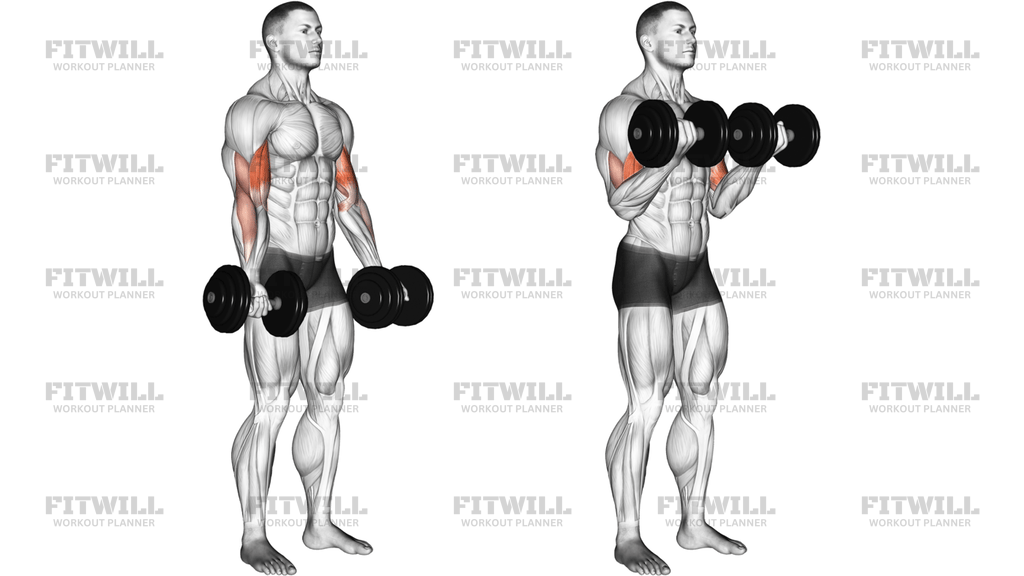
It is stricter and easier to isolate the biceps, while standing curls usually allow more total load and body English.
What is the most common mistake with the bench setup?
People often lose thigh contact or sit too upright, which makes the elbow slide and turns the rep into a swing.
Can beginners use this curl variation?
Yes, it is beginner-friendly if the dumbbell is light enough to move without rocking or wrist collapse.
What muscles help besides the biceps?
The brachialis and brachioradialis assist, and the forearm muscles help keep the handle stable.