Floor Hyperextension
Floor Hyperextension is a prone bodyweight back-extension exercise performed on the floor with the chest and legs lifting together in a small, controlled arc. It is used to train the posterior chain without a bench or machine, so the movement is more about clean spinal control, glute drive, and a steady brace than about chasing a big range of motion. When it is done well, the torso, hips, and legs stay organized while the lift comes from the muscles that extend the body, not from a hard yank through the neck or a violent kick of the legs.
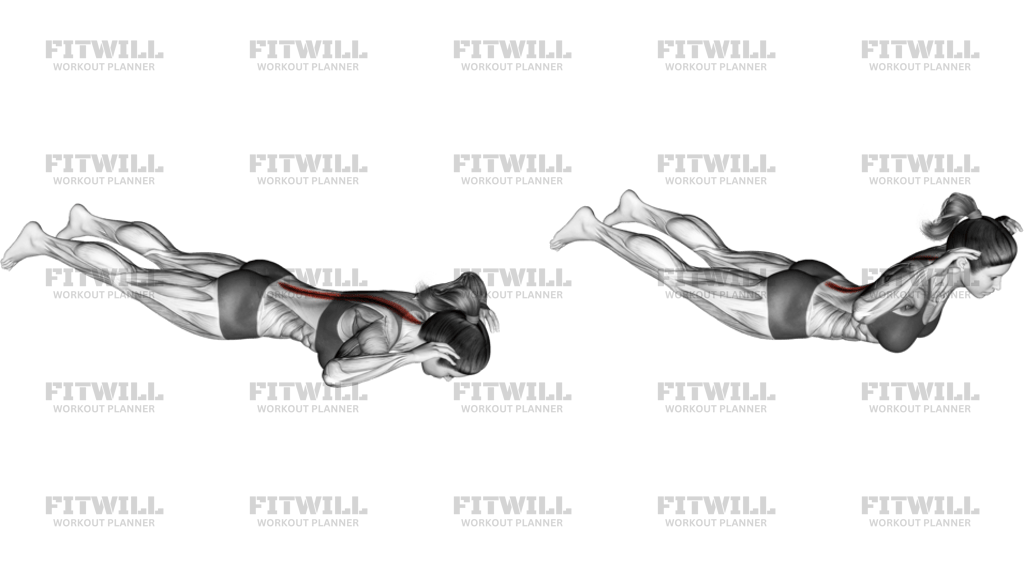
The floor setup matters because the body starts from a fully supported position. Lie face down with your forehead near the floor, hands by the sides of your head, elbows wide, and legs long behind you. From there, create tension through the glutes, hamstrings, and lower back before the first rep begins. That tension keeps the pelvis from dumping forward and helps the lift feel smooth instead of sloppy. The image shows both the upper body and legs leaving the floor, which makes this a full-body back-extension pattern rather than a simple upper-back shrug.
Each repetition should feel like a controlled hinge through the hips and spine. Exhale as you raise the chest, shoulders, and thighs a few inches off the floor, keeping the neck long and the ribs from flaring upward. At the top, the body should look extended but not cranked into a hard arch. Hold the position briefly, then lower under control until the torso and legs come back to the floor with enough tension left to start the next rep cleanly. If the rep turns into a kick or a neck-driven lift, the load or range is too aggressive.
This exercise is useful as accessory work for posterior-chain strength, low-back endurance, and glute engagement, especially when you want a floor-based option that does not require equipment. It also fits well in warm-ups, core circuits, and rehab-style training when the goal is to reinforce position and control. Because the range is small, the quality of the rep matters more than the height of the lift. Beginners can use it with body weight and a short pause at the top, while more advanced lifters can make it harder with slower tempo, longer holds, or added resistance only if the spine stays comfortable and stable.
The main coaching priority is staying precise enough that each rep looks the same. Floor Hyperextension rewards patience: the chest rises a little, the legs rise a little, the pelvis stays set, and the neck stays quiet. That is what turns it from a generic floor movement into a useful strength exercise for the glutes, hamstrings, spinal erectors, and supporting upper-back muscles.
[ Workout Log & Planner ]
Put your next workout in Fitwill
Keep your plan and training log ready when you are.


Instructions
- Lie face down on the floor with your forehead near the mat, legs long behind you, and hands placed by the sides of your head with your elbows open.
- Press the tops of your feet into the floor, lightly tighten your glutes, and set your ribs down before you start.
- Brace your midsection so your lower back feels supported instead of loose.
- Exhale and lift your chest, shoulders, and thighs a few inches off the floor in one controlled motion.
- Keep your neck long and your gaze down so you do not crank your head upward.
- Squeeze your glutes at the top and keep the lift smooth rather than jerky.
- Pause briefly in the raised position without collapsing your lower back.
- Lower yourself back to the floor under control and reset your breath before the next rep.
Tips & Tricks
- Keep the lift small; the goal is a clean floor extension, not a deep lumbar backbend.
- If your neck feels crowded, keep your chin slightly tucked and let the hands stay light beside the head.
- Think about lifting the sternum and thighs together instead of throwing the legs up first.
- Press the pelvis into the floor before every rep so the low back does not take over immediately.
- A short hold at the top is more useful here than trying to raise the chest higher.
- Slow the lowering phase so you do not drop out of the position and lose tension.
- Keep the elbows wide enough that they do not pull the head forward.
- Stop the set if you feel sharp pinching in the low back or strain at the base of the neck.
Frequently Asked Questions
What muscles does Floor Hyperextension work?
It primarily trains the glutes, hamstrings, spinal erectors, and the supporting upper-back muscles that help hold the chest up.
Can beginners perform this exercise?
Yes. It is beginner-friendly with body weight, a small range of motion, and a brief pause at the top.
Where should my hands go during the rep?
Place your hands by the sides of your head or at your temples and keep the elbows open so you do not pull the head forward.
How high should I lift my chest and legs?
Only a few inches off the floor is enough. The rep should stay controlled and extended, not forced into an exaggerated arch.
Should I feel this in my lower back?
Some lower-back work is normal, but the movement should also involve the glutes and hamstrings. If the low back feels pinchy, shorten the range and tighten the brace.
Is this the same as a Superman?
It is very similar, but this version keeps the hands by the head and emphasizes a controlled floor back-extension rather than an arm reach.
What is the biggest form mistake on the floor?
Jerking the legs up first or yanking the head back usually turns the rep into momentum instead of trunk extension.
How can I make Floor Hyperextension harder?
Add a longer pause at the top, slow the lowering phase, or hold a light plate only if you can keep the pelvis steady and the neck relaxed.